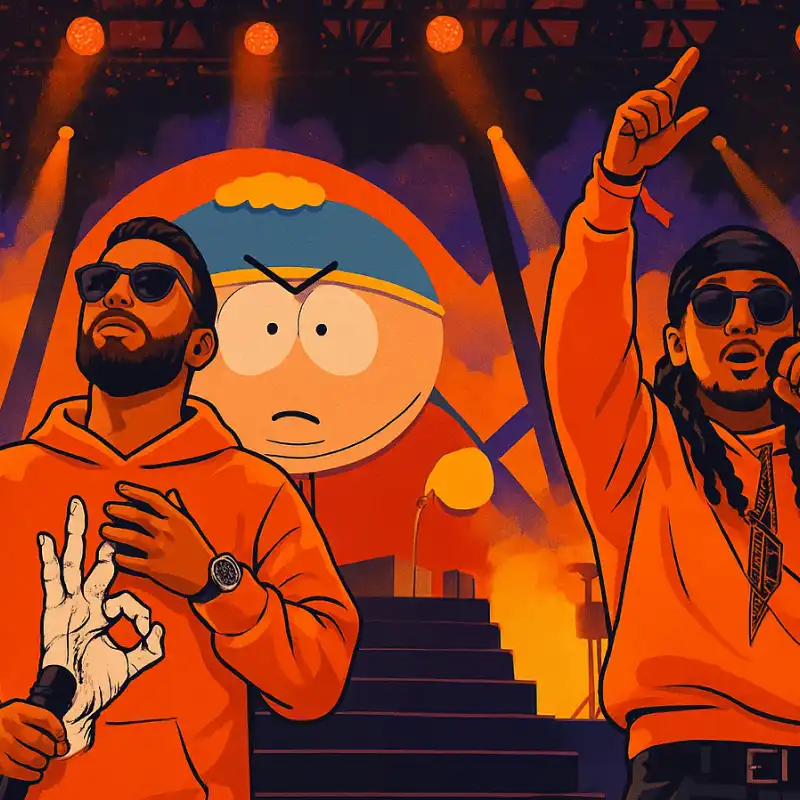
This was supposed to be an Ed Sheeran tour, full stop. Big stadiums, big choruses and grown adults getting misty-eyed during Photograph. Instead, Macklemore was removed, several musicians walked away, and Sheeran found himself in the middle of a debate about Gaza, free speech and who actually gets to call the shots on a stadium tour.
One star
Two stars
Three stars
Four stars
Five stars
Disclaimer: Apropos Magazine received access or a review copy. As always, we share our own impressions — unfiltered.
Six stars
So let’s start in the only sensible place:
What exactly is going on?
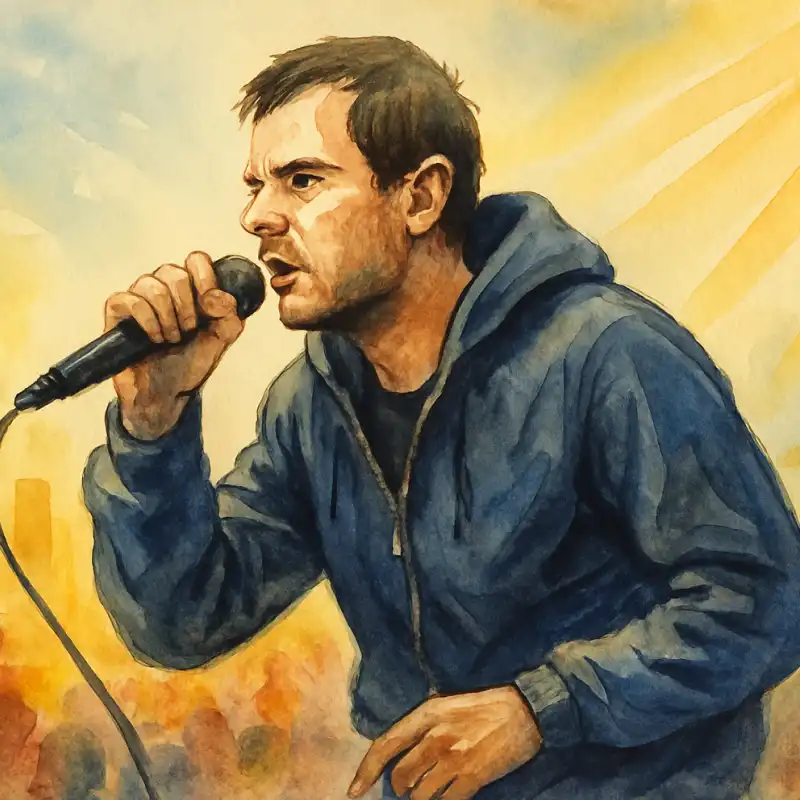
On September 4, Macklemore performed as Sheeran’s support act at MetLife Stadium in New Jersey. During the concert, he said “Free Palestine” and criticised the Israeli government’s actions in Gaza and the West Bank. None of this was new territory for Macklemore, who has made his position on the issue clear for some time.
But this time, the words had a very concrete consequence.
According to both people on the tour and Sheeran himself, several of the upcoming venues objected to Macklemore continuing as support. Tour promoter Messina Touring Group then removed him from the remaining shows.
Macklemore himself pointed to Robert Kraft, the owner of Gillette Stadium, as a key figure in the pressure campaign. Kraft has confirmed that he opposed Macklemore’s involvement, citing what he described as the rapper’s history of antisemitic rhetoric. Sheeran has also said that the decision to remove Macklemore was not his, but that venues had threatened to cancel shows if the rapper stayed on the bill.
This is roughly where the story stops being a simple tale of two pop stars falling out.
Because Macklemore and Ed Sheeran are not necessarily “opponents” in the classic sense. Macklemore has described Sheeran as a friend and said he understood that Sheeran was in a difficult position. Sheeran has said he tried to find a solution.
The problem lies instead in the strange machinery underneath a stadium tour.
Who actually decides?
The headliner? The promoter? The venue? The stadium owner? The insurance company? The person who can threaten to kill the lights and send 60,000 people home?
The answer is the annoying adult one: a bit of all of them.

And then came the next domino.
Aaron Rowe, Lukas Graham and Finneas pulled out of the tour. Sheeran’s backing band Beoga also announced that they would no longer continue. Their explanations were not phrased exactly the same way, but the reaction made one thing very clear: Macklemore’s absence could no longer be hidden away as an internal booking decision.
Now you could see the conflict on stage.
Literally.
That is also where Sheeran’s wish to keep the concerts politically neutral starts to become interesting.
Because the wish is, in a way, understandable. People do not buy a ticket to Shape of You in order to get a foreign-policy seminar thrown in. Sheeran has said that his audience also includes children and young people, and that he wants the concert to be a place for music, love and togetherness rather than political front lines.
Fair enough.
But neutrality becomes hard to maintain when the very decision about who gets to stand on stage has become political.
If Macklemore had stayed, that would have been a story.
When he was removed, that became a story too.
It is a bit like trying to keep a dinner politically neutral by throwing out one guest for what he said about politics. You can absolutely wish for calm afterwards. But everyone around the table has already seen the chair go empty.
Sheeran later addressed the issue more directly at a concert in Philadelphia. There, he described the situation in Gaza as catastrophic and indefensible, while also saying that he had never wanted to be an activist musician. He explained that the Macklemore situation had placed him in the middle of a debate about both free speech and the Israel-Palestine conflict.
That is probably the most human part of the whole affair.
Sheeran does not seem like a man who has longed to become the main character in a geopolitical argument. But superstars do not always get to choose the contexts their names end up in.
That does not automatically absolve him of responsibility. Major headliners have considerable influence over their own tours, even if contracts, promoters and venues also hold real power. But it does make the story less satisfying than the simple version, where one person just pressed a red button and said, “Get rid of Macklemore.”

And Macklemore’s criticism is not left unanswered either.
Kraft has said that his concern was not only criticism of Israel, but what he sees as Macklemore’s broader history of antisemitic rhetoric. Macklemore has previously faced criticism for a stage performance that was perceived as an antisemitic caricature, and which he later apologised for.
That matters, because otherwise the story quickly gets reduced to “artist says Free Palestine and gets censored.” That is Macklemore’s own interpretation of events, but not the only description of why the venues reacted.
What it does not change, however, is the central question.
Where is the line between a venue’s right to choose who it gives a stage to, and artists’ ability to express political views without losing their place on the tour?
There is no especially convenient answer sheet for that one.
A conclusion without a conclusion
This is probably not Ed Sheeran vs. Macklemore, even if that is the easiest headline through which to understand it.
It is more like Macklemore vs. the venues, the venues vs. risk, the musicians vs. the decision, and Ed Sheeran right in the middle of it all with a stadium tour that would really rather have just been a stadium tour.
You can buy a ticket to a pop concert without buying a political position along with it. But when someone disappears from the stage because of something they said, the empty space becomes part of the show too.
En stjerne
To stjerner
Tre stjerner
Fire stjerner
Fem stjerner
Seks stjerner