You can tell the story of a life through love affairs, workplaces and the people you lose. In Laura Ringo’s Nogen der kender nogen, the narrator uses addresses as well. Who owns the room? How long can you stay? And how much gratitude is included in the rent? A funny, sharp book about all the things a home gets to decide.
One star
Two stars
Three stars
Four stars
Five stars
Disclaimer: Apropos Magazine received access or a review copy. As always, we share our own impressions — unfiltered.
Six stars
Few dinner-party questions do their work quite as efficiently as “Where do you live?” Suddenly everyone has placed everyone else on a map of money, family and connections. An address can introduce you before you’ve had a chance to speak. Laura Ringo’s Nogen der kender nogen knows exactly how much power lies in that little exchange.
Laura Ringo was born in 1990 and grew up on the Danish island of Falster. She made her debut with the young adult novel Cremasterrefleksen in 2017 and later won the Blixen Prize for Papirbryllup. Her novels for adults include Fødedygtig, Grundtvig er død and Efter kort tids sygdom, and she has also taught at a Danish folk high school.
The story moves through addresses on Falster and in Odense, Aarhus and Copenhagen. Rented rooms, shared houses, temporary arrangements and folk high schools become stopping points in a life of studying, working, loving and writing. Just as you’ve got to know a place, something changes and it’s time to move again. That’s more than the book’s subject. It’s the rhythm of the thing.
Ringo is at her best when she lets inequality inhabit the details. Her friend Mathias becomes her landlord. A place in Copenhagen comes within reach because a friend’s parents bought her a co-op flat. A shared house offers companionship, but also scabies, mould and a cleaning rota nobody can quite make work. It’s funny and uncomfortably precise. Help can be warm and freely given and still remind you who can afford to give it.
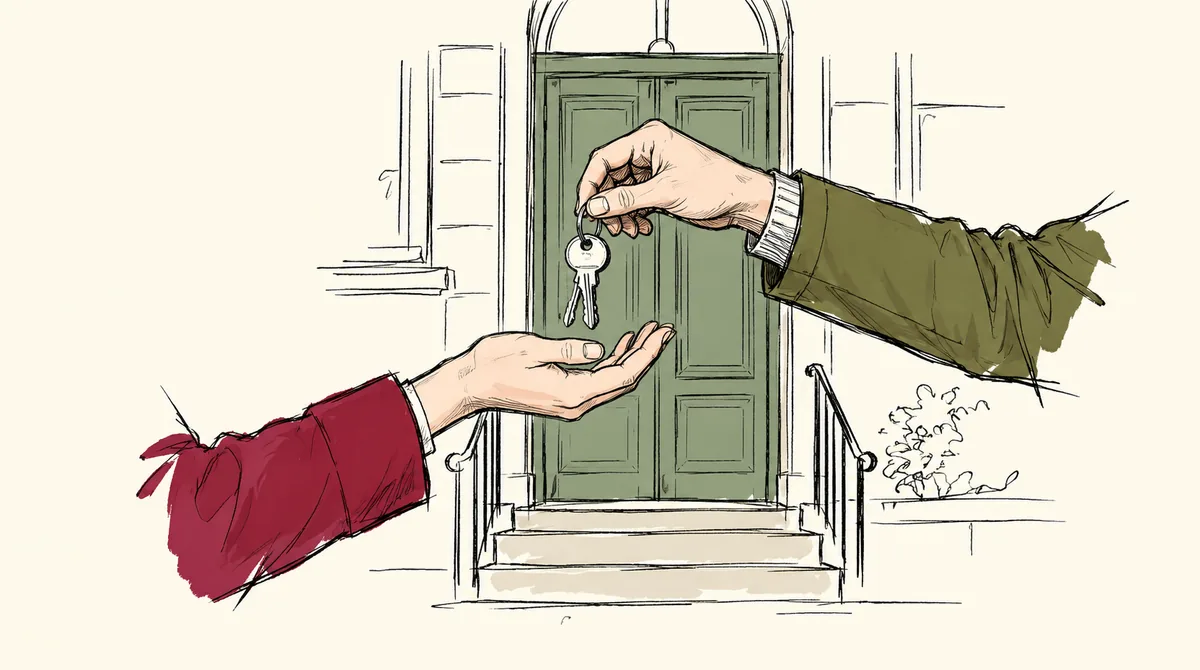
Scenes like these do more for the book’s critique of housing than any number of opinion pieces. They show how money translates into something you feel in your body: gratitude, shame, relief, the fear of having to pack up again. Happily, the narrator is no flawless representative of everyone on the outside. She measures herself against other people, makes bad decisions and tries to carve out a space where she gets to make the rules. It makes her a more interesting observer.
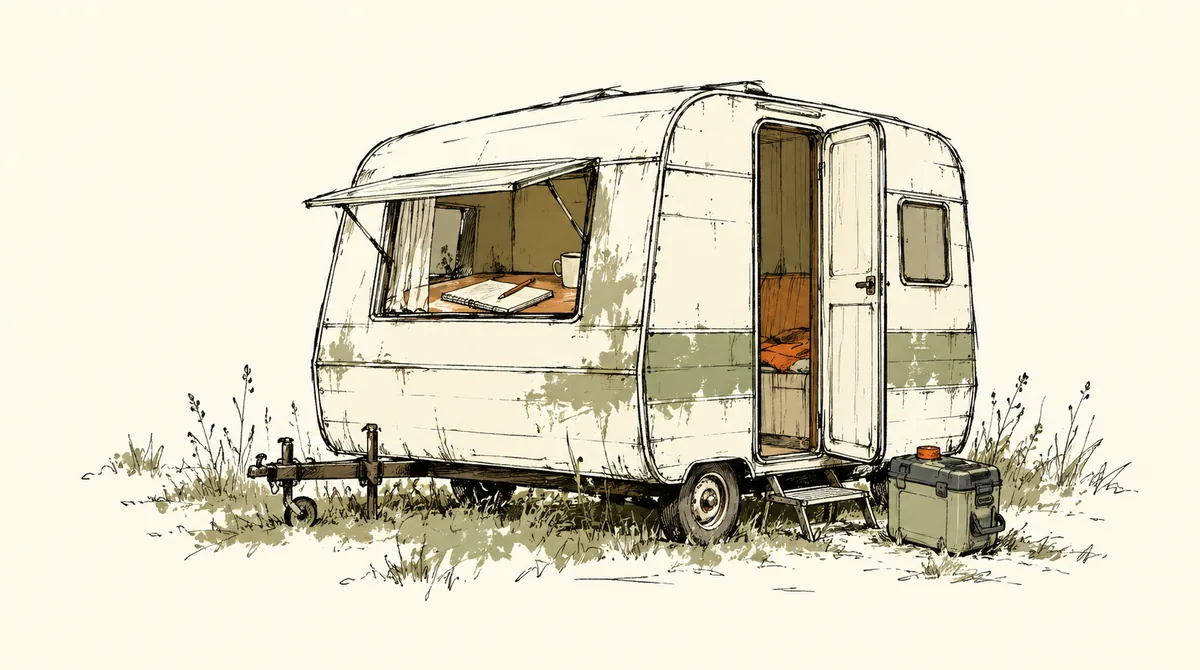
The caravan at Testrup Folk High School is one of the book’s best images. Literary ambitions and teaching sit alongside communal showers, manual work and emptying the toilet. It’s a gloriously unsexy version of the dream of finding your feet as an artist. By all means imagine a life in literature. Just remember there’s a tank to empty.
Gradually the story takes on weight. Literary opportunities don’t automatically put a secure roof over your head, and relationships change when illness and care move in. Later, the chance of a co-op flat on Amager comes through precisely the sort of connections the narrator has been railing against. It’s the book’s finest contradiction: a network is both a deeply uneven distribution of opportunity and a group of people who actually look after one another.
Ringo does have a habit of explaining her point once too often. Property-show dreams, differences between generations and the privilege of knowing someone get the full treatment in satire, essayistic digressions and direct questions. Several passages have real bite. But once a scene has shown us an injustice, the explanation that follows can feel like underlining something we could see perfectly well.
The montage comes at a cost, too. Some people have just started to get interesting when the next address takes over. Sometimes I wish the book would stay with them a little longer. Then again, a tidier story might be less true to the life it describes. Impermanence is the point. It’s hard to put down roots when you’re always keeping an eye out for the next notice to quit.

So where does that leave us?
Nogen der kender nogen is funny, angry and, above all, human. Four stars, because the way it builds a life out of addresses and catches our everyday dependencies is stronger than its occasionally insistent political explanations. It won’t solve the housing crisis. It does something more literary: it shows what the crisis does to a person’s idea of belonging.
Even as the narrator approaches somewhere she might call her own, the unease doesn’t disappear. You can have the key in your hand and still lie awake waiting for somebody to ask for it back.
One star
Two stars
Three stars
Four stars
Five stars
Seks stjerner