We like to know what is alive and what merely imitates life. That order sounds almost biologically self-evident, but in Amalie Smith’s Levende it is exposed as a human habit: a way of keeping nature, technology and ourselves at a comfortable distance from one another.
One star
Two stars
Three stars
Four stars
Five stars
Disclaimer: Apropos Magazine received access or a review copy. As always, we share our own impressions — unfiltered.
Six stars
A human-like figure can be made of ceramics, textiles, natural materials, waste and everyday objects. Which part makes it artificial? The manufactured material, the artistic processing, or our decision that life must be able to document a certain origin?
That unease is central to Amalie Smith’s Levende, which opened on 26 September in the north wing of Kunsthal Charlottenborg. According to the art hall, the exhibition consists of newly produced works created for the rooms and connects scientific research with literature, sculpture, sound and textile. It can be seen until 21 February 2027.
Smith already works across media. She graduated from the Danish Writers’ School in 2009 and the Royal Danish Academy of Fine Arts in 2015, but Levende does not use those disciplines as decorative labels on a conference folder. The different forms probe the same conflict: we like to think of life as something original and artificiality as something added, even though our bodies and surroundings have long since become entangled with technology, processing and human-made materials.
Five large vitrines shape the exhibition’s structure. They are adapted to the doorways between the art hall’s rooms and function as archive boxes containing material from different periods and contexts. An archive usually promises control. It puts one thing here and another there, so the world stops looking like the drawer where you throw all the cables.
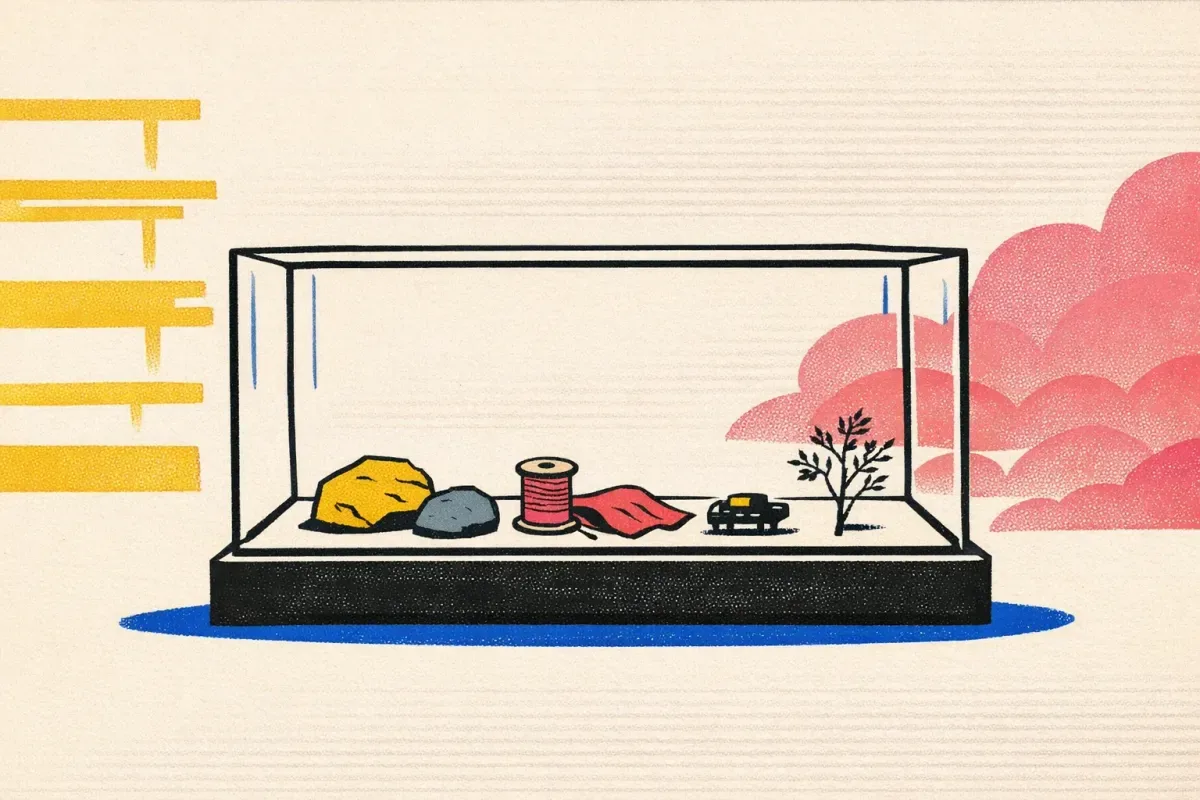
In Smith’s hands, however, the sorting itself becomes unstable. The hybrid figures gather materials that our language otherwise keeps separate: nature and waste, craft and technology, body and object. Some are wrapped in 3D-knitted textiles developed by the artist. Here knitting and technology meet in the same figure. The figure therefore becomes not a simple image of the human, but an argument against the idea of a pure, bounded body.
The same happens in Radio Levende from 2026, created together with composer and musician Simon Brinck. The sound work consists of five-channel audio files in multiple layers with music, field recordings, newly written songs and excerpts from research conversations with scientists. Parts of the work are played in the first five rooms, while the layers come together in a specially designed listening room in the sixth.
The researchers’ voices could easily have become the answer key that came in and tidied up after the art. But the conversations with scientists are part of a work that also contains song, field recordings and music. The descriptions of research do not disappear, but they become audible as one way of approaching life. The radio format turns knowledge into something that circulates between voices, rather than a judge blowing the whistle on the experiment.
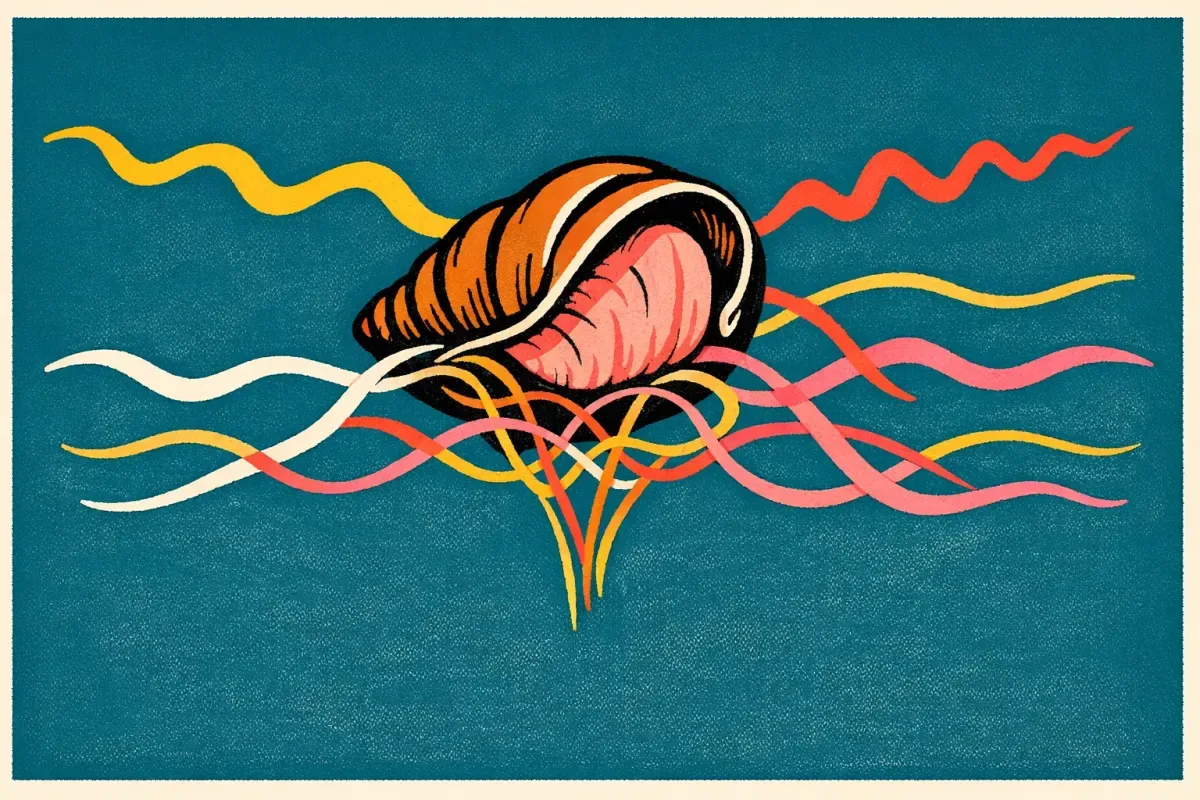
There is also a risk in this mixture. Contemporary art can make natural science function as borrowed prestige, where words like research and artificial life create gravity without necessarily creating insight. Levende does, however, have a concrete safeguard against that trap: for me, its strength lies in the connection between the materials, the organisation of the rooms and the layers of sound. The abstract has to have a body.
The text work Hjertet tror, det skal pumpe for evigt can be read in the exhibition and taken home. In this way, part of Levende leaves the art hall’s archive and continues among the reader’s own things. That fits the exhibition’s thesis exactly. The boundary between the living and the artificial does not exist only in the laboratory or in science fiction. It is produced every day, when we decide which bodies, materials and voices count as natural.
Sorting is itself a human invention
Levende gives our categories no peace. When waste can become part of a figure, research conversations can turn into musical material, and digital knitting can resemble care, the artificial is no longer life’s opposite. It becomes part of the conditions under which we already live. The question is therefore less whether we can manufacture life than why we are still so determined to keep the manufactured out of the definition.
En stjerne
To stjerner
Tre stjerner
Fire stjerner
Fem stjerner
Seks stjerner