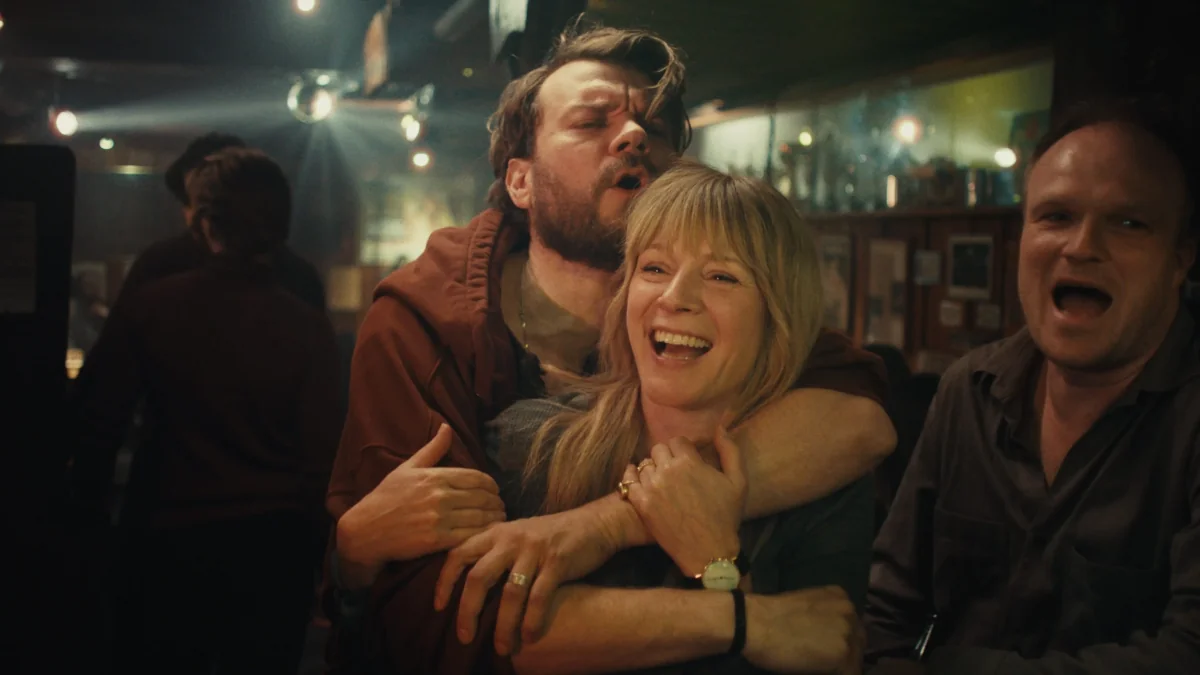
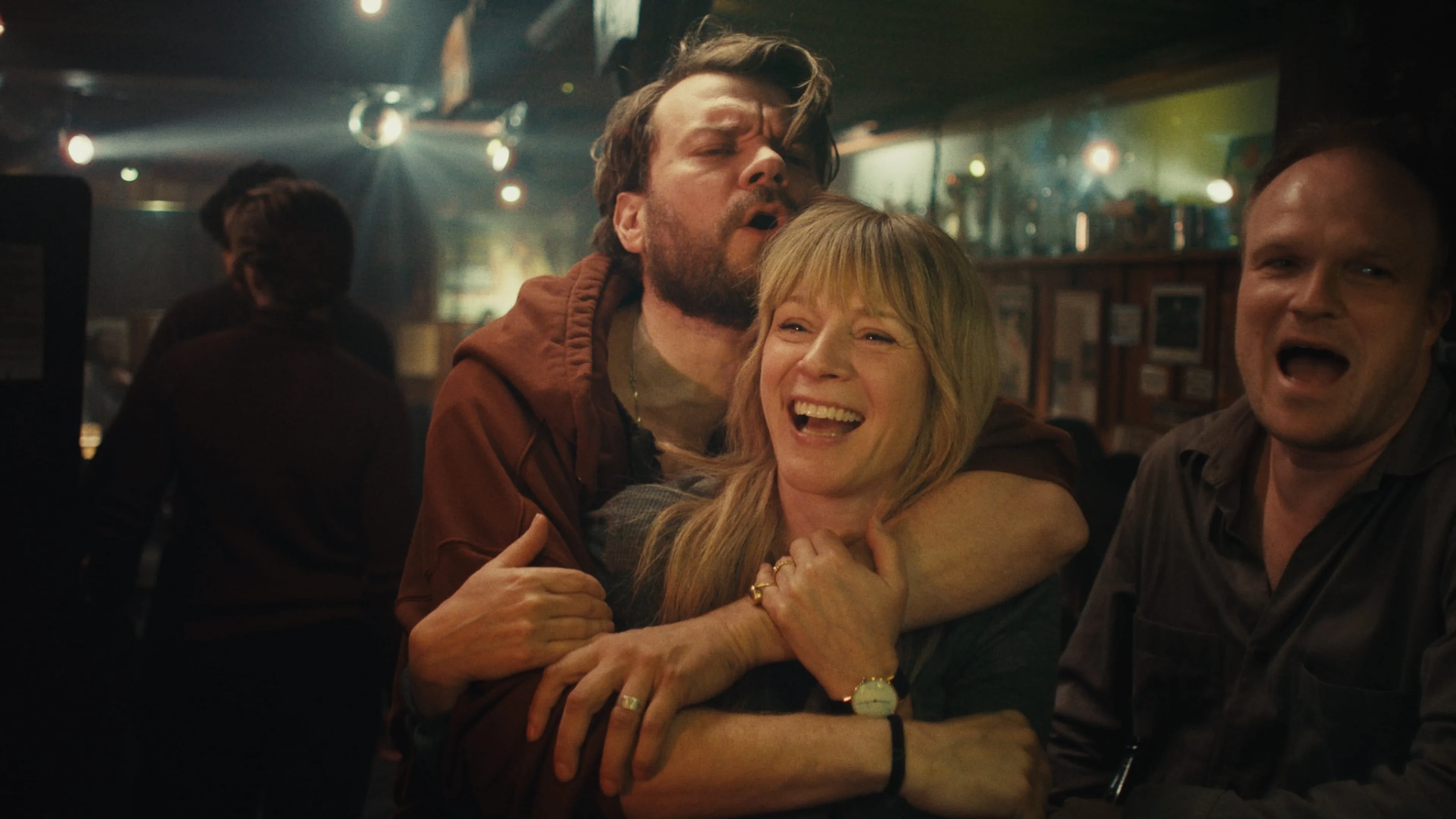
When the unsaid makes the most noise – a sibling drama that cuts right to the bone. Some series want to entertain. And then there are the ones that want something from you. The Good Mood firmly belongs in the second camp. It creeps under your skin and stays there long after the credits roll. Not because it shouts, but because it speaks quietly, precisely and uncompromisingly about family, guilt, addiction and the roles we never quite manage to shed – no matter how old we get. With Iben Hjejle and Pilou Asbæk in two richly layered lead performances, the series delivers some of the most complete and moving Danish television I’ve seen in a long time.
One star
Two stars
Three stars
Four stars
Five stars
Disclaimer: Apropos Magazine received access or a review copy. As always, we share our own impressions — unfiltered.
Six stars
Sibling bonds that tighten – and slowly suffocate
In The Good Mood, we follow the siblings Eva and Mads, who on the surface live functional, urban lives, but beneath the façade are tangled up in a dysfunctional pattern they have never quite managed to break. They live right next door to each other in an apartment building and drift in and out of one another’s homes as if they were still children, free to invade each other’s rooms. At first it seems charming, almost affectionate – but it quickly becomes clear that this lack of boundaries is anything but innocent. Much to the irritation of their respective families, Eva and Mads remain deeply dependent on each other, both emotionally and practically.
Older sister Eva has taken over their late father’s architecture firm, and outwardly everything is running by the book. She is successful, capable and efficient – the backbone of the family and the one who always takes responsibility. But that role comes at a price. Eva is trapped in a constant balancing act, trying to hold together her slightly neurotic mother, her chaotic younger brother and her own nuclear family, which is slowly falling apart under the weight of her absence and inner unrest.
Mads is Eva’s opposite – and at the same time her mirror image. He is a schoolteacher, idealistic, passionate and deeply self-absorbed. A man who constantly feels overlooked, especially by their father, and who hungers for recognition and attention. Mads is also an addict. Not necessarily in the classic, clear-cut sense, but addicted to parties, drugs, alcohol and chaos. He is the kind of person who can be charming, funny and intense – right up until he isn’t anymore. His addiction drives him to systematically put everyone and everything around him last, while Eva keeps picking up the pieces again and again.
It is in this tension that the series truly comes into its own.
Acting of the highest order – when the looks say more than words
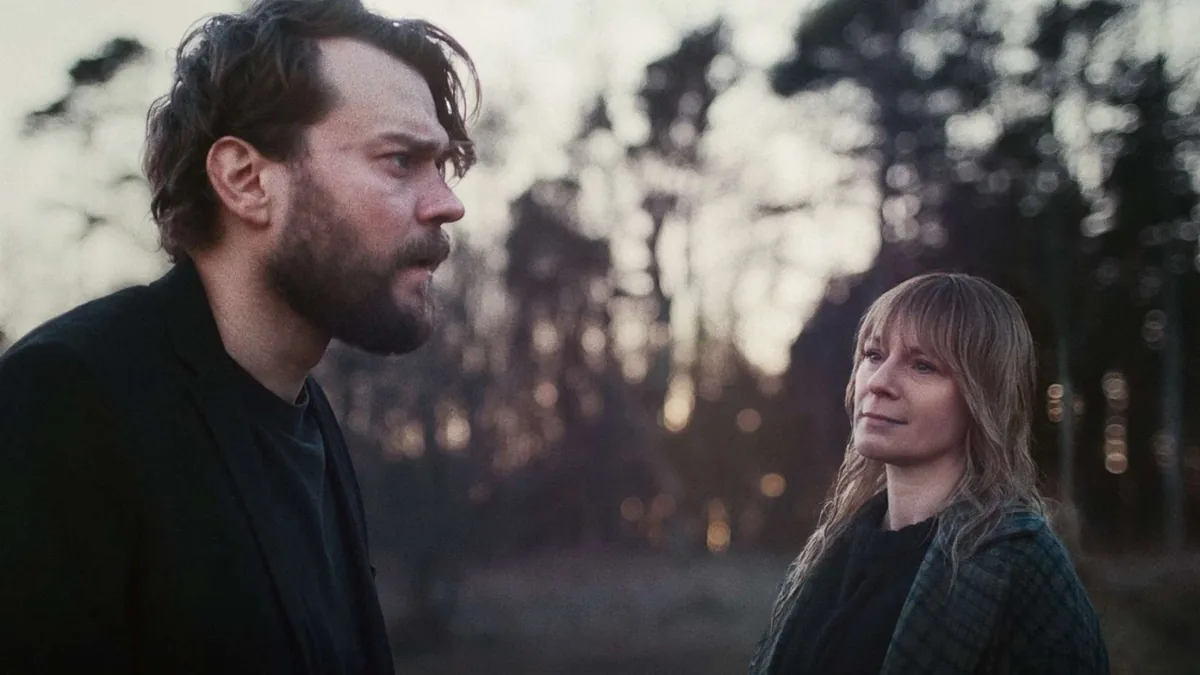
One of the most striking things about The Good Mood is how little it explains and how much it shows. Both lead performances are extremely convincing. Iben Hjejle delivers one of her strongest performances in recent years as Eva – controlled, inward-looking and constantly on the verge of collapse. She doesn’t play Eva’s pain big; she lets it seep out through tiny cracks: a tense smile, a wandering glance, a sigh that lingers a little too long in the air.
Pilou Asbæk is every bit as strong as Mads. He balances the role of the self-destructive younger brother with rare precision, making you feel sympathy, irritation and helplessness all at once. Mads is not a caricature of an addict – he is a person you recognise. Asbæk manages to make Mads both repellent and magnetic, often in the same scene. It is a performance that demands courage and discipline, and it lands all the way through. It is very clear that Asbæk visited addiction treatment centres as part of his preparation. If you have had addicts close to you, there are many recognisable patterns here, and Asbæk portrays them insanely well.
The series is also enriched by strong supporting characters. Among others, Thomas Hwan and Rasmus Botoft both deliver solid, nuanced performances that add depth and weight without stealing focus. There is a remarkable economy in the character work – no figure feels unnecessary, and no scene wasted. The acting lifts the series without the need for long stretches of dialogue. You can almost sense the less-than-good mood in the living room, even when nobody is speaking.
Few devices – maximum effect
The Good Mood is a study in restraint. The dialogue is sparse, but what is said lingers. There are no over-explanations, no didactic lines designed to make sure everyone is keeping up. The series trusts its audience – and that trust is rewarded.
The music is teasing and well chosen, but never too much. It sits like a discreet layer beneath the scenes and supports the mood without manipulating the emotions. The same goes for the visual style, which is subdued, realistic and consistent. The camera often lingers on faces and rooms where nothing is being said. It is in the pauses that the series truly lives.
At a time when many drama series suffer from an almost compulsive urge to explain, enlarge and prolong, it is refreshing to see a series that dares to cut to the core. Each episode runs for around 30 minutes – and that is a gift. There are no unnecessary side plots, no filler scenes that only exist to reach a runtime of 50–60 minutes. The series says what it wants to say, and stops while it is strongest. Many other productions could learn a great deal from that.
A series with something on its mind – and the courage to show it
What makes The Good Mood special is not just its technical quality or strong acting. It is its human precision. The series is about the roles we are assigned in the family – and how hard they are to shake. About responsibility that turns into burden. About love that slowly transforms into codependency. And about the bad atmosphere that arises when no one dares say what is actually at stake.
Eva and Mads are bound together by the past, by the grief over their father and by a pattern in which Eva always rescues and Mads always destroys. The series does not romanticise that dynamic – it exposes it. That is both painful and recognisable, and precisely why it hits so hard.
There is a maturity in the series’ gaze. No one is simply good or bad. Everyone acts from their own wounds and needs. That makes The Good Mood feel real – even when it is at its most uncomfortable.
A wonderful – and important – addition to TV 2
That TV 2 has bought the rights to the series from Viaplay, which originally intended it for an international audience, is only to the series’ benefit. In a lineup filled with safe crowd-pleasers like Stormester and Vild Med Dans, The Good Mood is a welcome contrast. It represents Danish drama at its most ambitious, uncompromising and relevant.
It is a series that alone can justify the subscription price. Not because it is easy or cosy – but because it matters. It asks something of you as a viewer, but gives a great deal in return. This is television that stays with you, and invites reflection rather than quick consumption.
Conclusion
The Good Mood is some of the best Danish television I’ve seen in a long time. It is gripping, moving and uncomfortably precise in its portrayal of family and addiction. With few devices, strong acting and impressive narrative economy, the series delivers an intense, complete drama that deserves both attention and recognition.
This is not feel-good TV. But it is TV that feels. And sometimes that is exactly what is needed.
En stjerne
To stjerner
Tre stjerner
Fire stjerner
Fem stjerner
Seks stjerner