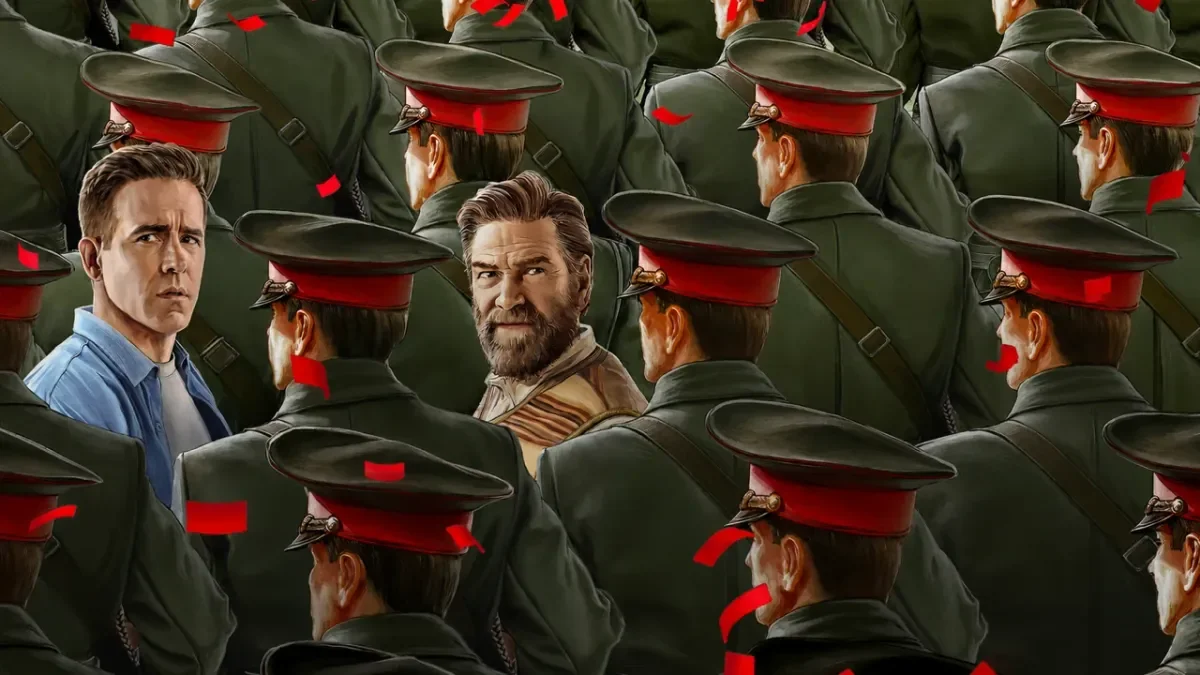
Can a superhero film still feel like a film, and not just a franchise that’s been given too much electricity? Spider-Man: A Brand New Day at least tries to answer yes. Tom Holland returns as Peter Parker, and after years of multiverses, noise, and digital confetti, it’s almost a relief that the series once again dares to be small enough to feel human.
One star
Two stars
Three stars
Four stars
Five stars
Disclaimer: Apropos Magazine received access or a review copy. As always, we share our own impressions — unfiltered.
Six stars
The first thing you notice is not a bang, but a peeling away. Something has been stripped off. The endless Marvel superstructure, the knowing nods to everything and everyone, that slightly weary sense that the universe must always expand, as if it were a company with growth targets rather than a story. Here, Peter Parker stands more alone, and it suits the series. Not because loneliness is dramatic enough on its own to sell popcorn, but because it gives Tom Holland something to play against. And he does it surprisingly well.
This is now the fourth Spider-Man film with Holland in the lead and his seventh appearance as the swinging, conscience-stricken teenager who has gradually become an adult without ever quite being allowed to own it. Peter Parker is no longer the boy fumbling forward with charm and awkward energy; he is a young man carrying the consequences of his choices, and you can feel that in the way Holland plays him. His gaze is heavier here. His body language less light. It is still Spider-Man, but now with a faint pressure of reality beneath the mask. That kind of thing makes a difference, even in a universe where people can be forgotten by the world, but not by the script.
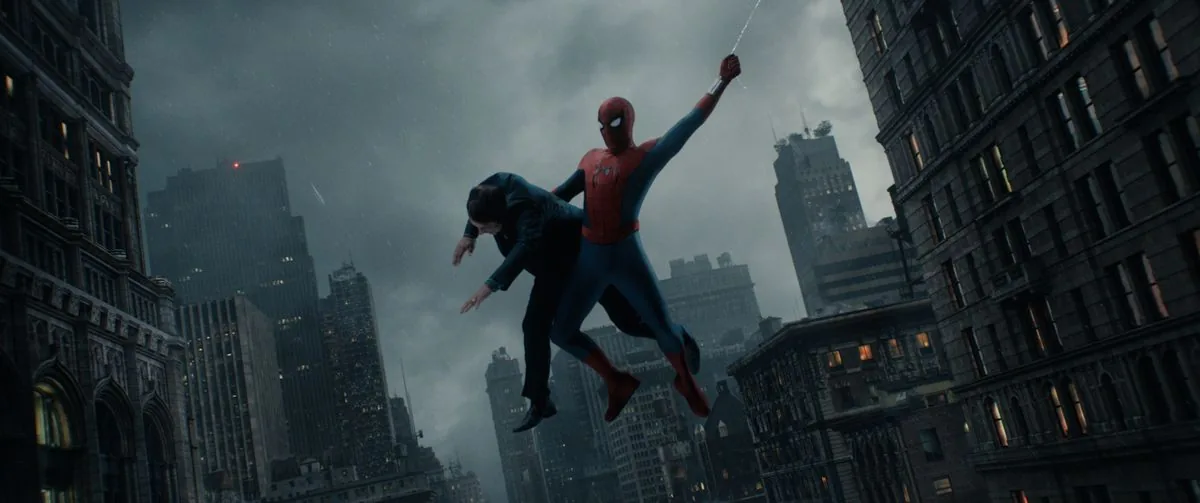
And yes, that is precisely the premise that gives the film its emotional anchor: the world has forgotten Peter Parker, but Peter Parker has not forgotten the world. It’s a fairly simple idea, but also one of the more elegant ones in Marvel’s recent catalogue. Instead of making everything about cosmic threats and parallel dimensions, the film turns its gaze toward the close-up. Friendships that no longer exist in practice. A life that goes on without him. That kind of pain is less noisy than an explosion, but often more persistent. It settles into the body like a bad night’s sleep and a cup of coffee that never quite gets warm.
That is also where the film finds its tone. There is still action, of course. Marvel probably has no intention of letting a Spider-Man series philosophise itself entirely out of the frame with its hands in its pockets. But the action is more tasteful than flashy. It doesn’t keep trying to convince us of its own importance. It is allowed to support the story instead of drowning it out. That is actually rather refreshing. You can almost hear a meeting room somewhere backstage saying: “Do we really not need three extra portals and a cameo from someone who shouldn’t be here?” And someone answers — thankfully — no.
That doesn’t mean the film is without problems. It will probably split audiences in two camps. Those who miss more noise, bigger stakes, and more of the usual Marvel escalation. And those who, like yours truly, are perfectly happy for a superhero film to have enough air to breathe. I’m firmly in the latter group. Not because smaller is automatically better, but because this series actually understands that suspense doesn’t only come from what explodes. It can also come from what is missing. From an emptiness. From a person trying to be something for others while slowly coming apart himself.
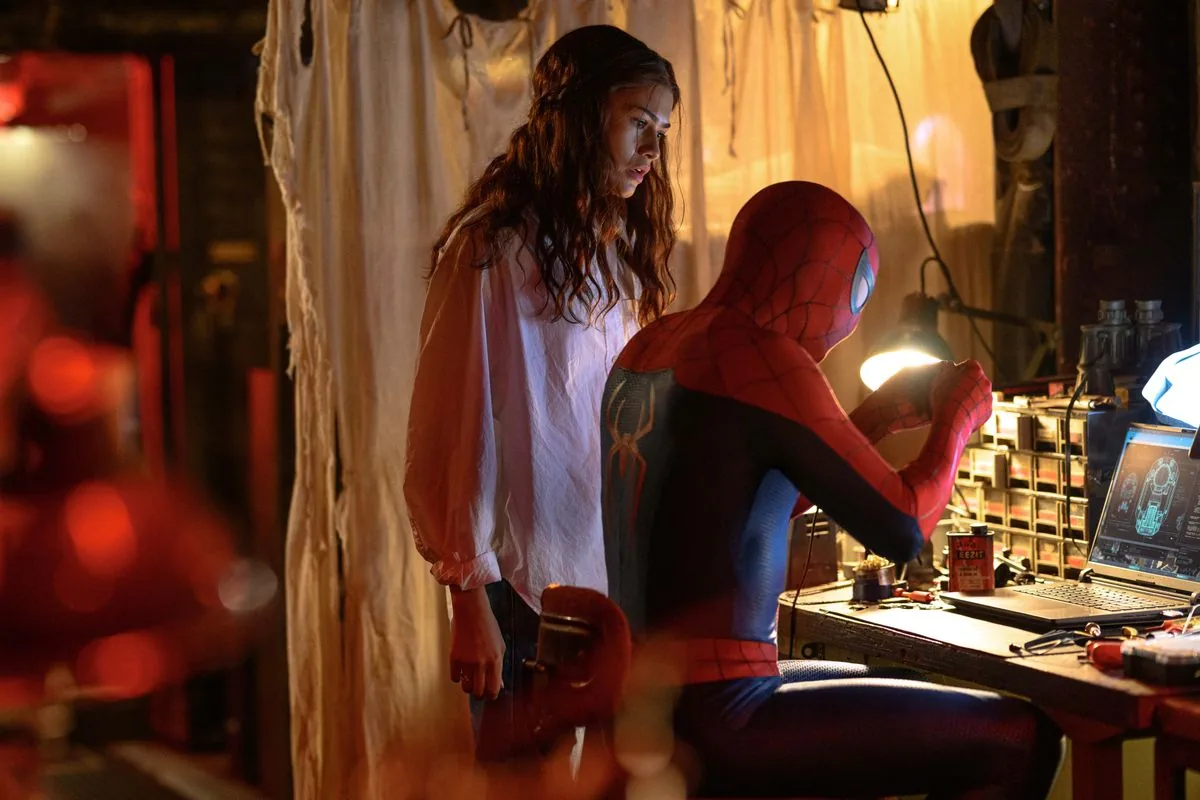
Tom Holland is the film’s strongest card. That may not be a sensational claim, since he is, well... Spider-Man, but he is in almost every scene. He is excellent in the quiet moments, where Peter Parker looks like someone who has slept badly for months. And he is excellent when the mask goes on and the body suddenly has to speak faster than the thoughts. That balance is something not every superhero actor manages. Some play the hero with their chest out and their eyes empty. Holland plays a boy who is still trying to figure out whether he even deserves to be in the room. That is more interesting. Also more human. And humanity is, beneath all the CGI, still the only currency that truly holds.
At the same time, it’s worth saying that the film is not necessarily the best Spider-Man story we’ve had with Holland. The previous film may have had more on its mind and more dramatic material to work with. But A Brand New Day points in a direction that feels healthy. It dares to be smaller. It dares to be local. It dares to let New York be New York and not just a backdrop for yet another digital war over the existence of the world. It is almost old-fashioned. Almost brave.

There is also that small, almost childlike joy of being able to hope again. Not for a revolution. Not for Marvel suddenly becoming French existentialism with laser fire. But for the possibility that the studio may have understood that audiences can also feel quality when it doesn’t scream. (That alone earns an extra star in my book.) Spider-Man: A Brand New Day is not a triumph that knocks everything over. It is something more modest and therefore perhaps more valuable: a sign that superhero films can still be made with pulse, direction, and a little soul. That is not nothing. Quite the opposite.
It also helps that the film seems less in love with its own mythology. There isn’t the same urge to explain, explain, and explain again, as if the audience were sitting there with exam nerves and had to sit an oral test in Marvel history. Here, the images are allowed to do the work. Peter in a room where no one knows his name. Peter moving through the city, where he is no longer the center of anything, but still insists on being useful. Those kinds of scenes are small, but they carry weight. They give the film a grounding that many recent Marvel productions have lacked, because they’ve been too busy trying to be bigger than their own shadows.
You can tell the film has thought about its own weight. It doesn’t want to be a museum of past triumphs, and it doesn’t want to be a desperate attempt to reinvent everything at once. It just wants to be good enough. That sounds modest, almost suspiciously modest, but in Marvel-land it is practically a revolution. When you’ve seen enough films and series that behave as if they were written by an algorithm with access to a colour filter, you become grateful for something that dares to stand still long enough for you to feel it. Imagine that. It doesn’t have to be so god damn big and violent. Less is more.
Spider-Man: A Brand New Day is therefore not just another chapter in a tired franchise. It is a reminder that the superhero genre can still find its dignity when it stops shouting so loudly. Tom Holland carries most of the film with a mix of exhaustion, warmth, and that particular Peter Parker unease that has always made him more interesting than most of his caped colleagues. And even though I still think the previous film had a little more to offer, I’m glad about the direction here. It feels more honest. More measured. More alive.
Afterthought: Maybe the most radical thing a superhero film can do in 2026 is let a man save the world without also trying to explain the entire cosmos with multiverse this and multiverse that. If Marvel can hold on to that thought, there is still hope.
Until Avengers: Doomsday lands in December, I’ll just enjoy a new chapter in the MCU that I absolutely do not hate.
Spider-Man: A Brand New Day is in Danish cinemas on July 29, 2026
En stjerne
To stjerner
Tre stjerner
Fire stjerner
Fem stjerner
Seks stjerner