Mortal Kombat has always lived off a single, almost childlike promise: that violence can be choreographed with style and self-irony. It’s a legacy that stretches back to the games and to the 1995 film, directed by Paul W. S. Anderson, and on to the 2021 movie, which at least had enough off-kilter energy to keep you from falling asleep straight away. So there was, in fact, a little anticipation for the sequel. That remaining scrap, frankly, was not treated kindly.
One star
Two stars
Three stars
Four stars
Five stars
Disclaimer: Apropos Magazine received access or a review copy. As always, we share our own impressions — unfiltered.
Six stars
The most depressing thing about Mortal Kombat 2 is not that it’s bad. Bad films can have character, nerve, a little chaos in their blood. The most depressing thing is that everything feels calculated and too stupid. And yet nothing lands.
There’s a particular kind of disappointment in watching a series or franchise you loved as a child — and still want to love — fall apart in your hands. It’s not just a matter of taste, but of trust. You remember the 1995 film for its kitsch and for its willingness to step right out onto the thin ice and make a racket while doing it. You remember the 2021 version for its dumb, but functional energy, its small flashes of humour and its willingness to let the universe be a little ridiculous. Here, that willingness has been reduced to a kind of corporate reheating. As if someone tried to distil an arcade-game experience down to Excel.
The dialogue is not merely predictable; it is almost proud of its own transparency. The lines arrive with the kind of weight you normally associate with protein powder ads or municipal consultation responses. You can feel the punchlines before they land, and that is rarely a good sign. When a series starts to feel like an exercise in guessing the next line, you are already deep in that cultural waiting-room zone where time takes on a metallic taste. Several times I found myself thinking that someone should have had the courage to write dialogue that actually surprised. But courage is not always the first thing studios order.

The story is so paper-thin you can almost hear it rustle. It exists mostly as an excuse to move characters from one fight to the next, but even those transitions lack pulse. There’s no real dramaturgy, no sense that anything is at stake beyond whether the audience can be bothered to stay seated. So you do. Out of loyalty, mostly. Out of professional curiosity, if you want to be generous. Out of sheer stubbornness, if you’re me...
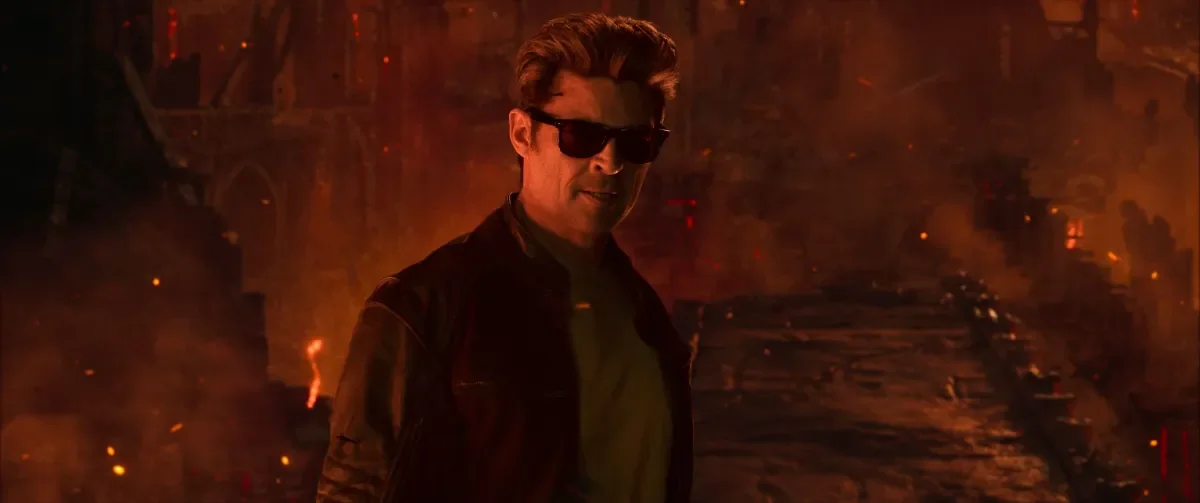
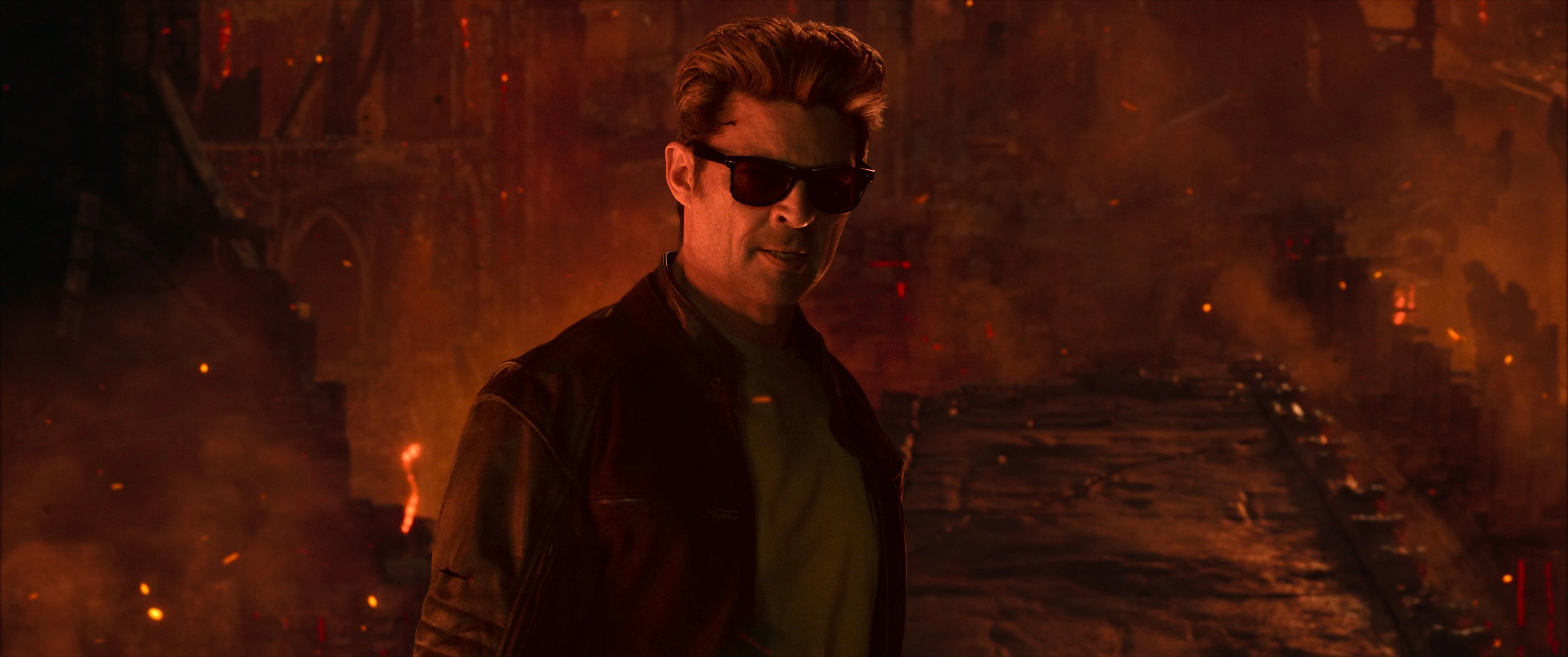
Karl Urban is occasionally allowed to poke his head through, as we know him. He has a face that can carry both irony and fatigue without looking like a PowerPoint presentation. The problem is that the series around him doesn’t really know what to do with that kind of energy. Urban is not enough to save a ship that is already lying keel-up. The film’s most positive experience is the return of Kano (Josh Lawson), who is at times hysterically funny, but also so funny that it falls flat when all the other characters are trying to be deadly serious...
The fight scenes ought to be the series’ big selling point, and that is perhaps why it hurts extra when they feel so clunky. There is no necessary rhythm in the blows, no little choreographic precision that can make violence look like anything other than digital noise with joint models. You see people hitting each other, but you don’t really feel it. It’s violence without weight, even though they’ve tried to make it with as little CGI as possible in 2026. And when a Mortal Kombat series loses its weight, it loses its soul.
This is also where you notice how much the film lacks a sense of tempo. Not just in the action, but in its entire way of being. It wants to present itself as a big, dark, mythological machine, like the one we saw in the games, but it misses completely. There is no sense of build, no pleasure in the pauses, no feeling that silence can be more threatening than yet another explosion. It is almost an art form in itself to make something so physical feel so absent.

It doesn’t help either that the series seems trapped between two impulses that never quite meet. On the one hand, it wants to stay true to the game’s bloody, over-the-top universe, where the characters are larger than life and death looks mostly like a temporary pause. On the other hand, it wants to be a serious franchise with emotional conflicts, destiny and inherited trauma. It doesn’t come close to pulling off the latter. In principle, it could work. There are, after all, good films and series that balance the absurd and the serious. But here the balance feels more like a collision. One moment we’re supposed to take the mythology seriously; the next we’re meant to laugh at a line that sounds like something an algorithm would write on a bad day.
There is an almost touching lack of self-irony in the project. And I say that with a certain tenderness, because Mortal Kombat ought to be exactly the kind of place where you dare to laugh a little at your own bloodbath. It’s not Shakespeare, and it’s not meant to be. It’s a world of tournaments, finishing moves and names that sound like something invented in a teenage bedroom with too much energy and too little sleep. When you take all of that so seriously that it turns rigid, you lose the spark that could have made it all bearable. Or even fun. Imagine if someone had said: “Yes, this is stupid, but let’s do it with style.” Instead, we get something that feels like a project they didn’t quite believe in themselves.
Still, there is one old grudge match between two friends that briefly gives the film a pulse you can actually feel. Here, there is a story in the blows, a small echo of past and betrayal that gives the violence a human edge. It’s not big. It’s not elegant. But it’s alive. And that is precisely why the rest becomes so sad, because there you can see what the series could have been if someone had dared to let relationships matter more than fan service and gloomy smoke signals. You do have to look past the CGI hell surrounding the scene, but it worked okay.

That may be the most irritating thing about the whole affair: you can glimpse a better version of the film. Not a brilliant one, just a more honest one. A version with a little more devil-may-care spirit, a little more timing, a little more desire to play with its own material. Instead, you’re left with an experience that feels like being invited to a party and then placed in the kitchen with a lukewarm soda and a conversation about spreadsheets. You can stay there. You can even survive it. But you don’t go home thinking: I want to experience that again.
I’d like to write something gentler, because there is always a small cultural politeness in looking for the positive. But sometimes it’s simply necessary to say that something is a botch. Not as a dramatic doomsday pronouncement. More as a tired observation after sitting through a series and feeling mentally parked in an empty shopping centre after closing time. Mortal Kombat 2 tries to be a bang, but ends up as a dud. Unfortunately.
Mortal Kombat 2 can be streamed on HBO Max now.
En stjerne
To stjerner
Tre stjerner
Fire stjerner
Fem stjerner
Seks stjerner