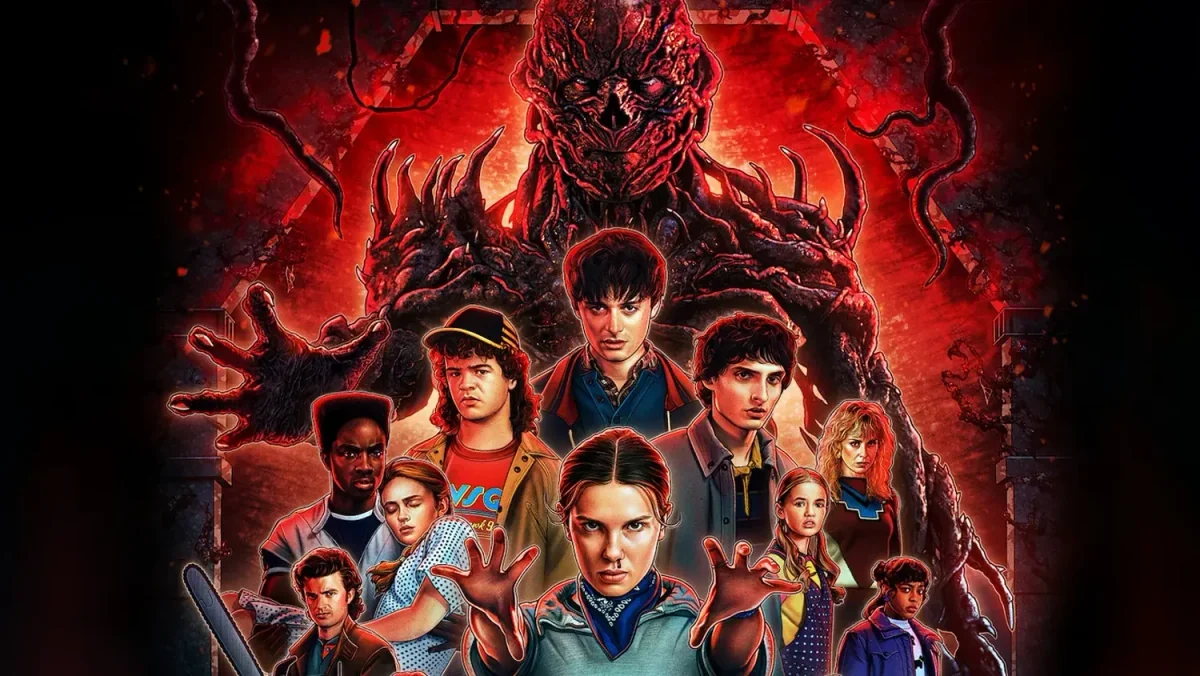

After more than three years of waiting, Stranger Things returns with its fifth and final season. A finale that promises answers, catharsis, and one last showdown in Hawkins — and delivers on scale, effects, and fan service. But the bigger the series has become, the harder it has been for it to hold on to its core. Season 5 is an ambitious, often entertaining, but also messy farewell to a universe that once thrived on mystery, simplicity, and genuine dread — and now struggles under the weight of its own success.
One star
Two stars
Three stars
Four stars
Five stars
Disclaimer: Apropos Magazine received access or a review copy. As always, we share our own impressions — unfiltered.
Six stars
The fifth and final season of Stranger Things is not just another season. It is a cultural full stop. A farewell to a series that, for nearly a decade, has served as a shared point of reference, a nostalgic comfort zone, and a blockbuster with a child’s heart. And you can feel that from the very first minute: this is not a series that merely wants to entertain. It wants to conclude. And it wants to do it properly.
The season once again unfolds in Hawkins and in the increasingly porous borderland between our world and The Upside Down. Chronologically, we are one year on from the previous season, and the mood is correspondingly darker, more serious. Hawkins is no longer just a small American town — it is a wound. Military presence, secret operations, and a latent paranoia have replaced the 1980s idyll. Our heroes are trying to live something like normal lives, but the night — and Vecna — won’t allow it.
It is ambitious. Maybe too ambitious. The Duffer brothers have clearly wanted to gather everything: every thread, every theme, every emotion. And that is where the season’s biggest weakness emerges. When everything has to matter, some things lose their weight. The plots are at times unnecessarily complex, the dialogue explanatory, almost didactic. The series has less faith that the audience can connect the dots on its own, and that costs it tension. What used to be suggested is now explained.
Still — and this matters — I was never checking the time. I was invested. Not out of loyal duty, but because Stranger Things still does something fundamentally right: it makes you care about its characters. Even when they say things that are a little too obvious, or move through storylines that could have been tighter, there is a human warmth that carries the series forward.
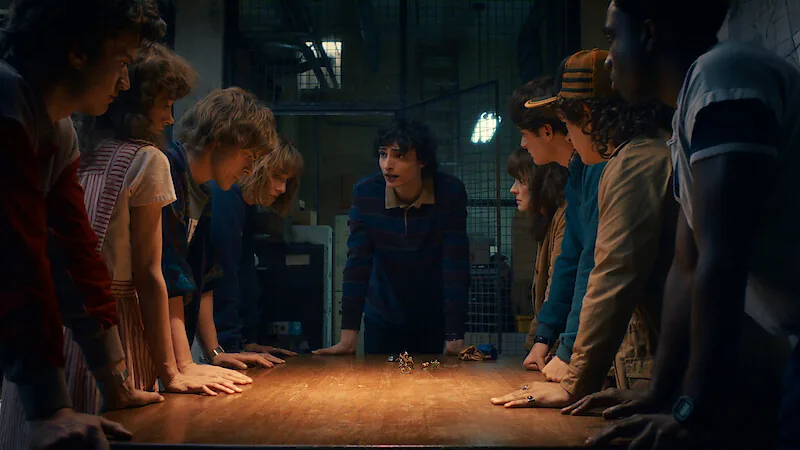
This is especially clear in the handling of the central characters. There are emotional peaks that work precisely because we have followed these people for so long. A major character moment for Will in episode 7 is admittedly overexplained — what everyone already knows is spelled out almost Hollywood-thick — but the feeling behind it is real. The problem is not the intention, but the dosage.
The introduction of new layers in the mythology, including “The Abyss,” points in the same direction. The idea is strong and visually compelling, but the execution feels a bit like a universe growing faster than the story can carry. You sense a desire to match today’s big franchises in scale and complexity. The result is that the season sometimes becomes overcrowded. Not messy all the time — but pressured.
On the other hand, the series hits the mark when it remembers what it is made of. The nostalgic elements are still seductive. Small callbacks to earlier seasons reward loyal viewers, and the Hawkins universe still feels alive. The 1980s tone, the music, the pace — everything that made the series iconic — is intact. Even supporting characters and temporary antagonists, who never quite gain real narrative weight, work as pieces in a larger emotional picture.
The finale is, as one would hope, grand. Long, intense, and clearly designed as the series’ climax. The battle against Vecna and the Mind Flayer delivers both visually and dramatically, and although it is obvious that much has been built toward exactly this, the tension holds. The epilogue is moving without being cloying, and the final scene — centered around D&D — lands on the series’ original nerve: community, imagination, and childlike seriousness.
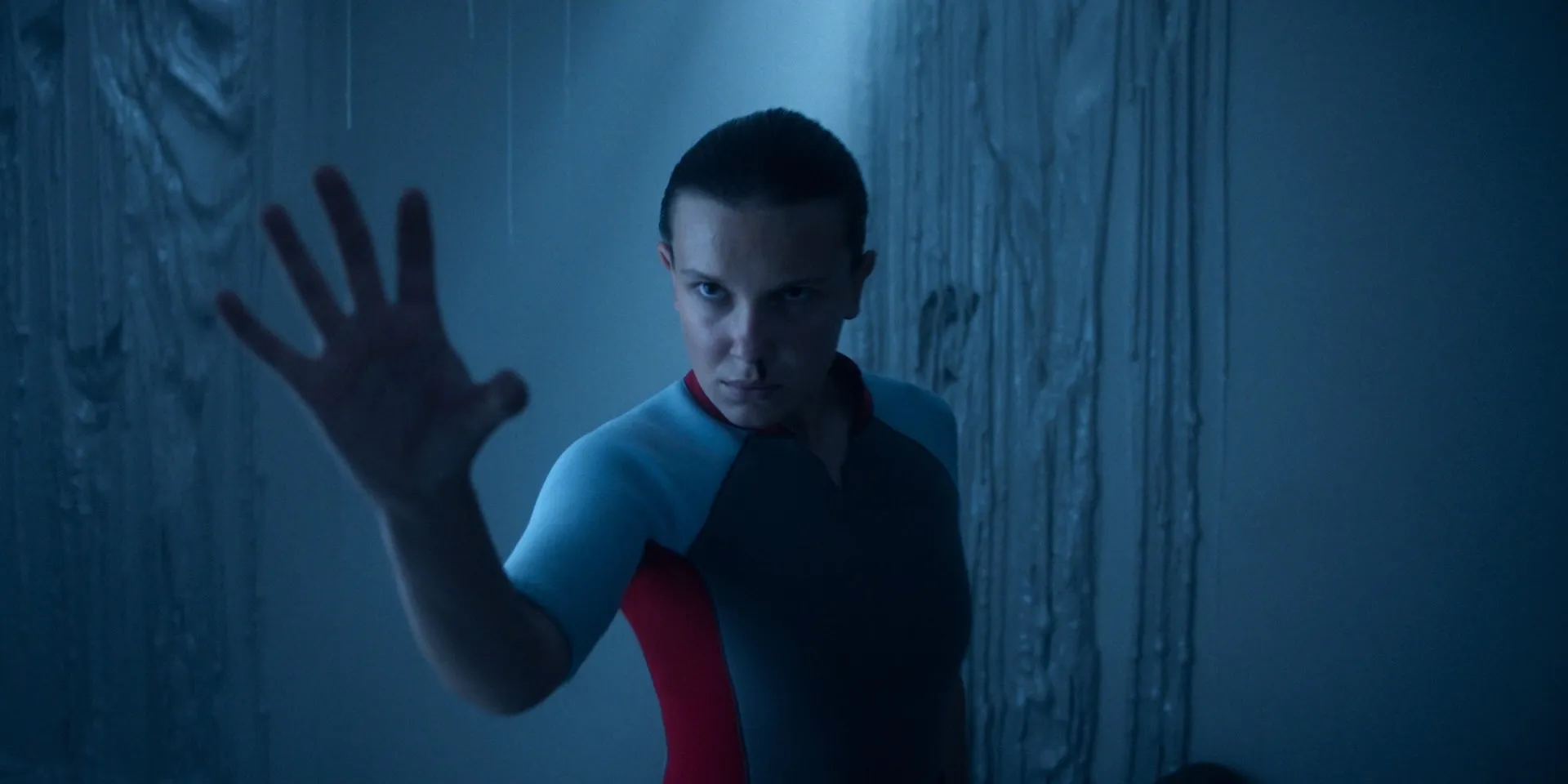
When compared with season 1, the difference remains stark. The first season was simple, tight, and scary in a way that got under your skin. Over time, the horror has become more spectacular and less intimate. That is not necessarily wrong — just different. And that is also where the season’s paradox lies: it is at once too big and still deeply charming.
Stranger Things season 5 suffers under its own ambition, but it does not break beneath it. It stumbles, yes — but it does not fall. The entertainment value is high, the emotional payoffs are real, and as an ending it feels honest. I did not feel cheated. And in a series of this size, that in itself is an achievement.
The Duffer brothers deserve credit for ending it while interest is still there. Not everything works. But enough does.
In reality…
Maybe it is not the series that has become too big. Maybe it is our expectation of what a finale should be able to do that has grown beyond reason. We want catharsis and mystery at the same time, answers and resonance, a full stop and space. Few stories can carry all of that — and Stranger Things at least tries honestly.
I am not left with a sense of loss. Rather, with a quiet acceptance that some things have to be said too loudly for others to be allowed to be felt. Along the way, the series loses some of its original tightness, but it keeps the most important promise: it takes its characters seriously and lets us say goodbye. Not perfect. But dignified.
En stjerne
To stjerner
Tre stjerner
Fire stjerner
Fem stjerner
Seks stjerner