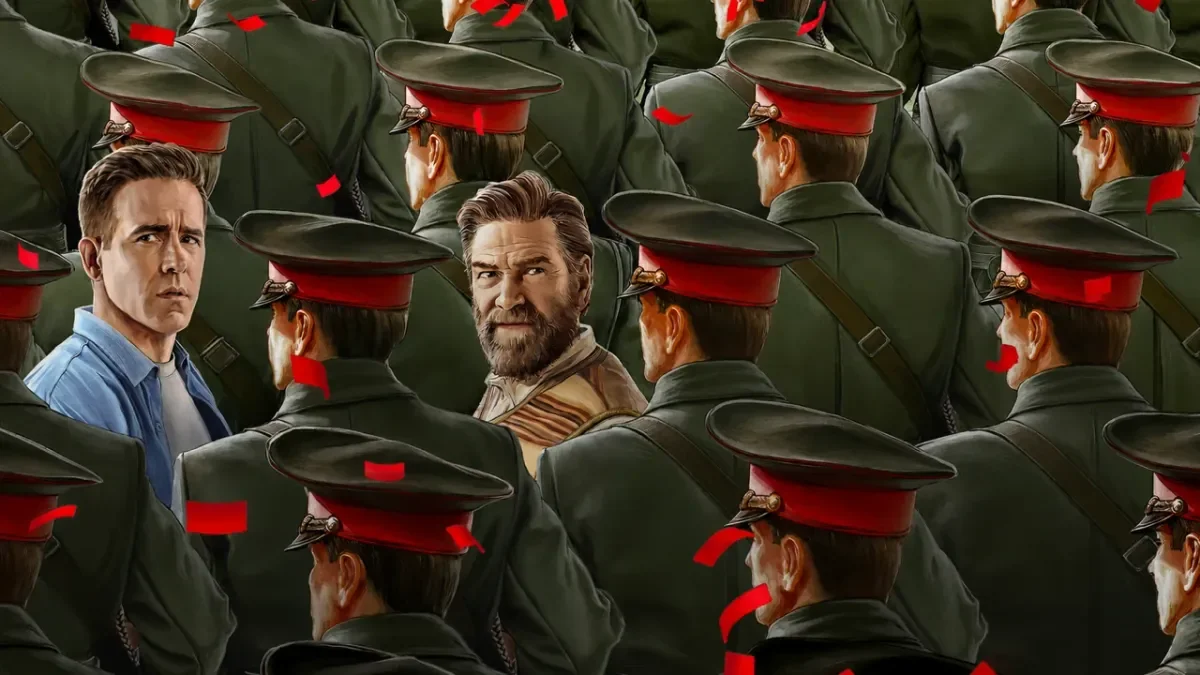
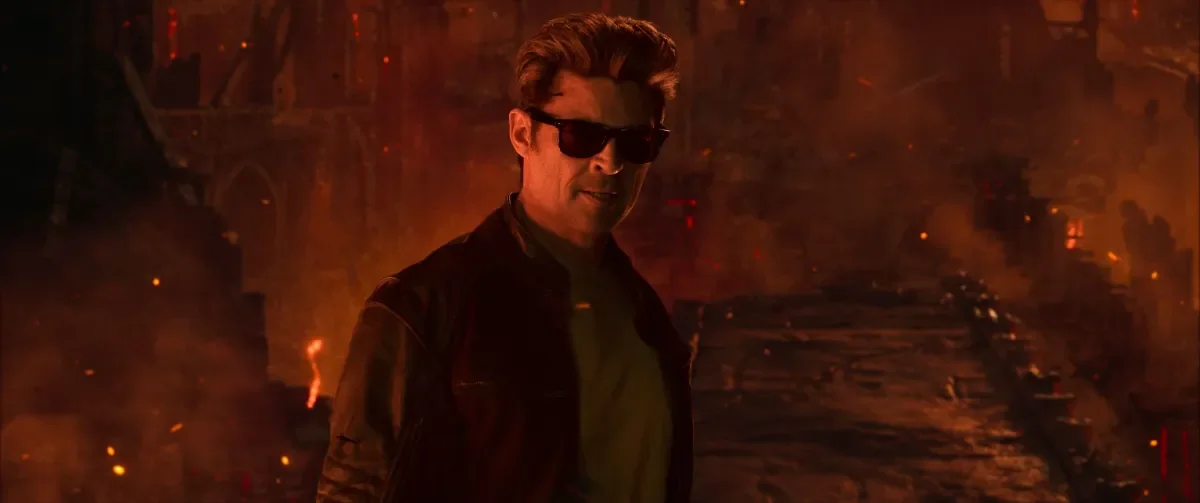
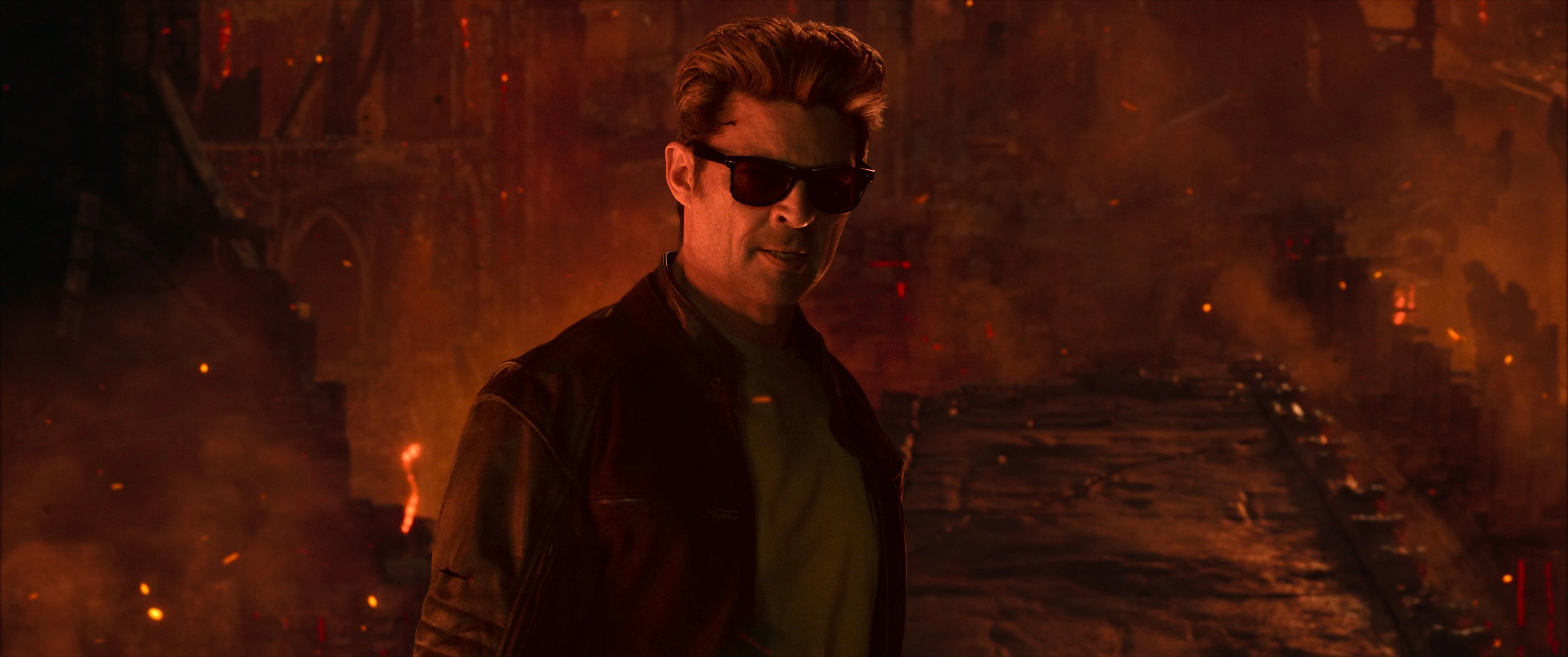
A group of American Rangers suddenly finds itself facing an enemy that doesn’t play by the usual rules of war: a gigantic, seemingly unstoppable war machine. In the middle of the chaos, a young soldier must try to survive a battle that looks lost before it has even begun. But can human beings really take on a 30-meter-tall robot?
One star
Two stars
Three stars
Four stars
Five stars
Disclaimer: Apropos Magazine received access or a review copy. As always, we share our own impressions — unfiltered.
Six stars
It seems like a classic tale of American Rangers. The kind that makes Americans puff out their chests with pride. The plot takes shape when an otherworldly war machine appears, and it is... angry. Apparently, you should not provoke it by blowing up some C4 against it; that is just not a good idea. And so begins a nerve-racking escape from this giant machine, which seems to have no weaknesses at all. It is David versus Goliath in the future — if Goliath were 25 meters tall, made of titanium, and armed with an arsenal that would make even a small NATO stockpile jealous.
The film is packed to the rafters with visual effects — and it actually does that quite well. There is no shortage of explosions, projectiles, or digital sparks. Everything barrels along at a pace where you can almost hear the CGI budget working overtime. Alan Ritchson is good and relatively convincing in his interpretation of the human war machine. He has just the right mix of physical heft and stoic Ranger attitude, which makes him a fitting lead in this action-heavy story.
The plot? Predictably thin. The kind you’ve seen about 1,000 times before. Paper-thin and fairly predictable — but that is not really where the film is trying to win you over. The dialogue? Even thinner. At times, you almost get the feeling it is mostly there to give the audience a breather between explosions. You could almost have done without it, because it adds very little to the whole.
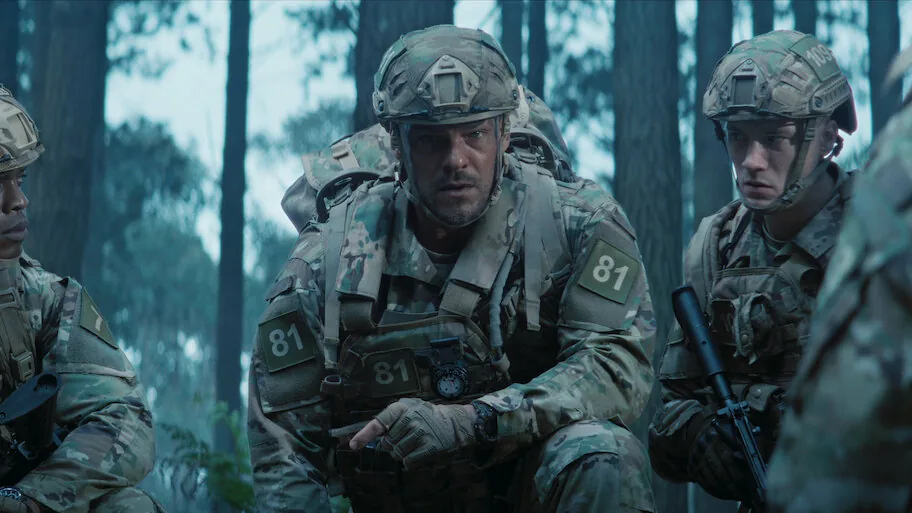
This is pure bang-bang entertainment, and not much more. If you are in the right mood, the popcorn is perfect, and your drink of choice is cold, you may well be nicely entertained here. I actually was. But let’s not confuse that with great cinema. We are in the category where impressive visual effects try to carry the whole thing — even though, by now, we expect impressive CGI every time we watch a modern action film.
There must be a very particular market for this kind of film in the US. It hits all the right patriotic buttons and leans hard on the idea of the unbreakable soldier against an overwhelming enemy. As a critical film nerd, there is room for all of it, but you still come away wishing we perhaps did not need quite so many films like War Machine, where the plot could fit on the back of a postage stamp. At the time of writing, though, War Machine is one of Netflix’s biggest launch successes ever, with more than 39 million viewers in just three days — so maybe we simply have to admit the market is not quite saturated yet? It is a shame, but also a symptom of a culture that seeks short-lived thrills rather than deeper reflection and narrative complexity. Perhaps we, as an audience, could demand more from what we watch on screen?
In a time when film productions are often driven by algorithms and market research, War Machine is an example of how commercial interests can overshadow artistic ambition. It is a film that wants to entertain, but in its eagerness to satisfy a broad audience, it ends up as a superficial affair that rarely manages to touch the deeper layers of human experience. There is no room here for nuanced characters or complex relationships; instead, we are served a template designed only to fill the sofas at home with people looking for a fleeting escape from the greyness of everyday life.
Alan Ritchson — known from, among other things, Reacher — plays the Ranger hopeful in this Netflix explosion of a man vs. machine or David vs. Goliath film. He is as big as a house and wears his scars with a dignity that suits a real Ranger. Ritchson’s performance as a Ranger is, however, a bright spot in the whole affair. He manages to give his character a certain depth that stands in contrast to the flat plot. His physical presence and his ability to express both strength and vulnerability make him a believable figure in a world that otherwise feels like an exaggerated caricature. It is almost as if he is fighting an inner battle that the film’s superficial narrative rarely explores. It could have been interesting to see how his character handles the ethical dilemmas of fighting a machine that represents humanity’s own creation — a creation that now threatens to take over its place on the battlefield.
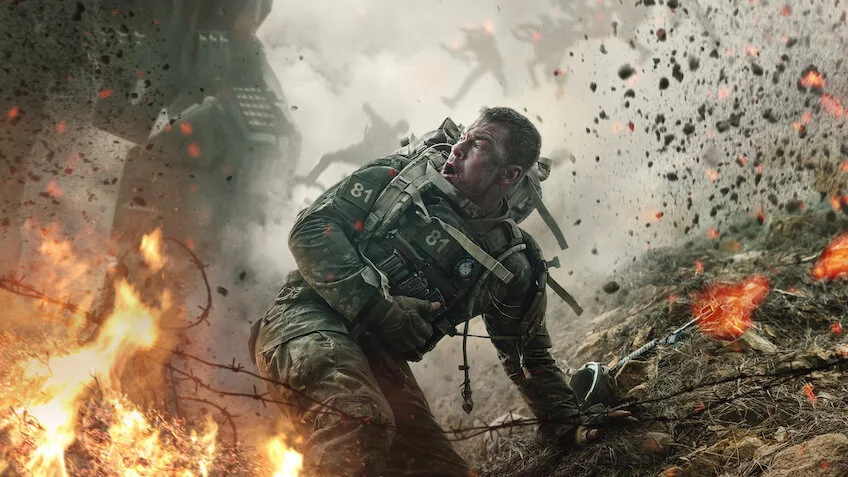
But that reflection remains unused, and we are left with the feeling that the film had the chance to be more than just a CGI party. The visual effects the film is so proud of become a kind of visual noise that drowns out any depth. It is like watching a concert where the sound is so loud you cannot hear the music. You are bombarded with impressions, but they leave behind an empty inner crowd, longing for something with more substance.
It is clear that War Machine has an audience. The 39 million viewers and, apparently, a new Netflix viewing record bear witness to that. It is a film that appeals to those who want to see the incredible in action. But for those seeking a deeper story — one that challenges our understanding of humanity and technology — there is not much to find. That is a shame, because at a time when we are facing technological advances that constantly change our lives, films like this could have been a platform for discussing the ethical and moral implications of our own creations.
So what does it say about us as an audience when we accept a film like War Machine? Perhaps it is a sign that we have grown used to swallowing entertainment without asking questions. In a world where we are constantly bombarded with content, it can be tempting to choose the easy-to-digest over what requires a bit of thought. But if we want to see film as an art form that can challenge and inspire, we must demand more than explosions and CGI. We must insist on stories that touch our souls and ask us questions about our own existence.
In the end, War Machine is a product of a culture that has lost interest in the profound in favor of the superficial. It is a film that wants to entertain, but also reminds us that we should be critical of what we watch. For in a time when technology and humanity collide, it is more important than ever to reflect on what it means to be human in a world where machines are becoming increasingly dominant. Perhaps it is time for us, as an audience, to start questioning the stories we are presented with — and demand more from them.
En stjerne
To stjerner
Tre stjerner
Fire stjerner
Fem stjerner
Seks stjerner