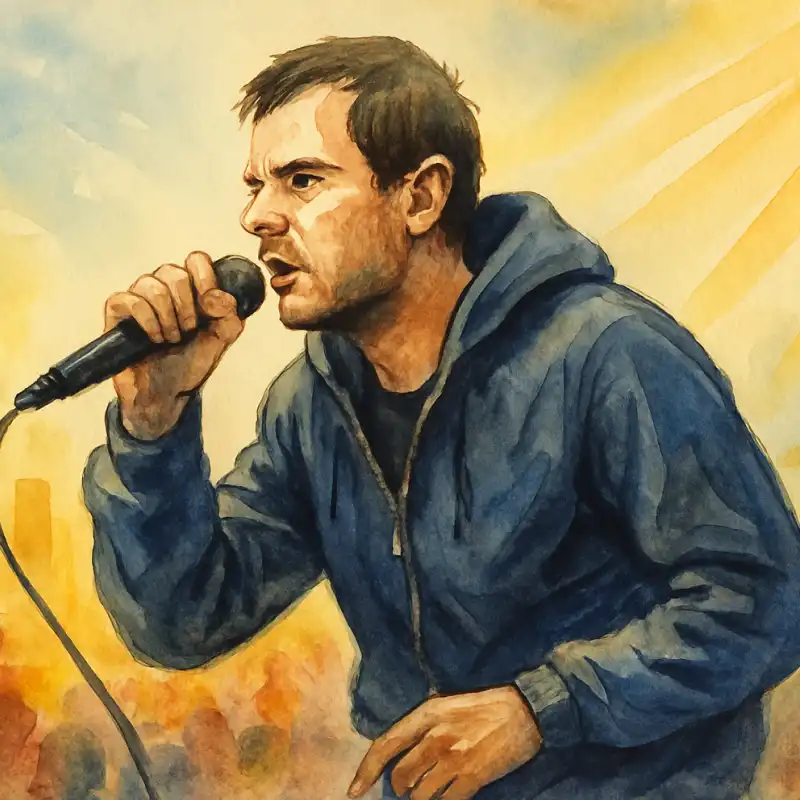
Gobs has been moving fast these past few years, and by now it’s pretty clear that Victor Gaardboe knows exactly which buttons to press, twist and turn if he wants a song to lodge itself in your head. On Bornholm, it quickly became clear that he also knows how to get an audience dancing while the lyrics head in a completely different direction. That takes more than charm. It takes a very sharp ear for Danish pop.
One star
Two stars
Three stars
Four stars
Five stars
Disclaimer: Apropos Magazine received access or a review copy. As always, we share our own impressions — unfiltered.
Six stars
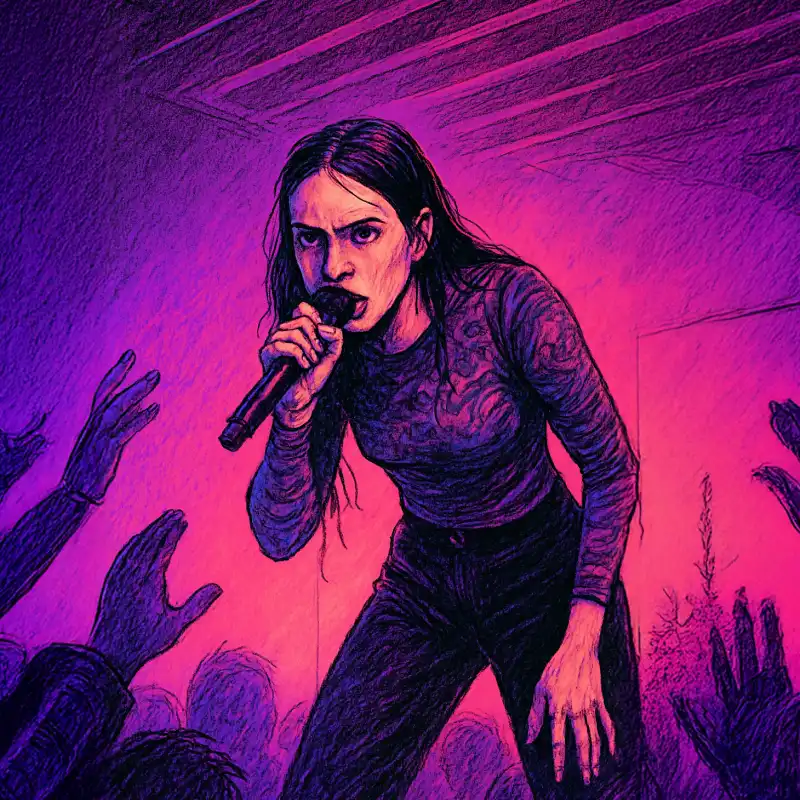
The first thing that struck me was how calmly it all was delivered. Gobs wasn’t up there wrestling with the material, as if he had something to prove to anyone. He had the seasoned energy of an artist who has done this before, and behind him stood a tight, well-playing band that kept the concert taut without making it sterile. Everything was under control. Not that nervous “let’s hope this lands” feeling, but a more relaxed professionalism, where everything still hits exactly where it should.
And yes, there were hits. Plenty of them. But what was interesting wasn’t just that they worked. It was how deliberately they worked. Gobs has a keen eye for the Danish pop machine, and that became clear in the way the songs leaned into something familiar without sinking into the lazy comfort zone of imitation. This is where we enter the intertextual: the little nods, the sonic echoes, the lyrics that speak with what we already know instead of simply shouting louder than it. It’s not just borrowing. It’s a conscious conversation.
Bornholm is Denmark’s Ibiza, yes, and that sentence still hangs in the air like a slightly over-tanned ad for something you still want to be part of. Several of the songs could easily have lived in the wake of B.O.C.’s track of the same name, and elsewhere it was hard not to hear traces of Rasmus Seebach. That wasn’t a problem. Rather, it was part of the point. Gobs works in a field where recognition is currency, and where the main thing is not to reinvent pop’s wheel, but to make it roll in a way that feels current.

It was a party, all right. But not only in the empty, confetti-filled sense where you’re just allowed to shout along and go home without having had a single new thought. This was a party with a layer underneath. And that may be where Gobs becomes most interesting. Because he doesn’t only work when things are turned up. He also works when the material points toward something darker. On Depressiv Tankegang, he moves into loss, crises and depressive thoughts, and those songs were given space on stage too. It could have been an awkward shift in mood. First festival euphoria, then emotional collapse. But it wasn’t. He made it hold together because he didn’t play the darker songs as a break from the party, but as part of its nervous system.
That’s a difficult balance. Dark lyrics can quickly become too heavy if the music can’t carry them. And conversely, they can become pure surface if the party drowns out all the content. Gobs landed somewhere in between, where both things were allowed to exist. People were partying while singing along to lines that were really about something much more fragile. That takes an artist who isn’t afraid to let contradictions stand side by side without explaining them to death.
He treats personal crises and loss without letting them break the artistic expression. That’s actually a strength many pop artists only discover too late, if they ever do. The dark thoughts don’t become less dark because the audience dances to them. They just get another space in which to exist. And that may be the most human part of the concert: that you can stand in the middle of a party and still feel that something in the songs is hitting a place where there are no neon lights or plastic cups, but something far more familiar and a little more tender.
After a technical hiccup that briefly seemed to throw Gobs off course, the concert continued, and one of the final songs was Igen og igen. Here came another example of his familiarity with Danish pop history. The references in the lyrics are close at hand, but they don’t feel like pure nostalgia. The old material isn’t simply dragged out as decoration; it’s put to work. And that’s where the intertextual quality really makes sense. Gobs isn’t only singing to us. He’s singing with everything we’ve already heard before, letting the new stand in dialogue with the old.
Gobs clearly knows where the Danish pop buttons are. What’s interesting is that he also knows when not to press them. And that is exactly why the concert ended up feeling bigger than yet another successful party. It had laughter, sweat and singalongs, yes. But also that small residue of darkness that lingers when the lights go out and you realize you were actually listening.
En stjerne
To stjerner
Tre stjerner
Fire stjerner
Fem stjerner
Seks stjerner