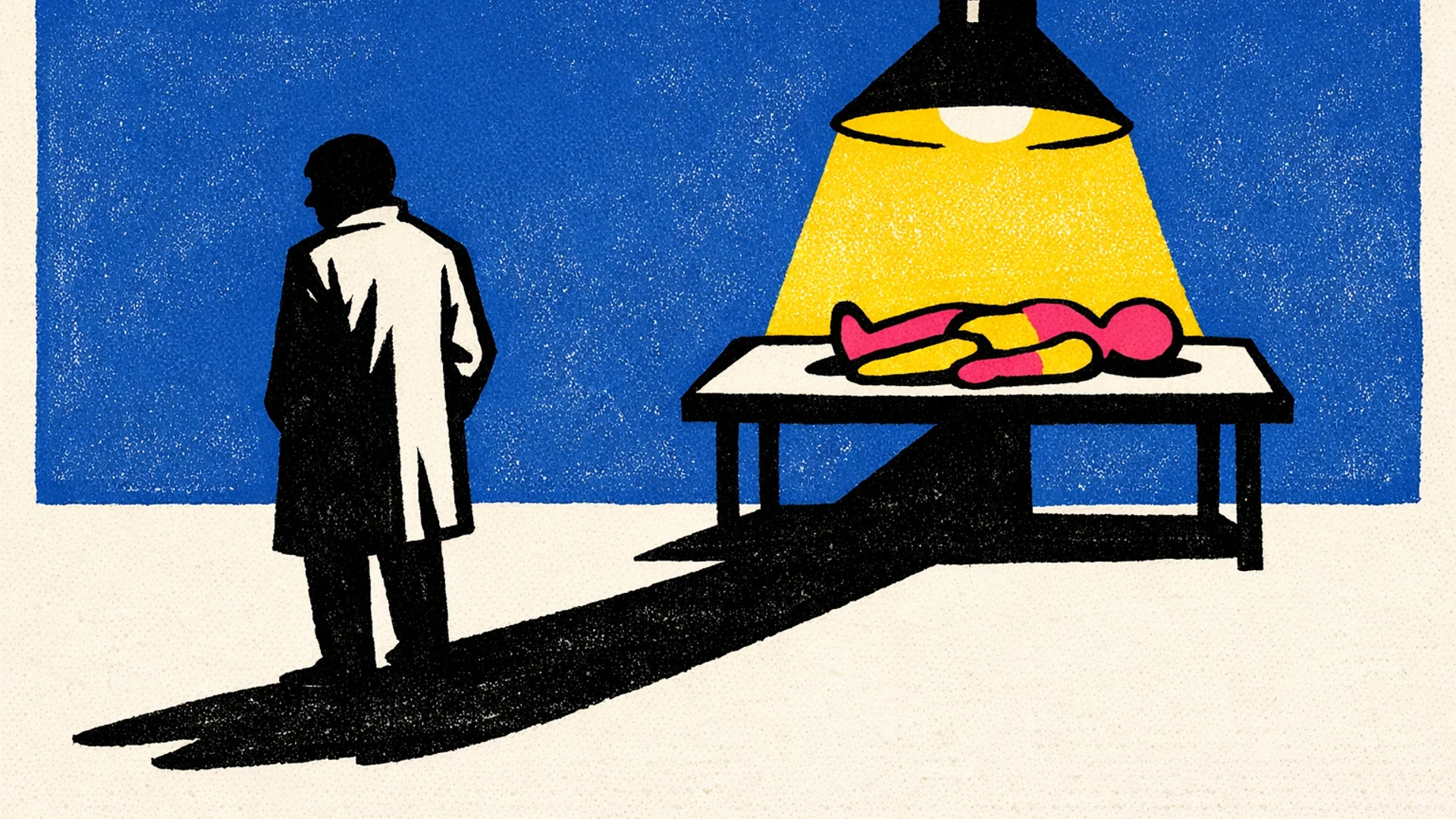
A monster rarely begins with a roar. Sometimes it begins with an idea, a body on a table, and a creator who later wants nothing to do with his work. So when Golden Days folds Frankenstein into its MONSTER festival in September, Mary Shelley’s novel still lands where it hurts: our fear is at least as much about responsibility as it is about evil.
One star
Two stars
Three stars
Four stars
Five stars
Disclaimer: Apropos Magazine received access or a review copy. As always, we share our own impressions — unfiltered.
Six stars
Golden Days 2026 runs from 4 to 20 September with more than 200 events across 17 days. The festival moves between horror films, opera, performances, parties and folk tales, but Frankenstein is one of the figures that ties the theme together. It makes sense. The monster is both a creature of the imagination and a figure for our ideas about power, morality and enemies, as festival director Svante Lindeburg describes the festival’s basic premise.
Mary Shelley’s 1818 novel, however, is more unsettling than the classic version of the monster story, where a dangerous being simply has to be stopped. Victor Frankenstein gathers body parts and gives them life. In that moment, he is not only a scientist with grand ambitions. He is also a human being who creates another and then refuses to take the relationship seriously.
The most revealing textual moment is therefore not the act of creation itself, but Victor’s reaction to it. According to SWR, he gives the assembled body life, looks at the result and is filled with disgust at the creature’s appearance. Then he flees the laboratory. It is a small movement with enormous moral weight: he can control the beginning of life, but he cannot bear to meet the life he has brought into being.

Here, the novel’s question also becomes a question of identity. Who gets to appear human before they have proved themselves worthy of it? Victor’s creature is made into something hideous before it is given any chance to be understood. SWR reads the novel as a story in which science itself opens the door to the irrational, and where the opposition between beauty and ugliness is tied to ideas of good and evil. It is a sharp reminder of how quickly our gaze can turn into a court of judgment.
At the same time, Victor should not be reduced to a cartoon villain. I read the subtitle The Modern Prometheus as placing Victor in a tradition of people who want to cross boundaries. Death is his opponent, but his real defeat lies in shirking responsibility. He wants to be the one who creates, without being the one who remains.
A counter-reading is possible. Perhaps the creature is also a monster, and perhaps it is too easy to make Victor the only guilty party. The creature disappears, and in a production by Oldenburgisches Staatstheater it is later allowed to tell its own story when Victor seeks it out in the Swiss mountains. The performance thus opens up responsibility, empathy and humanity. To understand a figure is not the same as acquitting it.

What matters is that the novel lets us remain in the discomfort between the two possibilities. The monster can be both the one who has been cast out and the one who causes harm. But Victor has created a situation in which another being must live with his choices, while he himself tries to escape the sight of them. This is not only a story about technology. It is a story about the convenient distance between putting something into the world and taking responsibility for it.
Golden Days’ Frankenstein event, Mythos live: Frankenstein’s Mythical Roots, was announced for 3 September at the Glyptotek with Lauge Hendriksen and Sophus Helle as hosts and Anne Blomsgård as reader. By placing the novel among myth, horror and contemporary ideas of enemies, the festival makes its old questions feel current without forcing them into modernity. We do not need more monsters that simply have to be defeated. We need stories that ask who built them, who turned away, and who later called them evil.
En stjerne
To stjerner
Tre stjerner
Fire stjerner
Fem stjerner
Seks stjerner