Season 7 of Black Mirror serves up six new episodes, balancing technological satire, sci-fi experiments and meta-commentary. The result, unfortunately, is uneven, and the series’ ability to mirror reality weakens when its ideas drift too far from both relevance and resonance.
One star
Two stars
Three stars
Four stars
Five stars
Disclaimer: Apropos Magazine received access or a review copy. As always, we share our own impressions — unfiltered.
Six stars
Episode 1. Common People
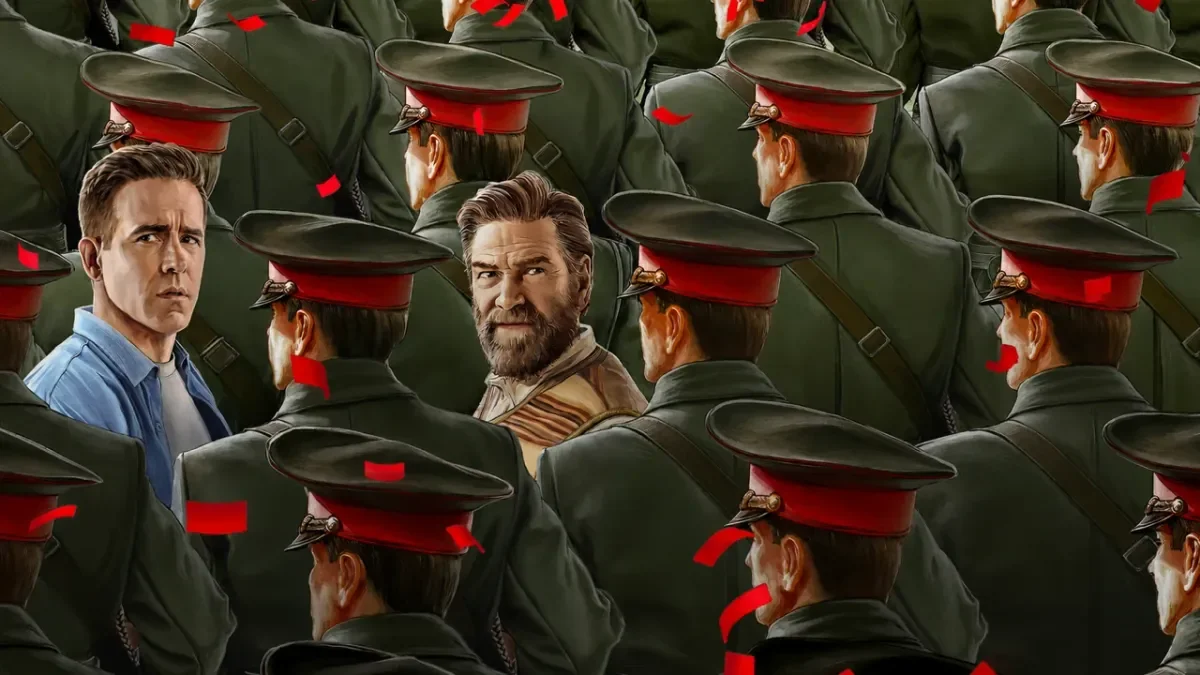
If you’ve ever lost track of your streaming subscriptions, just wait until you have to pay for school, food and oxygen in “Basic,” “Plus” or “Ultimate” packages. Common People is Black Mirror when it sinks its teeth in and refuses to let go. A future that feels far too close, hitting today’s tech and capitalism critique with a mix of dry satire and pure desperation.
Chris O’Dowd delivers a restrained but suffocating performance as a man just trying to stay afloat in a society built like a mobile plan. The episode keeps pace, tone and credibility in perfect balance — and leaves you with that classic Black Mirror feeling of “this may not be fiction for much longer.” Easily the season’s strongest. And most frightening.
Episode 2. Bête Noire
It begins as an intense psychological game between two women: Maria, a food scientist, and Verity, an old schoolmate who suddenly turns up as a new colleague. There’s a simmering unease to the atmosphere — in the best way. Think Single White Female meets Black Mirror, with a dash of miso and corporate labs.
But then... yes, then the episode completely loses its grip at the end. And as if one ending weren’t confusing enough, there are two — as though the episode itself couldn’t decide what level of “out there” it wanted to land on. What began as a sharp psychological thriller ends up as a kind of accidental Twin Peaks-lite with AI and ghost logic. An episode that wants to say something big, but mostly mumbles it all away in hazy symbolism and strange pacing.
Episode 3. Hotel Reverie
Think Weekend at Bernie’s, but with Oscar winners and deepfake technology. In Hotel Reverie, a film company tries to resurrect old stars with AI and create new movies — and who hasn’t been missing more monologues from digitized corpses? The premise is chillingly current and could have been a razor-sharp comment on Hollywood cannibalism. But it all trips over itself quickly.
The problem is the lead — a character so implausible and clumsy that halfway through you start rooting for the algorithm instead. Her interactions with the dead cast are so awkward they trigger flashbacks to cringey amateur theatre. It all ends up as an ironic meta-critique of AI-generated films, just without meaning to. An idea with potential, smothered by flat dialogue and emotional vacuum.
Episode 4. Plaything
A spiritual successor to Bandersnatch with a heavy dose of LSD and ’90s nostalgia. We follow Cameron, a former games journalist, who falls down the rabbit hole via the computer game Thronglets — a glitchy universe populated by AI beings with consciousness. It starts strongly, playfully and promisingly, with exactly the right amount of digital paranoia. Sure, the writer here gets flashbacks to a time of floppy drives, CD-ROMs and pixelated graphics, but then the episode remembers it also has to be “deep.” And that’s where it starts drifting — literally and figuratively — away from anything resembling grounding. It becomes meta in the way that makes you wish for a pause button for the episode itself. Brooker goes all in on idea explosions, but forgets to anchor them in anything we can recognize ourselves in. The result? A hallucinatory Black Mirror trip that fascinates — but doesn’t truly land.
Episode 5. Eulogy
A sci-fi dream that could have come straight out of Blade Runner 2049 and Her — though without the actual plot, of course. We follow Phillip, a man contacted by a tech company to reconstruct memories of his dead ex-girlfriend through AI. Because what could be better than reliving old relationships through technological magic when you can’t manage a proper conversation in real life?
Visually, it’s a feast for the eyes — neon, floating technology, and an atmosphere that makes you feel like you’re on a futuristic holiday. But the pace? So slow you almost have time to consider writing your own obituary. Luckily, they’ve got Paul Giamatti, and he plays Phillip so well that you almost forget not much is happening. His mix of cynicism and vulnerability gives the episode the depth it would otherwise have lacked entirely. Without him? A beautiful but completely empty shell.
6. USS Callister: Redemption
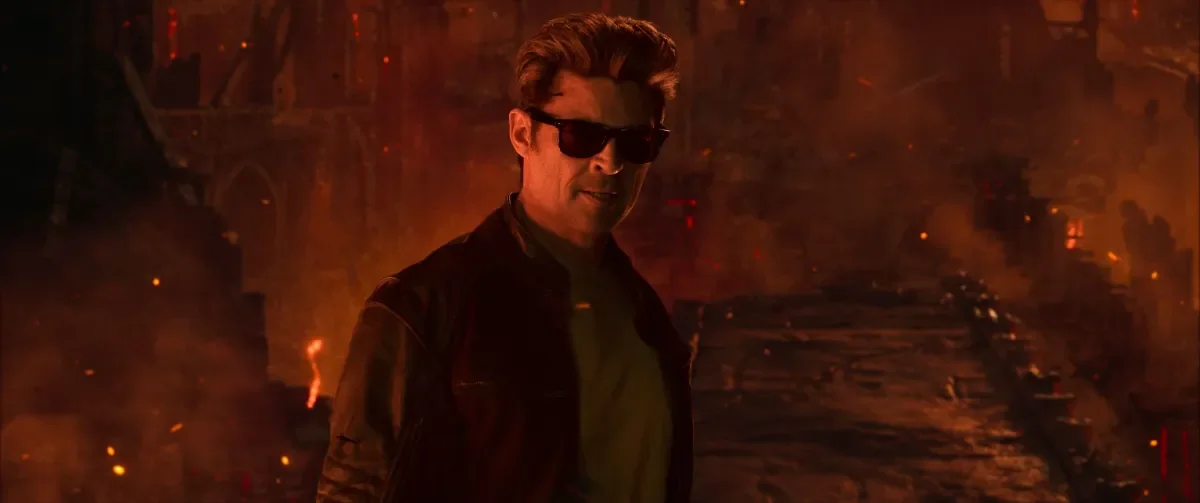
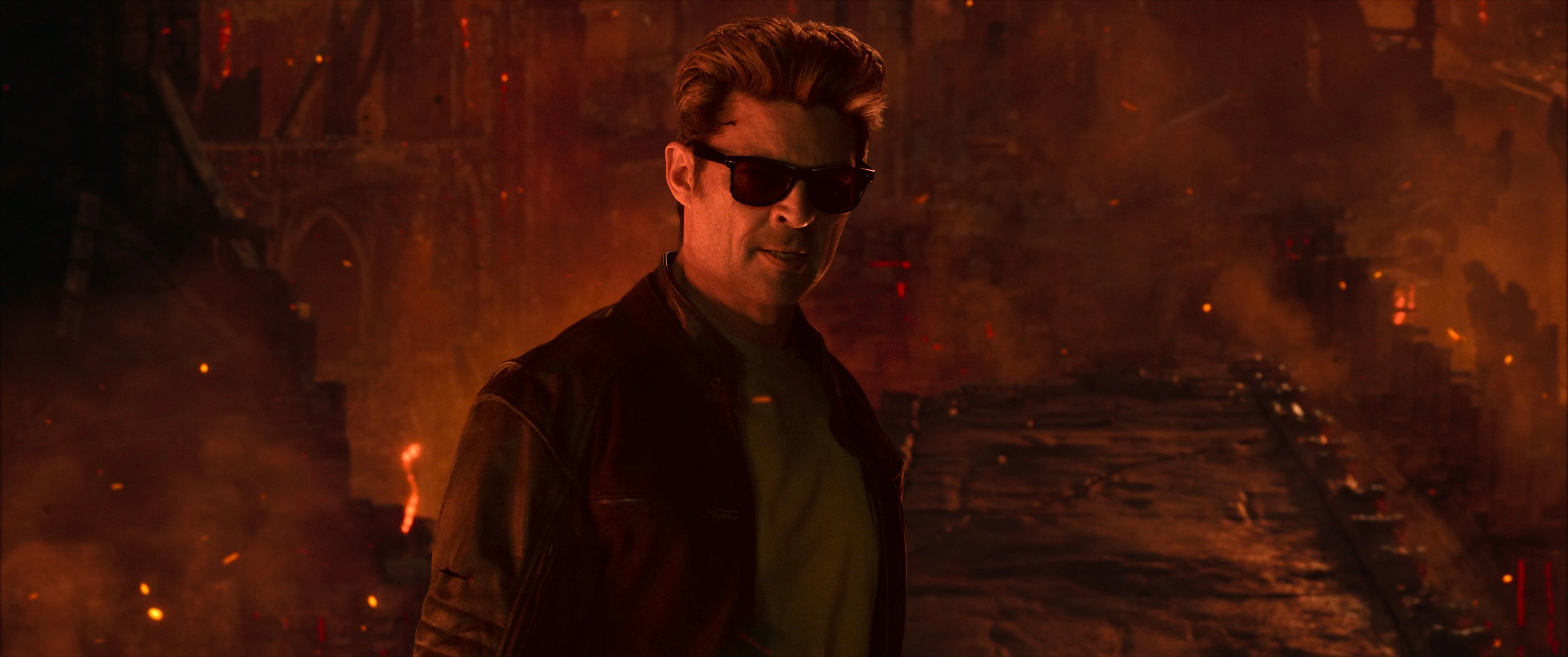
A welcome return to Black Mirror’s most colourful universe — this time with new characters, a new conflict and more CGI effects than ever before. It’s slick, entertaining and packed with references to Star Trek, the gaming industry and itself.
But at heart it’s popcorn with glitter: crisp, colourful and quickly forgotten. Where the original had a sharp social commentary on power, gender and escapism, Redemption feels mostly like fan service with a bigger budget. And that’s perfectly fine — as long as you don’t expect it to say anything important. Because it doesn’t. It just wants to be fun. And thankfully, it is some of the time.

So what now?
Season 7 has its moments — and especially *Common People* proves that Black Mirror can still hit hard and precisely. But the rest of the season struggles to find the balance between innovation and relevance. When the series loses touch with reality, it also loses some of its impact.
Episode | Rating
Common People | ★★★★★☆
Bête Noire | ★★★☆☆☆
Hotel Reverie | ★★☆☆☆☆
Plaything | ★★★☆☆☆
Eulogy | ★★★☆☆☆ (+1 for Giamatti)
USS Callister: Redemption | ★★★☆☆☆
All told, that must make it a total of three stars.
En stjerne
To stjerner
Tre stjerner
Fire stjerner
Fem stjerner
Seks stjerner