Honestly, I expected a game that would lean so heavily on Bond mythology it would buckle under its own weight. Instead, IO Interactive has made something far more interesting: a game that knows its tuxedo, but also knows when to roll up the sleeves. 007 First Light is both grand and playful, and it feels as if Danish game development has just grabbed a global franchise by the lapels and said: “Relax, we’ve got this.”
One star
Two stars
Three stars
Four stars
Five stars
Disclaimer: Apropos Magazine received access or a review copy. As always, we share our own impressions — unfiltered.
Six stars
The first thing you notice is not the size of the budget, but the courage of the ambition. Danish IO Interactive has gone all in here — a project at the heavy end of the scale, where you can almost hear the spreadsheet coughing in the background. And this is not pocket change (around $200 million) they’ve put into the craft. When you’re working in the same financial league as, say, Marvel’s Spider-Man 2, there isn’t much room to hide behind charm and good intentions alone. Luckily, that’s not what IOI does. They go straight for Bond as an idea, not just as a logo.
It’s also worth remembering where they come from. For years, IOI has refined the Hitman series, where assassination, disguises and social manipulation have become a kind of elegant digital finishing school. Hitman has sold millions of copies and turned Agent 47 into one of gaming’s most enduring figures. But James Bond is a different beast. He is less controlled, more theatrical, more likely to blow up a room if the mood calls for it. So it actually makes perfect sense that 007 First Light draws as much from Uncharted as from Hitman. That’s not a flaw. It’s an acknowledgment. And a pretty smart one at that.
The game chooses to begin before the legend is fully formed. Here, Bond is not the polished gentleman with everything in place, but a man walking into his own myth. That gives the project a welcome sense of grounding, something the film series has only occasionally dared to linger on — most clearly in Casino Royale from 2006, where Daniel Craig was allowed to be more raw than refined. IOI takes that idea a step further and uses it to create a Bond still under construction, but already carrying that mix of confidence and self-deception so central to the character. At heart, he is a man who always arrives as if he is already late.
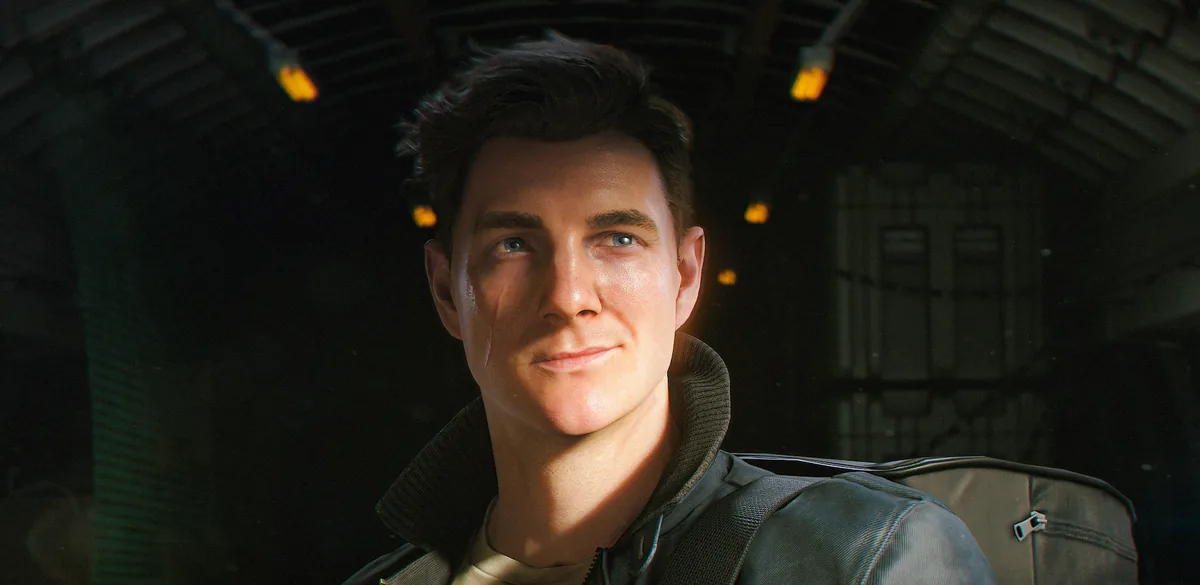
It’s also clear that the developers have done their homework on Ian Fleming’s version of the character. The small detail of the scar on his face is not decoration, but a nod to the source material, and that kind of thing matters. Not because every player is wandering around with a literary antenna on their head, but because it signals a rare kind of respect: not museum-like, but curious. There is a difference, and it matters.
The structure itself is built around training, infiltration, escalation and the slow, almost physiological transformation of Bond into Bond. It works surprisingly well, because the game keeps rewarding you for becoming a little sharper, a little faster, a little more alert. There are no heavy-handed upgrade systems flashing away like a bad idea in neon. You get better by playing, not by managing yourself to death. That ought to be a given in more games, but we do live in an age where everything is expected to feel like an Excel sheet with action.
AI plays a major role in the story, and it suits the game that it doesn’t just lean on classic spy nostalgia, but also tries to say something about a present where surveillance, identity and loyalty have become more fluid than a martini in a bad nightclub. There are secret agendas, shifting alliances, grumpy superiors and villains who are allowed to have a little more personality than an anonymous budget line. Thankfully, IOI also understands that Bond without one-liners is a bit like beer without carbonation: technically possible, but rarely worth bragging about.

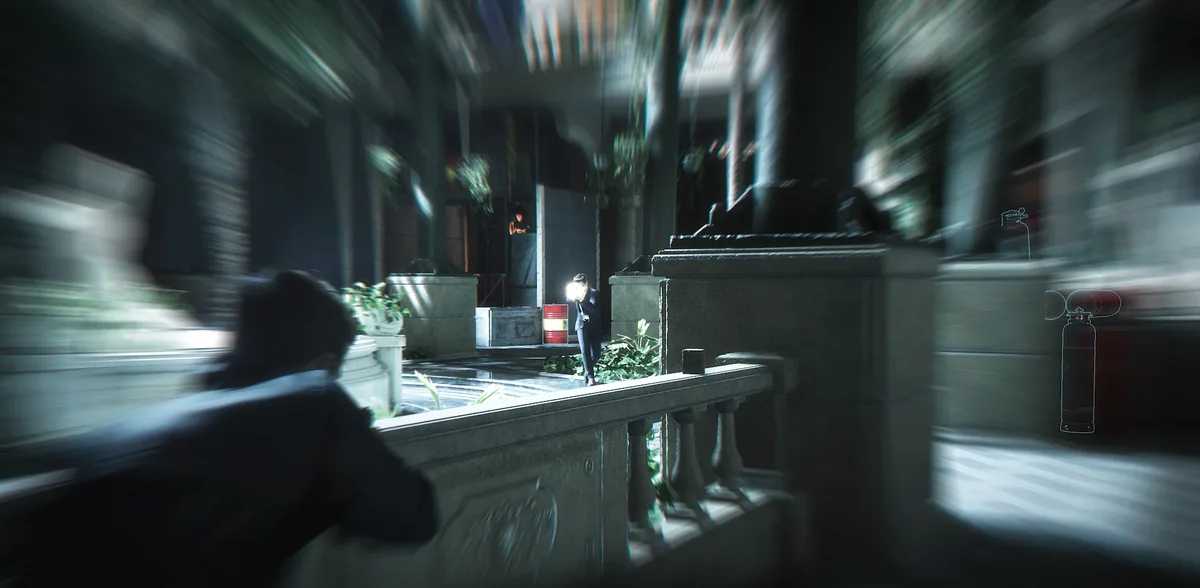
Perhaps the best thing is the freedom in the levels. You can go in loud, sneak around, bluff your way through situations, or combine it all with a kind of well-mannered chaos logic. The gadgets are dosed just right, inviting play without tipping over into the kind of overcooked circus that some of the Pierce Brosnan films could drift into, once invisible cars and other technological miracles started hogging the conversation. Here, everything is tighter, more elegant, more believable. Bond is allowed to be imaginative. He does not need to be a walking PowerPoint presentation for Q’s department.
If anything drags it down a little, it’s the occasional movement that feels slightly jerky. Jumping, climbing and certain transitions do not always have the same silky rhythm you know from the Uncharted series. It’s not a disaster, far from it, but you can feel a small mechanical crunch at the edges. And then there’s the level with the robot vacuum cleaners. At first it’s almost funny. By the end, you do find yourself thinking that it is, after all, a little odd that James Bond has to use household robots to open a door when he is also running around with Q-gear that could start a small war. It’s the kind of absurdity you either love, or you note with a small, dry sigh. I belong to the first camp, but only just.
On the other hand, the rest is so strong that it’s hard to stay grumpy for long. There isn’t a dull chapter in the game’s 10 chapters, and that is an achievement in itself. The villains have bite, the boss fights have nerve, and the shooting and combat scenes are handled with a confidence that makes it very easy to forget how huge a franchise IOI has actually been handed. This could have gone terribly wrong. Instead, what you get is a game that understands the character and respects the format.
That is also why you almost start to worry a little on behalf of the Bond universe. Because if this is the level, then Amazon has something to live up to when they themselves begin shaping the future of 007. IOI hasn’t just made a good game; they’ve made an argument that Bond can be renewed without being dissolved in modernisation fever. He doesn’t need to be redesigned from scratch. He just needs a new stage to walk onto.
007 First Light is not perfect. But it comes close. It is well composed, entertaining and executed with a steady hand that rarely loses its grip. And most importantly: it gives Bond his dignity back without turning him into retro culture. What more can you really ask for when an icon steps out of the shadows and still manages to look as if he’s been there all along?
En stjerne
To stjerner
Tre stjerner
Fire stjerner
Fem stjerner
Seks stjerner