
I’ve always thought of myself as a gamer. Not the kind who shouts into a headset or chases trophies, but the existential kind — the kind who plays to get through everyday life. From my childish longing for a Stone of Jordan in Diablo II to more than a thousand hours in Call of Duty during lockdown, gaming has always been my refuge. But when I became a father, gaming became something else. It became therapy. A place where I could sit with my son on my lap, controller in hand, and feel that, for once that week, we were actually in sync. And then Astro Bot arrived.
One star
Two stars
Three stars
Four stars
Five stars
Disclaimer: Apropos Magazine received access or a review copy. As always, we share our own impressions — unfiltered.
Six stars
There is something almost poetic about the fact that Astro Bot comes from PlayStation’s own studio, Team Asobi. It feels as if Sony looked out toward the horizon and said: “Okay, Mario has had his fun for 30 years — now it’s our turn.” And instead of copying, they created a tiny white-and-blue robot that feels like PlayStation’s soul, wrapped up in a game that radiates joy, finesse, and craftsmanship of the highest order.
The story? It’s there. Something about an evil green alien stealing your PS5 and scattering its components across the galaxy. You have to rescue your little Astro friends while repairing your console. Classic save-the-world setup. But honestly — I wasn’t paying that much attention. I was too busy watching my three-year-old son sit there with his mouth open and tears in his eyes when we first rescued a component and brought the wounded PlayStation back to life. That moment was bigger than the story itself.
What makes Astro Bot special is the way it uses the controller. The PlayStation 5’s DualSense is already a little marvel, and Team Asobi has managed to make it the star of the show. You have to blow, shake, swipe, press, and tilt — and every single time it feels fun, intuitive, and just silly enough that even a three-year-old can join in. There’s no frustration. No menus. No “press here to change the control zone.” It’s pure play.
And that’s where Astro Bot hits something few games do: it feels like childhood in game form.
Every level feels like a new way of playing the game. A new trick. A new gimmick. You get abilities that change the whole experience — sometimes you fly, sometimes you swim, and suddenly you’re a helmeted spring, bashing yourself in the head to jump higher. It sounds ridiculous, and it is ridiculous. But it’s also brilliant.
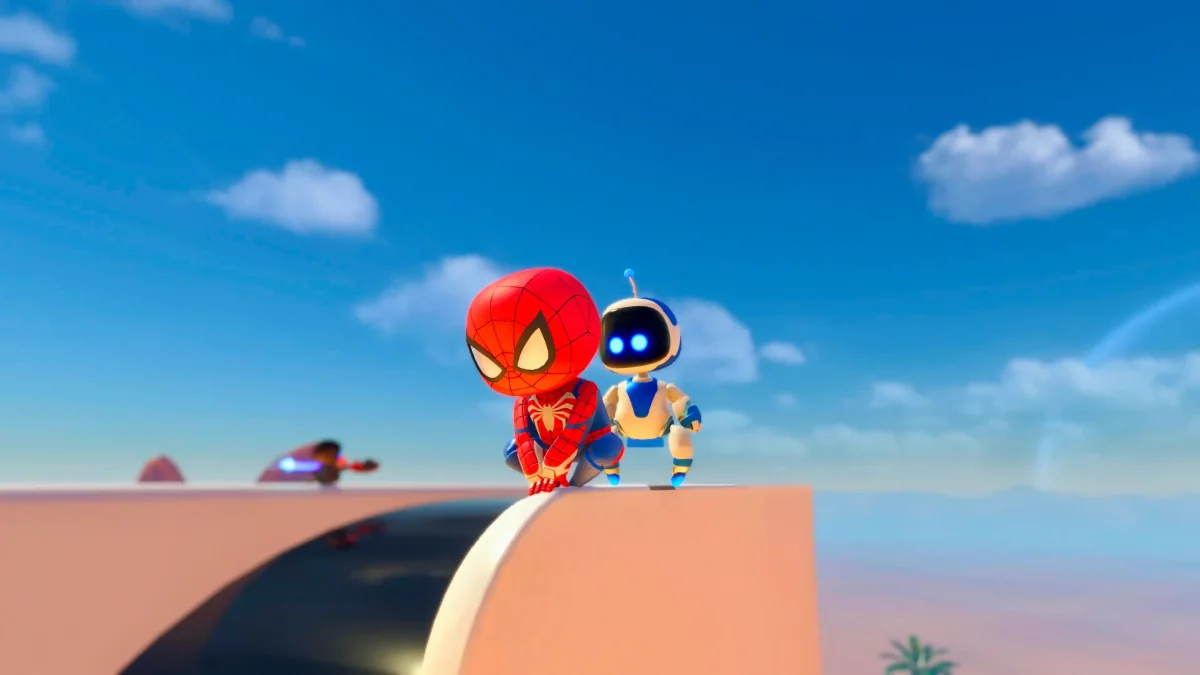
It feels like a game made by people who genuinely love making games. Not a product of a marketing meeting, but a love letter to everything PlayStation has ever been. You rescue characters and figures from across Sony’s universe: Spider-Man, Kratos, Nathan Drake, Ratchet & Clank, Spyro — you name it. And every time you do, the nerd inside you jumps a little higher.
My son asked me to unlock everything. “Dad, who’s the one with the sword?” he asked. “That’s Cloud, sweetheart.”
And in that moment I understood that I was passing on my own cultural inheritance — through a game with robots and rainbows.
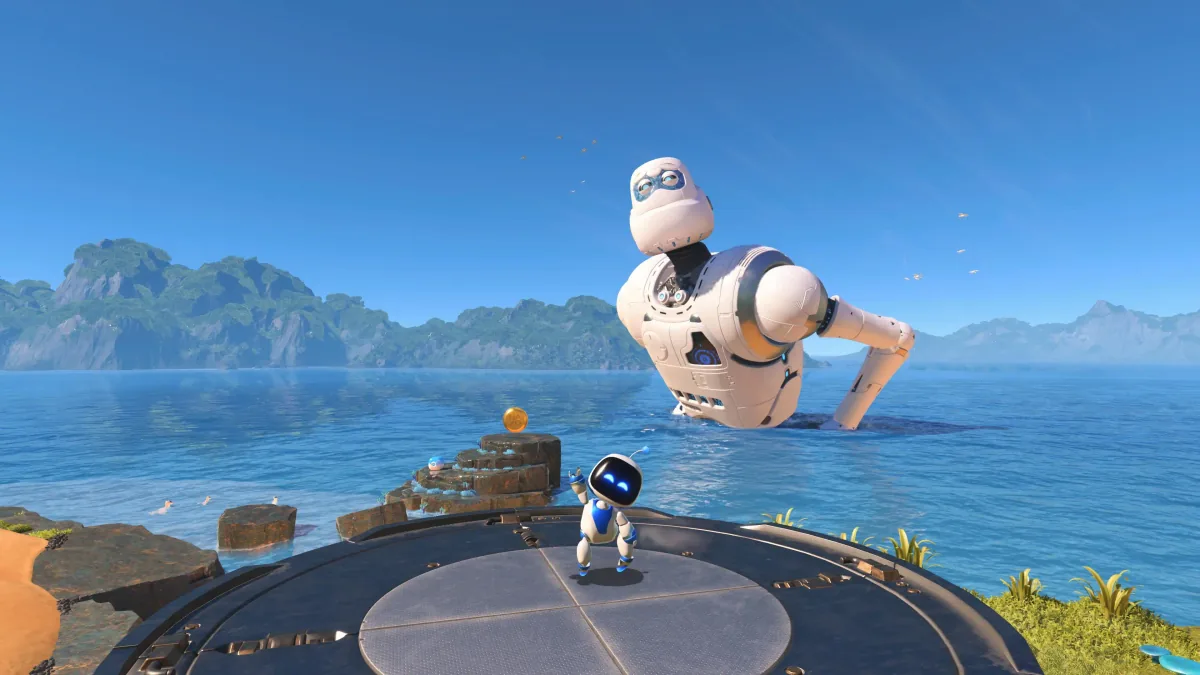
I don’t know how Team Asobi does it, but everything about Astro Bot feels ... light. Not simple, but light. There’s a rhythm to it. A harmony. The music, the colors, the movement — everything comes together in a choreography where even the enemies seem happy to be there. And although the game is, at its core, a classic 3D platformer, it never feels predictable.
It’s a game that knows you’re sitting in the living room with your family. It isn’t afraid to be cute, silly, or sentimental. It’s just honest.
The boss fights are a blast. The final battle (spoiler alert) gathers the whole family in front of the TV. You have to wake Astro Bot back to life after he sacrifices himself to save all the little robots you’ve freed across the galaxy. I looked at my son, sitting perfectly still with the controller in his hands. As the music swelled and Astro rose again, he just said: “Dad, he did it.”
It was one of those moments when you suddenly understand that gaming can carry just as much emotional resonance as a Pixar film.
Visually, Astro Bot is a riot of color. Every planet is a tiny new universe — some places look like a beach holiday in Japan, others feel like an acid trip through a machine hall. The lighting, textures, and sound design are so polished that you almost want to lick the screen. That’s the level of detail where you understand why game development sometimes takes five years.
And then there’s the sound. The music is a mix of children’s TV and rave — little melodies that stick in your head like chewing gum. I woke up several mornings with the Astro Bot theme in my head, and my son sang along in the car. It sits right on that border where it is equal parts adorable and psychotic.
But nothing is perfect.
I won’t lie: the extra challenge levels are a nightmare. It’s as if the developers suddenly remembered that there are grown men with far too much free time and decided to punish them. The difficulty jumps from cozy Sunday game to Dark Souls at toddler height. I watched YouTube tutorials, read guides, and after ten attempts at the same level I was sitting there with sweaty palms and a son who asked: “Dad, why are you angry at the robot?”
That’s when I had to breathe and think: Okay, this isn’t about winning. It’s about being together.
When the credits roll and you’ve rescued every last little friend, you’re not just done with a game — you’ve had an experience that feels like a small part of your family history.
For me, Astro Bot is not just a game. It’s a memory. A memory of my son on my lap, the laughter, the cheering, and the feeling that the two of us — if only for a moment — were on the same planet.
Reflection:
There are games you play. And then there are games you remember. Astro Bot belongs in the latter category. It’s the kind of experience you can measure childhood by. A father and son, a TV, a controller, and a little robot saving the world — not because he has to, but because it feels right.
That may be the most beautiful thing games can do: make you forget that you’re playing.
En stjerne
To stjerner
Tre stjerner
Fire stjerner
Fem stjerner
Seks stjerner