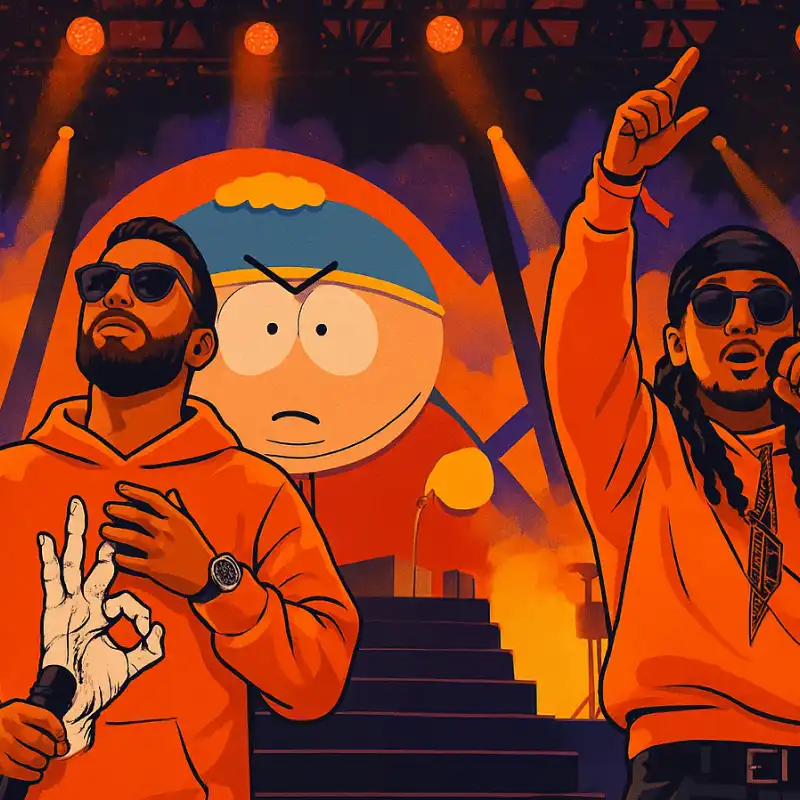
Some people say they just don’t get it. How you can stand in the middle of a concert, with the world’s biggest band onstage, and still film the whole damn thing on a phone you’ll never actually watch the footage from. But maybe it’s not because we’re idiots. Maybe it’s just because the concert was never really about the music. Not anymore.
One star
Two stars
Three stars
Four stars
Five stars
Disclaimer: Apropos Magazine received access or a review copy. As always, we share our own impressions — unfiltered.
Six stars
It’s 2025, and the concert experience has become something else entirely. It’s no longer just about sound and bodies and togetherness. It’s about documentation. About proof. About showing that you were there — and that other people know it.
You’re standing there with a beer in one hand and your phone in the other. You’re trying to balance a story, a scream, and a glance to see whether anyone has seen your story. And maybe that’s fair. Maybe it’s just the reality we’ve created. We experience through a screen — even when we’re physically present.
The concert as content production
When Taylor Swift tours, a whole wave of TikTok videos comes with it. There are rules: You must film "All Too Well". You must take photos of the bracelet. You must get that one money shot for Instagram. And these days it’s no longer fans who happen to be recording. It’s small production teams disguised as audience members.
It’s not about being present — it’s about being relevant. The experience becomes secondary to what the experience can be turned into.
Where did the intimacy go?
Many of us remember the feeling. Standing in front of a stage, hearing the first hit of the bass drum and feeling your whole body react. Not through a camera, but physically, all the way through. You forget what people looked like. You remember the atmosphere. The light. The shout.
But today there’s a wall of screens. The audience isn’t filming to keep something safe — they’re filming to be seen. And that changes the concert. It changes the music. It has to look right. It has to be shareable. It has to be clip-friendly, share-friendly, recognisable. And preferably not too ugly or sweaty.

Is it the fault of art? Yes, a little.
Artists stage themselves as brands. And that’s understandable. Necessary, even. But it reinforces the illusion that the concert is an experience you buy into as a customer — not something you take part in as a human being. There’s less room for mistakes, and therefore less room for magic.
At the same time, venues and booking agencies have realised that the experience has to be able to be sold on. So there’s more light, more confetti, more choreography. It looks like a commercial — because that’s what it is.
So what can we do?
You could start by asking yourself: Am I here to be here — or to show that I was here? And yes, it’s difficult. We’ve all become our own press photographers. This isn’t a sermon. It’s a statement of fact.
Some artists try to break the pattern. Kevin Morby once asked the audience to put their phones away and watch one song with their eyes open, not behind a screen. People felt awkward. Others said thank you afterwards.
Reflection
Maybe it’s not about banning mobile phones. Maybe it’s just about creating moments stronger than the urge to document them. Maybe the concert needs to become a space where we forget ourselves — and each other — just a little. Not forever. Just for three minutes and seventeen seconds.
Or maybe it’s too late. And the only thing we can hope for is that someone films you while you film them — so at least we have proof that we were once human beings who experienced something. Before we became content.
En stjerne
To stjerner
Tre stjerner
Fire stjerner
Fem stjerner
Seks stjerner