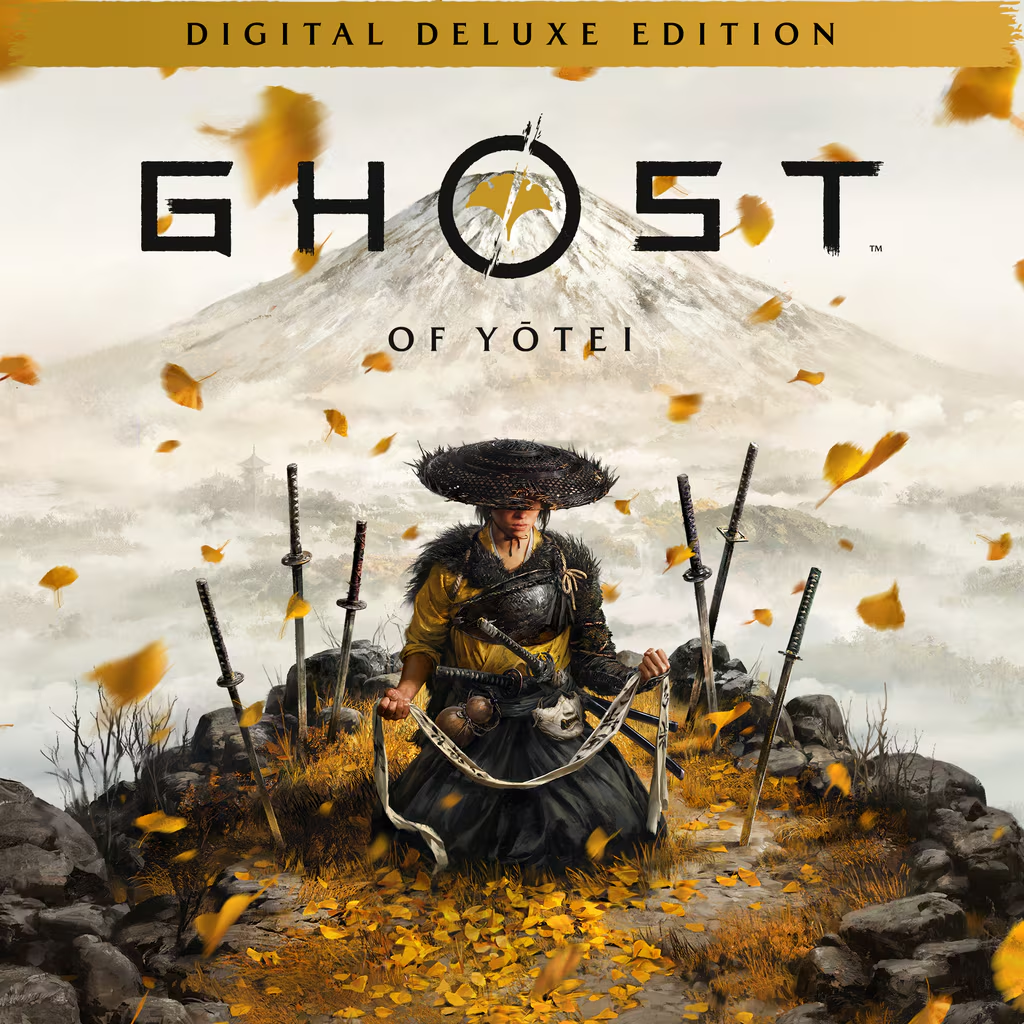
I thought I was done with revenge games. Done with samurai stories and men in slow motion shouting at the sky while blood sprays in elegant arcs. But Ghost of Yōtei feels different. It smells of steel and rain, feels like a Zen poem dressed up as a bloodbath, and somehow manages to make revenge beautiful. It’s rare for a game to make me slow down and just look. But here I am, in the middle of a Japanese mountain pass, controller in hand, with the sense that I’m not only fighting enemies, but myself.
One star
Two stars
Three stars
Four stars
Five stars
Disclaimer: Apropos Magazine received access or a review copy. As always, we share our own impressions — unfiltered.
Six stars
It begins like a film you don’t quite understand yet. Your family was slaughtered by the Yōtei Six sixteen years ago, and you return to do what samurai always do: restore honor. But there is no bombastic music, no cutscenes with American voices trying to sound Asian. There is only snow, wind, and a quiet voice telling you to begin. You kill the first of the six, The Snake, in a tutorial that feels like a ritual. As if the game is saying: welcome back to the world, now that you can feel pain again. It’s a violent opening, but also a poetic one — like opening an old wound and letting it bleed on purpose.
Ghost of Yōtei is one of the most beautiful games I have ever seen. And I’ve seen a lot. It’s the kind of graphics that make reality look shabby afterwards. Every leaf, every stone, every reflection in a stream feels carefully composed — as if nature has been given a new graphics engine. I know it’s just light and code, but it feels physical. As if the wind in the game is breathing with you. And that’s really what the game is about: rhythm, calm, and revenge as meditation.
As you move through the landscape, you’re not guided by arrows and markers, but by the wind. It blows in the direction of your next objective, and you quickly learn to read its language. It’s a brilliant detail, because it makes the whole experience feel organic. You’re not hunting something; you’re being led. I don’t think I’ve ever felt so calm in a game about killing. It’s almost ironic.

The combat is brutal, but disciplined. There are no overcooked combo systems, no 40-step tutorials. It’s you, your sword, and timing. A duel can be over in three seconds if you know what you’re doing. Or three minutes, if you panic. Every strike feels like a decision you have to stand by. It’s a little like the old Souls games, just without the punishing sadism. Here, it’s not about surviving, but about keeping your dignity intact. You quickly learn that revenge requires patience.
The DualSense controller does the rest. You feel the weight in every swing, the resistance in every parry. When swords hit flesh, it doesn’t feel like an effect, but like a breath stopping. When you play your instrument, you physically move the controller in small, precise strokes. When you cook, meditate, draw, or cut bamboo, you can almost feel the resistance in your hands. It creates a physical connection to the game — as if you’re not just playing as a samurai, but becoming one. There’s a bodily presence to it that almost feels like too much. As if you’re playing yourself closer to something you’d rather not feel.
But there is also the calm that comes after. That almost uncomfortable silence, where you stand in the middle of a field with three dead men and hear the wind take over again. This is not a game that rewards you for violence. It simply reminds you that you committed it.
That’s what I love about Ghost of Yōtei. It refuses to please you. It doesn’t tell you when you’re doing well. It gives you no pop-ups, no “Great job, warrior!” Just nature looking back. Like a master giving a slight nod, but never applauding. You are alone, and that is the point.
There are moments when the game lets go of the pace entirely. You can sit by a hot spring, breathe, and choose a subject to reflect on: fear, revenge, loss. It sounds banal, but it works. Your character speaks in short sentences, and suddenly it doesn’t feel like an XP grind, but like therapy. Somehow the game makes you believe you’re becoming a better person simply because you’re thinking about it.
Even the smallest details are ritualistic. You clean your sword after every battle. Not as an animation you can skip, but as a gesture you repeat. It becomes part of the rhythm. Kill, exhale, clean. Repeat. It feels more like playing music than an action game.
The story is classic: revenge, honor, guilt. But it works because it isn’t told grandly. It is quiet. You know what you must do, but gradually you understand why. Each of the six enemies represents something in yourself. Hatred, fear, pride, doubt. You’re not just killing them — you’re killing what you could have become. That’s the kind of thing that makes Ghost of Yōtei more than a game. It feels like a conversation you have with yourself at two in the morning, after everything has gone quiet.
The side stories are small, but beautiful. An old warrior who refuses to die. A farmer searching for his son. A woman making tea for her dead husband. Tiny stories, all of them about loss and ritual. They don’t feel like “quests,” but like encounters. You help people, but you don’t become the hero. You simply bear witness to their pain. And that is enough.

When you play Ghost of Yōtei, you get the sense that the developers understood something fundamental: that calm is not boring. That silence can be just as dramatic as explosions. That blood can be beautiful if it flows in time.
I think that’s what makes the game so hypnotic. It makes revenge feel like a form of control. Not over others — but over yourself. When you sit there in the middle of the night, with a cup of cold coffee and rain outside, the game becomes almost therapeutic. It’s like taking a break from the world by stepping into one that asks nothing of you — only your attention.
Granted, there are flaws too. Some textures pop, some NPCs stand there like wooden figures. But it doesn’t matter. Because the game has something most modern games have forgotten: soul. That sense that someone actually meant something with what they made. It’s not just a production line, but a meditation in 4K.
Ghost of Yōtei is not a game you “finish.” It’s a game you stay in. Like a book you read too slowly because you don’t want to reach the end. It feels as if the developers have coded a kind of thoughtfulness into the engine. You play, and you think. Not because the game asks you to, but because it feels natural.
I often think about a scene where my character stands on a snowy ridge. She looks out over the landscape as the sun breaks through the clouds. I stood there for two minutes without pressing anything. There was nothing to do — and that was the whole point.
In reality…
Ghost of Yōtei is not a revenge march. It is an attempt to find calm in the noise. It is a game that dares to take its time and forces you to take yours. There are many beautiful games, but few that dare to be quiet. Few that let the wind be the storyteller.
It feels like meditation with a sword. Like a Zen masterpiece disguised as a PlayStation exclusive.
And yes — I love it.
En stjerne
To stjerner
Tre stjerner
Fire stjerner
Fem stjerner
Seks stjerner