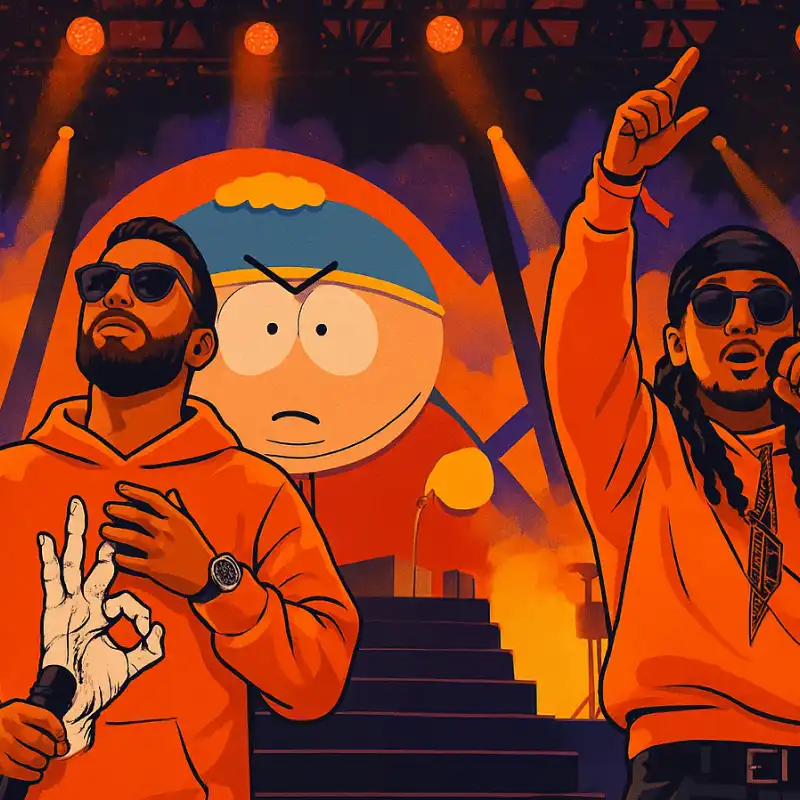
Clipse on Orange Scene should have been one of those bookings you later say you were right there for. Pusha T and Malice. The brothers. The myth. Coke rap with museum status and a still-fresh whiff of asphalt. But somewhere between the razor-sharp rhymes, the heavy beats, and an audience that wanted to be convinced, it all started to feel a bit like having the same hard-boiled text message read aloud 27 times.
One star
Two stars
Three stars
Four stars
Five stars
Disclaimer: Apropos Magazine received access or a review copy. As always, we share our own impressions — unfiltered.
Six stars
There is something almost comical about calling Clipse a nostalgia booking, because they do not sound like nostalgia in the soft sense. There is no warm reunion glow, no old men with acoustic guitars and tears in the corner of their eyes. Clipse still sound like a spreadsheet of moral decay, read aloud by two men who can make a drug metaphor feel like an annual report from God.
On paper, it was a strong Roskilde booking. Pusha T and Malice back together, a new chapter after many years apart, a discography with Lord Willin’ and Hell Hath No Fury in the bag, and enough cultural capital to make half of Danish music journalism adjust their glasses out of pure respect. And they deserve that respect. You do not have to be an idiot to understand that.
The problem was simply that respect is not the same as a good concert.
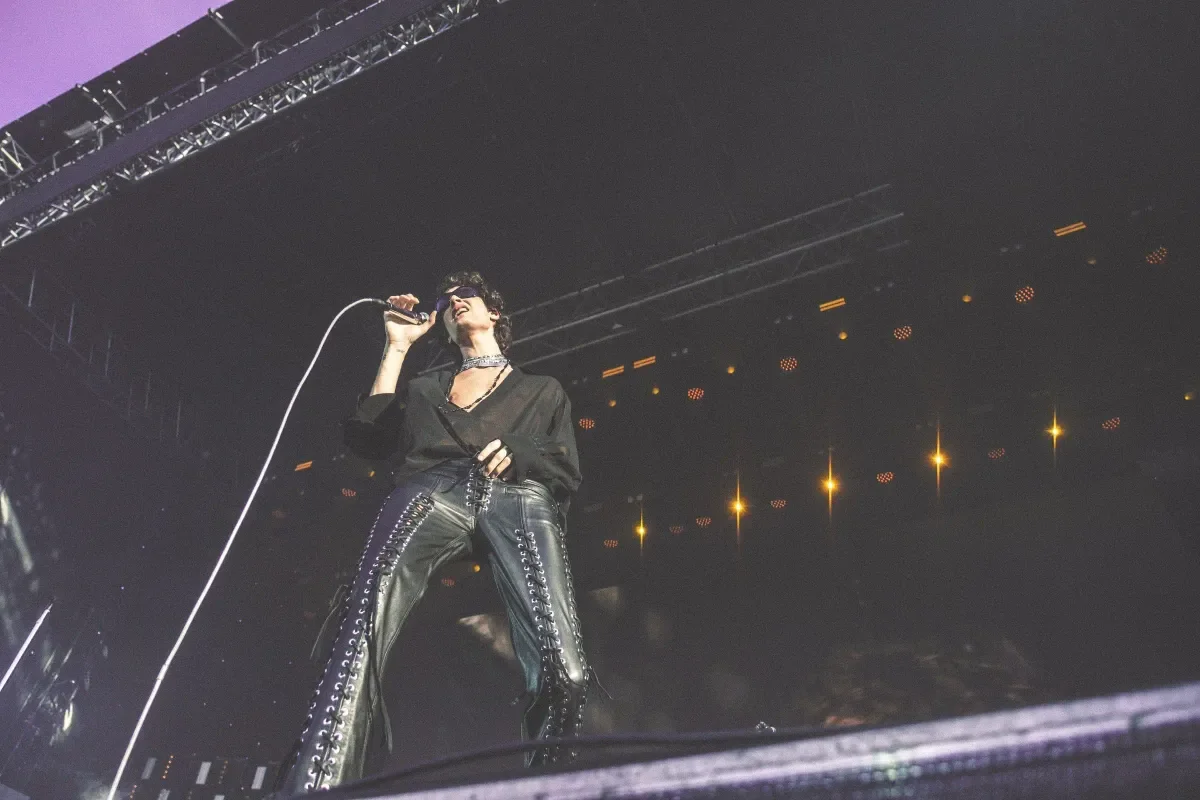
On Orange Scene, Clipse stood sharp, controlled, and with an authority you could not mistake. Pusha T rapped with that icy precision where every word feels weighed, polished, and vacuum-sealed. Malice had his own gravity, more grounded, more serious, like a man who has been away, seen something, and does not quite feel like explaining it to people in rain jackets and festival wristbands.
But together it quickly became a strangely flat experience. Not bad from the start. Just offensively even. Beat after beat. Verse after verse. The same dark attitude. The same hard-boiled pose. The same “we know we are better than you” energy. That can be incredibly effective for three songs. After 35 minutes, it starts to feel like standing in line for a very exclusive nightclub that only plays its own intro.
And then there were the little repetitions. “Easy, easy, easy.” Again. And again. And again. As if someone had found a hype-man button and forgotten to take their finger off it. The first time it felt like crowd control. The second time like a mood marker. By the fifth, I started wondering whether there was an internal competition for how little you could say and still get Orange to react.

That is a shame, because Clipse have more than enough material to do something far more dangerous. Their best music has a knife in its back and a cross in its pocket. It is about money, guilt, family, faith, emptiness, and consequences. This is not just coke rap as a genre exercise. It is coke rap as confession. But live on Orange, the nuances were often pressed down into the same hard shape. Everything was delivered with so much cool that the temperature eventually dropped.
The audience never seemed completely blown away either. There was respect, yes. There was nodding. There were people who had clearly been waiting to hear the old tracks on a big stage. But the collective explosion never came. Orange can be merciless that way. It quickly reveals whether a show grows with the room or just stands there looking expensive. Clipse looked like a booking for Orange, but at times sounded like a concert that would have been better off in a darker, tighter, sweatier space.
It is possible that others heard a history lesson. I heard more of a lecture with a lot of confidence and too few surprises. Skilled? Absolutely. Legendary? On paper. Alive? Only in flashes.
There were moments when the weight landed. When the flow sat exactly in the beat, and the two voices worked up against each other, you could feel why Clipse still matter. You could also feel the history. That particular chill, that particular minimalism, that Neptunes DNA where everything sounds simple until you try to figure out why it works.
But a concert cannot live on legacy alone. Not at Roskilde. Not on Orange. Something has to happen in the room, not just in the references. And Clipse never quite got out of their own icon status. They stood there looking like a duo that needed recognition more than surprise.
Let us just put it like this…
Clipse had the story, the attitude, and a stage big enough to make the evening memorable. But the concert became too locked into its own expression, too repetitive in its energy, and too content with being cool. Sometimes the most dangerous thing about legends is not that they disappoint. It is that they deliver exactly what you expected, and nothing more.
En stjerne
To stjerner
Tre stjerner
Fire stjerner
Fem stjerner
Seks stjerner