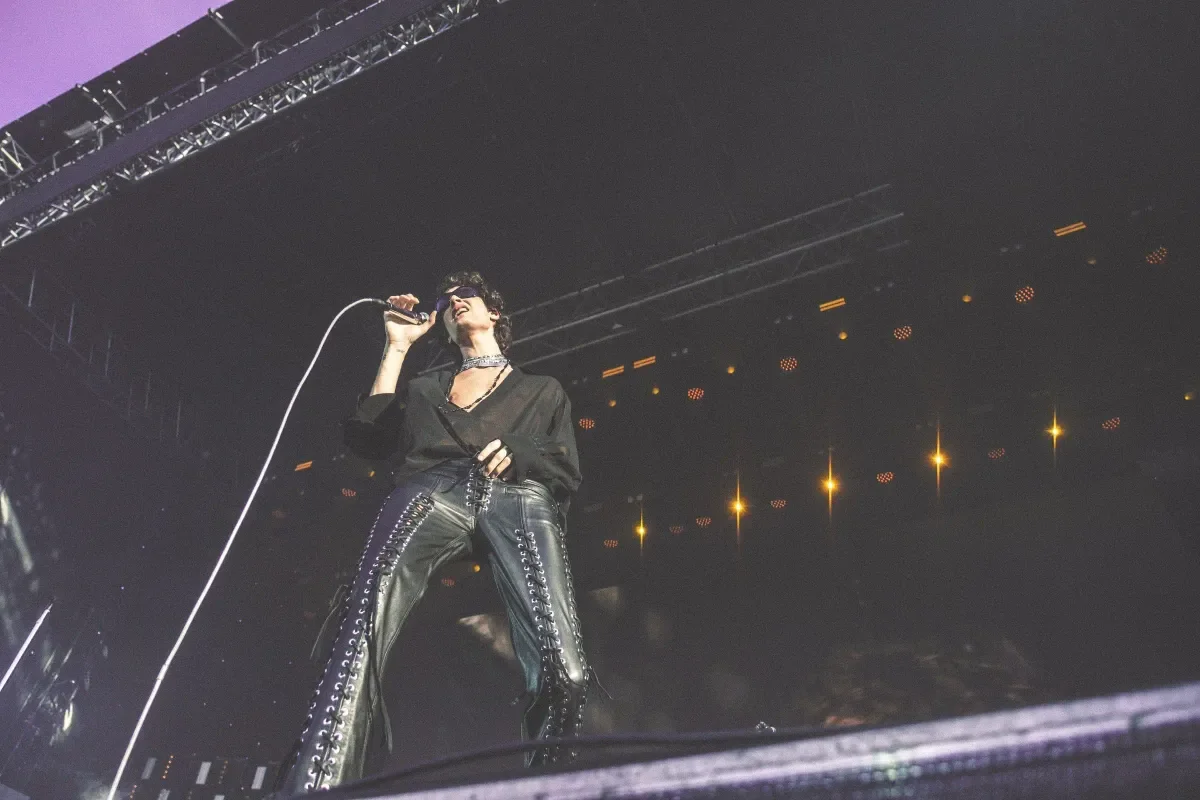
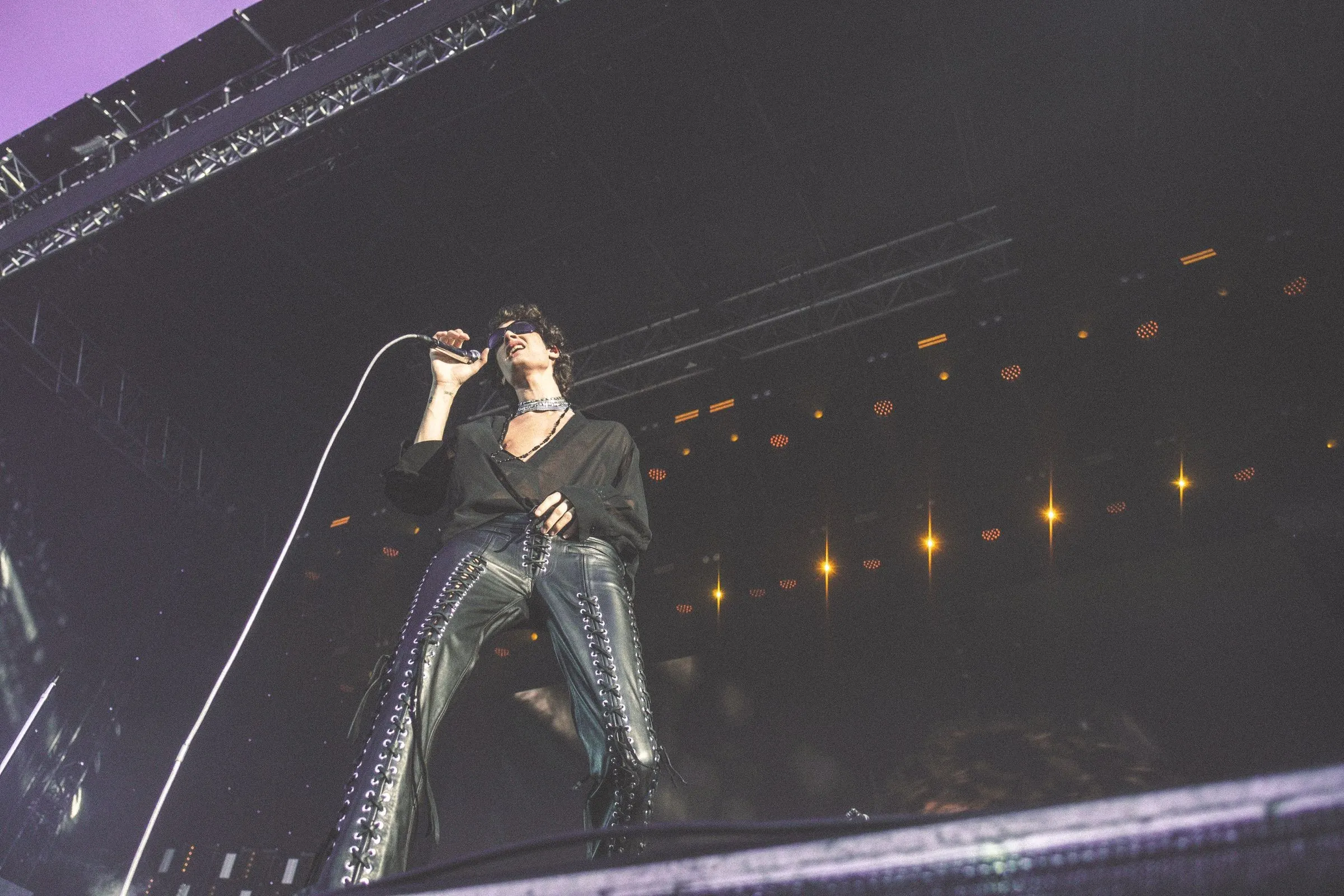
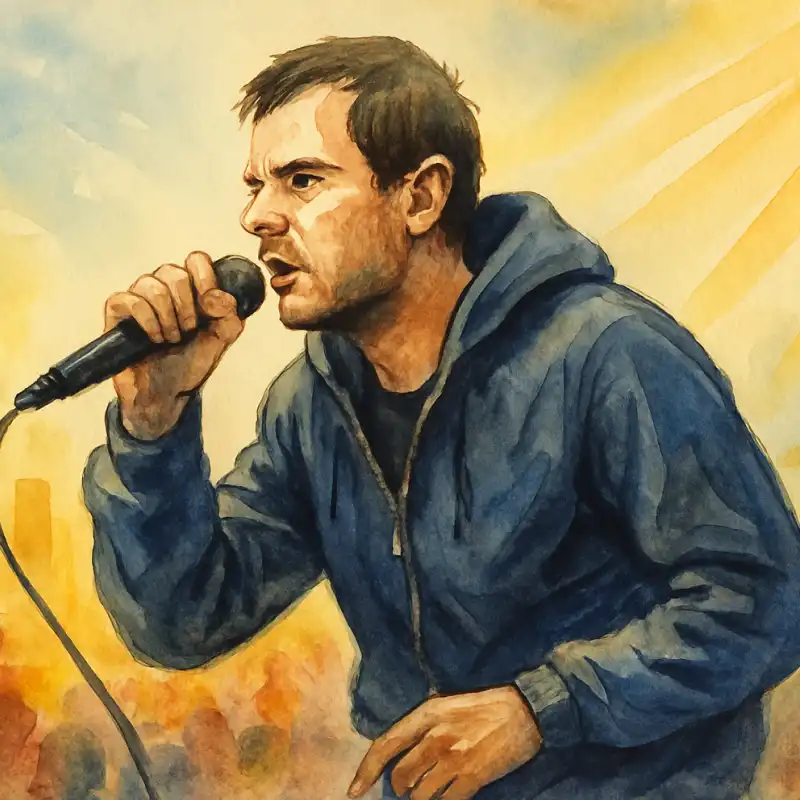
Rain poured down over Roskilde, and Arena was packed to the rafters. Some people sheltered under the tent canvas; others slowly soaked through without quite giving up. It could have turned into a heavy afternoon. Instead, Guldimund became a reminder of how much can happen when a concert doesn’t try to fill every corner, but simply dares to stay close.
One star
Two stars
Three stars
Four stars
Five stars
Disclaimer: Apropos Magazine received access or a review copy. As always, we share our own impressions — unfiltered.
Six stars
There was something almost unreasonably precise about the weather when Guldimund took the stage at Arena on Thursday afternoon. The rain had made the festival grounds heavy, grey and wet in that way where, in the end, you stop distinguishing between clothes and skin. Along the sides of the tent, the collected rain came crashing down in curtains of water, and a hole in the canvas occasionally sent small, surprising drops onto the audience members who thought they had found shelter.
They hadn’t. But it didn’t matter much.
Because once Guldimund was there, the weather slipped a little out of focus. Not because he drowned it out. Quite the opposite. He almost let the rain become part of the concert. His music has that quality: it doesn’t try to lift you away from reality. It stays in it. In the close, the difficult, the wet. In everything we never quite manage to say to one another before it’s either too late or too awkward.
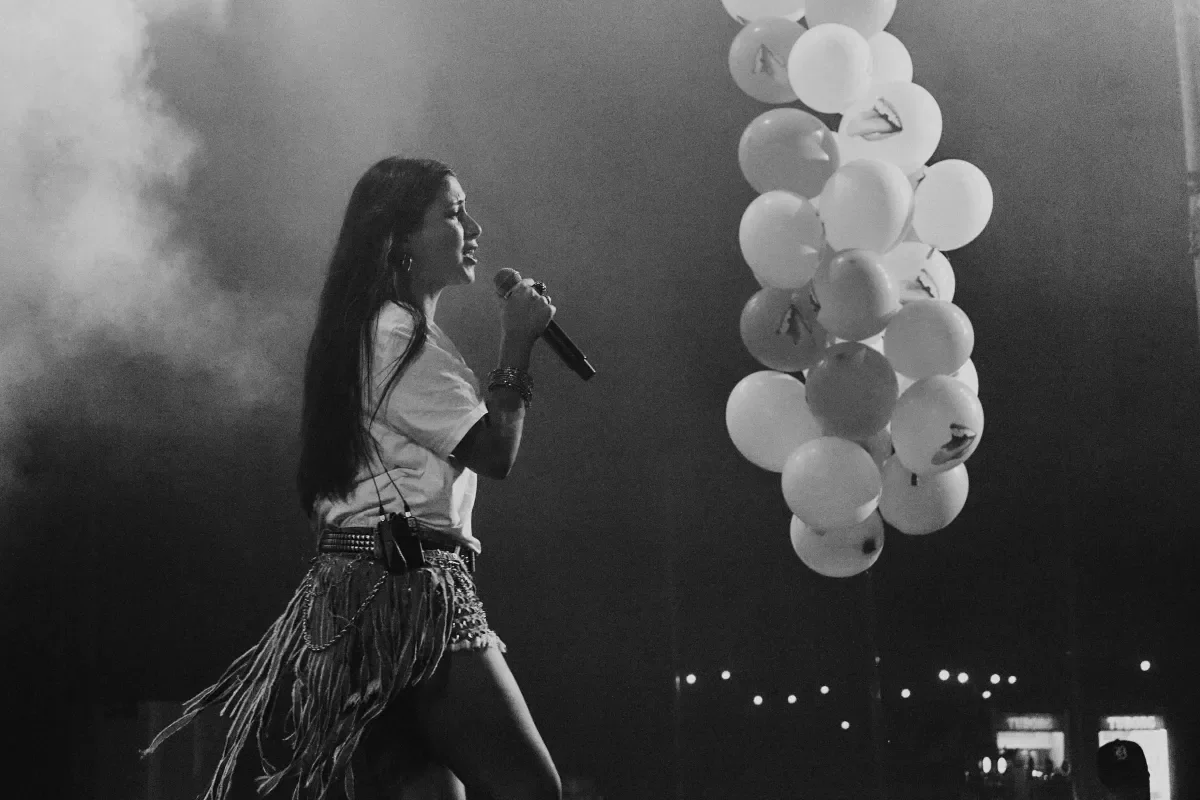
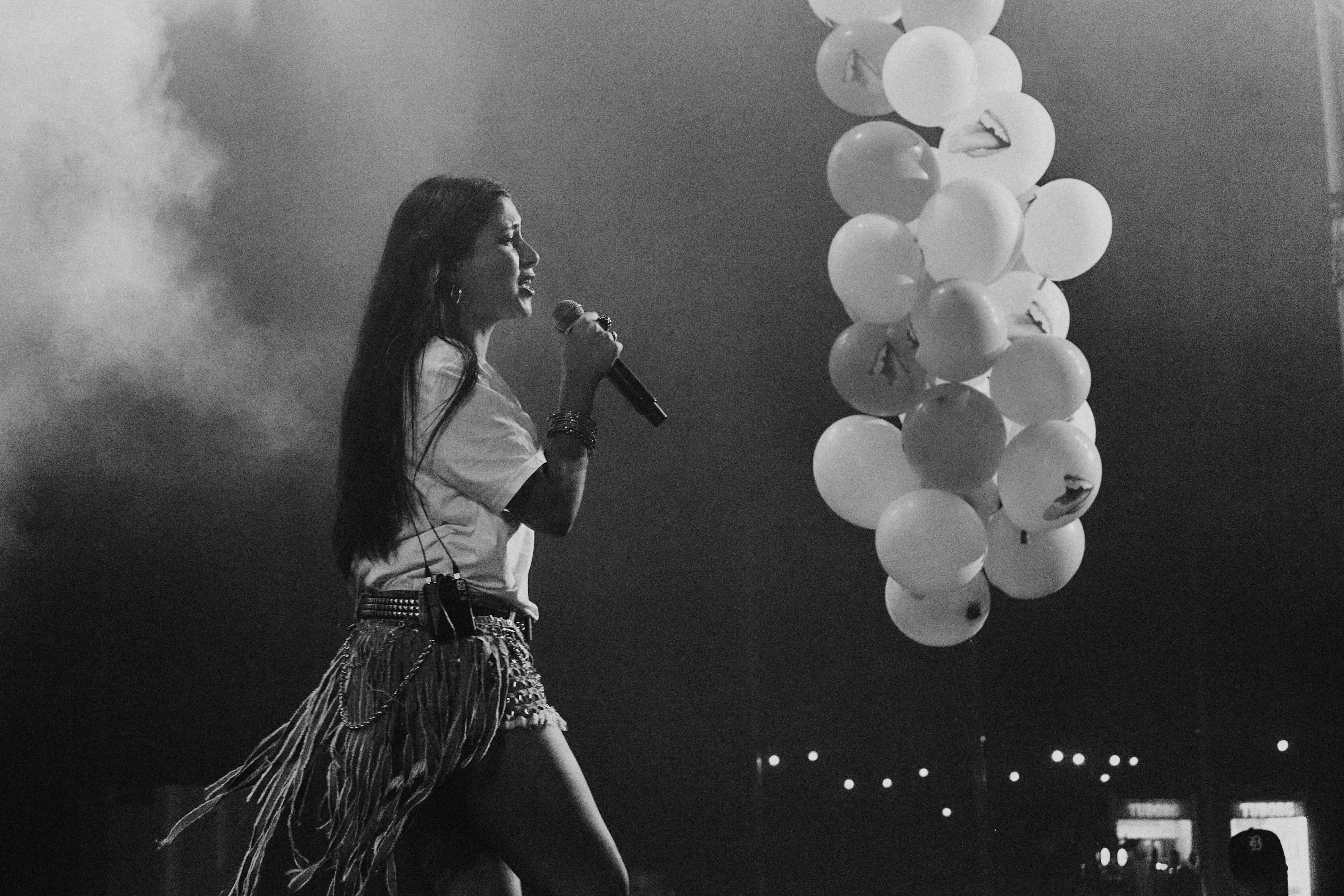
Guldimund is not an artist who takes over a room with grand gestures. He doesn’t seem like someone who needs to conquer the stage. Rather, he stands inside it. Calmly. His strength lies in the pauses, in the gaze, and in the way he makes a large festival stage feel smaller without making the concert itself small.
Between songs, he spoke to the audience in a way that felt sincere. He talked about songwriting with his wife and introduced, among other things, a song written for his son. That kind of thing can quickly become too private, as if the audience has suddenly been invited into a family calendar we never asked to see. But that wasn’t how it felt here. The stories opened the songs without explaining them to death.
“Ring når du har tid” became one of the concert’s finest moments. It had something almost folk high school about it, yes, but in the best possible way. Like a small space of recognition. A song about the kind of contact that ought to be easy, but rarely is. To call. To answer. To reach out. To dare to be the one who needs someone.
This is where Guldimund lands best. He writes about feelings as they exist in real life: wrapped up in everyday routines, family, exhaustion, care and bad timing. His songs are about the small relationships that shape us more than the big events. The conversations we keep postponing. The people we love, but don’t always take good enough care of. The messages we should have sent.
That is also part of what makes Roskilde beautiful when the festival is at its best. That in the middle of the mud, the noise and the big names, there is still room for concerts where presence matters more than staging. Where you may not be blown backwards, but are slowly drawn in.

When the concert was briefly interrupted, it could have broken the mood. It didn’t. Guldimund returned calmly and continued exactly where he had left off. At the same time, he used the moment to remind the audience to drink in moderation and look after one another. A small gesture, but one that said a great deal about the concert’s underlying tone. There was care in it. Not polished festival care, but actual humanity.
And then came “Vil du noget”. That was when the mood changed. Arena woke up in a different way. The audience sang along, danced, and gave the concert the shared moment the more reflective songs had been building toward. It wasn’t a violent release, but a warm one. A moment when the tent suddenly felt less wet, less heavy, more united.
The concert was not without its weaknesses, though. The restrained expression also meant that some passages sat a little too close to one another. You could have wished for a bit more variation, or a sharper edge in the dynamics. Not because the concert needed to be bigger or more dramatic. But because at times it became so comfortable in its own warmth that it lost a little tension.
Even so, it was hard not to be moved by the space he created. Not in the big way, where you stand there crying into a festival beer. More in the quiet way, where your body drops its shoulders a little and you feel that something in you has been listening.
When the final song ended, the rain was still falling outside. Many people remained under the tent long after the concert was over, as if they needed a moment before stepping back out into the weather. It made for a fitting afterimage of the concert: an audience hesitating a little, not only because of the rain, but because the space Guldimund had created was hard to leave right away.
Reflection:
Guldimund didn’t deliver Roskilde’s biggest production or most bombastic concert. Instead, he created a space where strong lyrics, presence and genuine connection made even a rain-soaked festival tent feel intimate. Some concerts kick the door in. This one knocked softly, and then stayed in the body a little while afterwards.
En stjerne
To stjerner
Tre stjerner
Fire stjerner
Fem stjerner
Seks stjerner