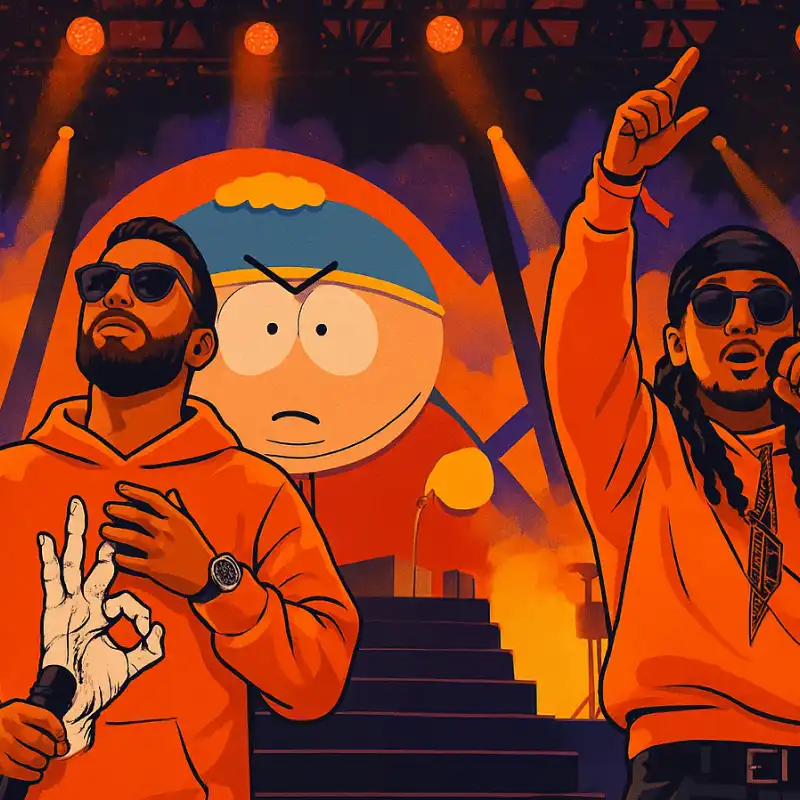
I’d actually meant to leave. Just catch the opening, feel the temperature, do the classic festival move where you pretend you’re a free person in control of your evening. But then Tobias Rahim was there. Gleaming, composed, and completely absurdly ready for Orange Stage.
One star
Two stars
Three stars
Four stars
Five stars
Disclaimer: Apropos Magazine received access or a review copy. As always, we share our own impressions — unfiltered.
Six stars
Tobias Rahim on Orange Stage was one of those bookings that, before it happened, split opinion in the very Danish way. Not with drama, but with little skeptical exhalations through the nose. Was he big enough? Was it too soon? Should Roskilde have booked an international name? Could you really hand Orange to a man who, only a few years ago, still felt like a phenomenon in motion?
The answer came pretty quickly.
Yes. Of course you could.
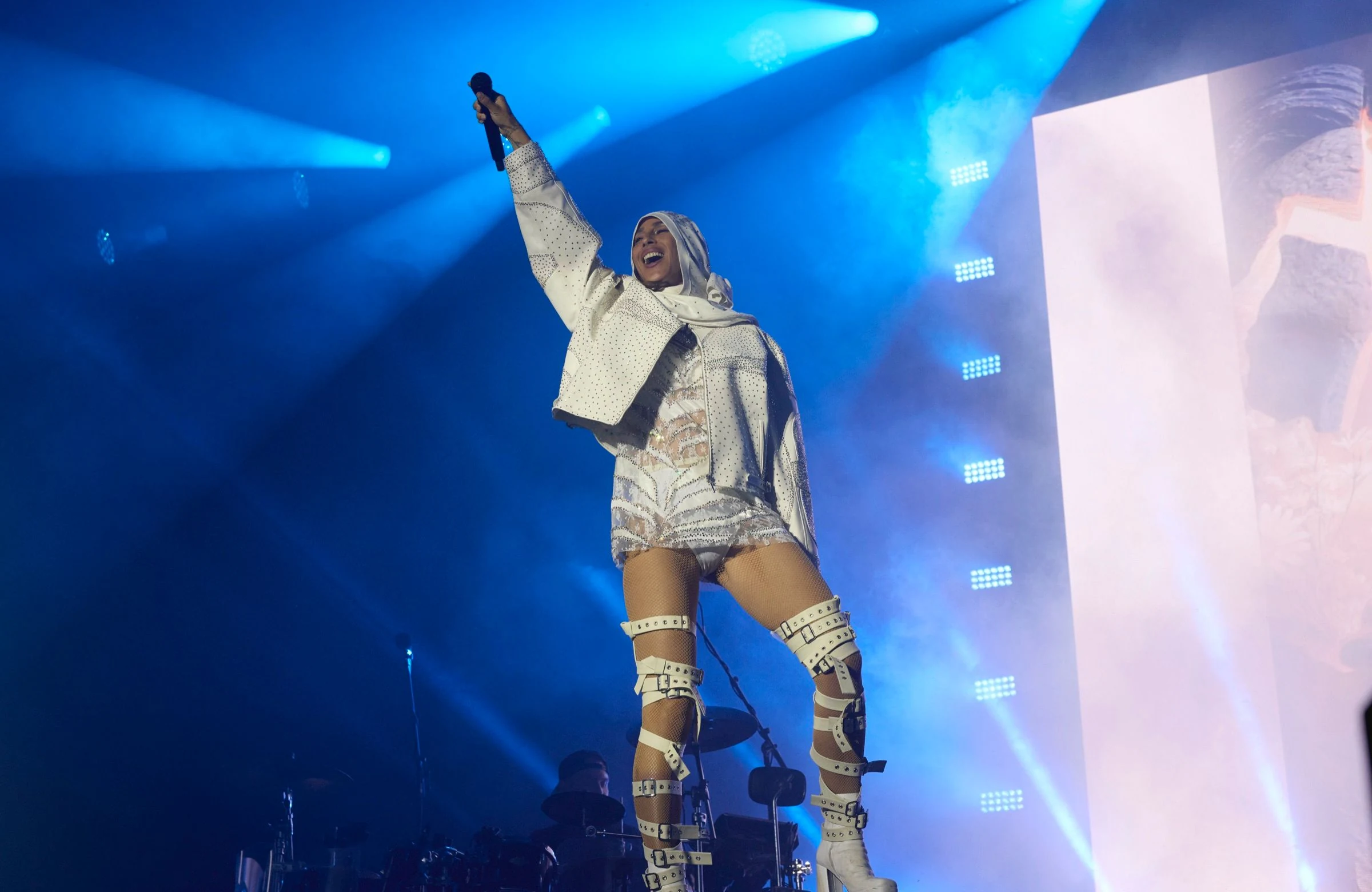
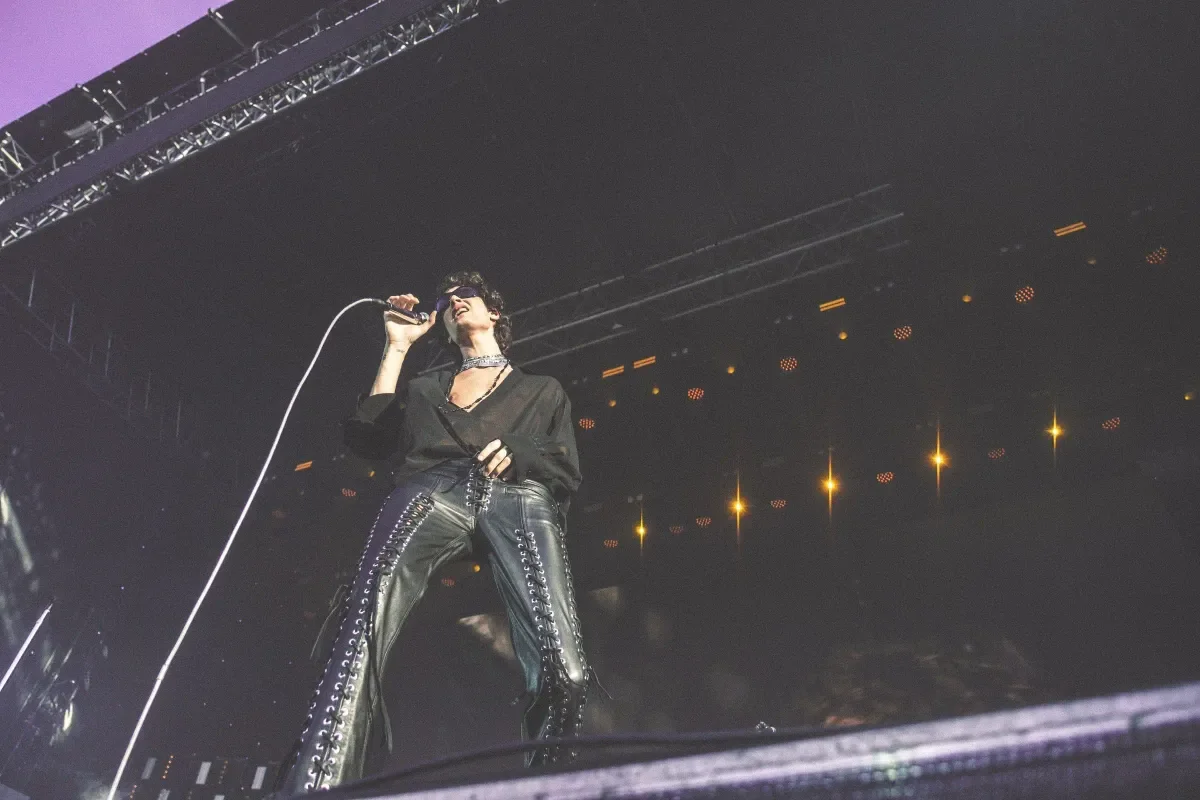
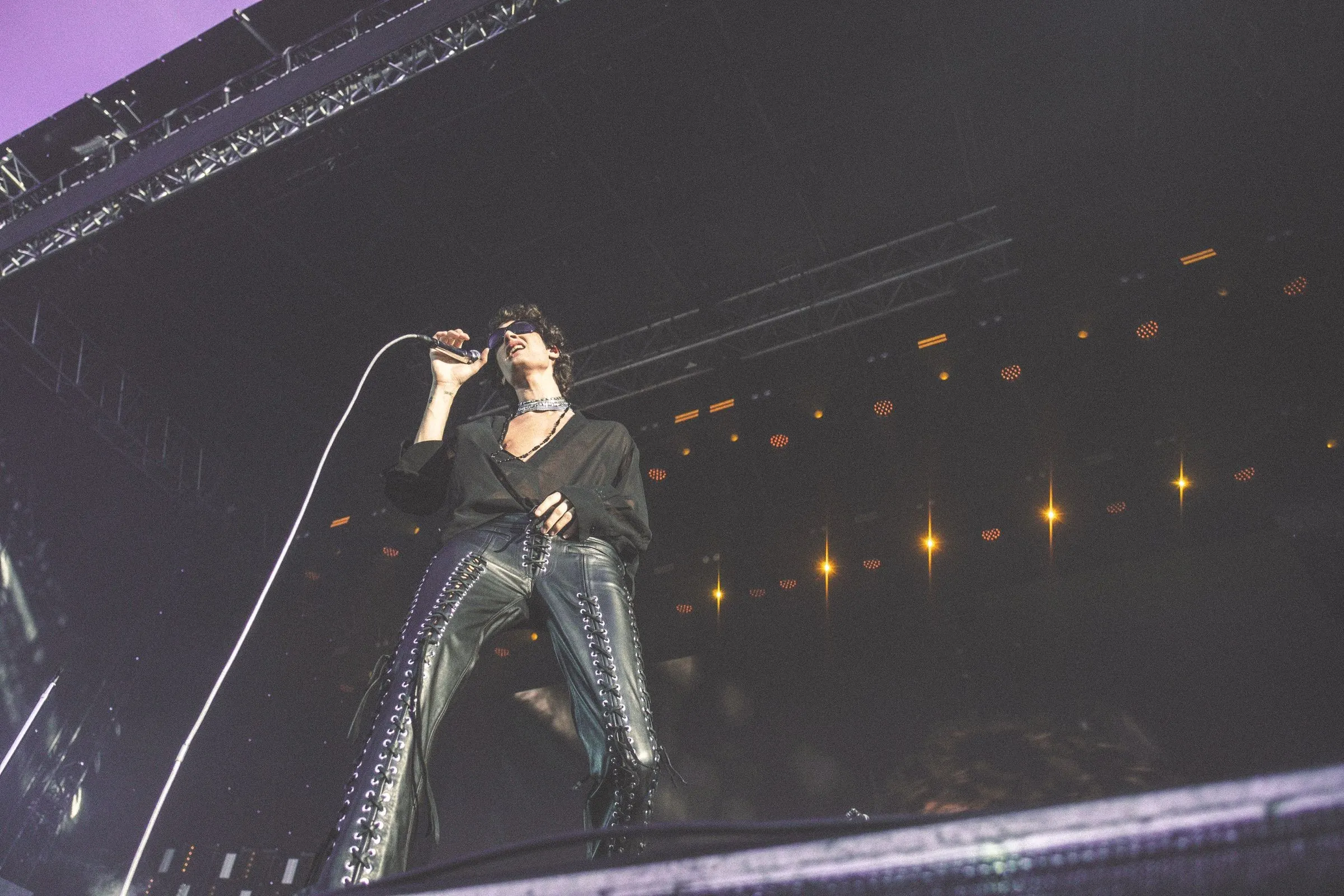
Because Tobias Rahim didn’t stand on Orange like someone who had been allowed to. He stood there like someone who had been waiting for the stage to finally catch up with him. And that’s a difference. He came on with his band, slicked up, shining, physically present in that Rahim way, where you never quite know whether you’re looking at a pop star, a performance artist, or a very well-trained man from a dream you had after too much natural wine.
The set design was familiar. The enormous golden antlers towered over everything like a symbol of all the Rahim project wants to be: big, mythical, bodily, a little kitschy, and utterly uninterested in Danish modesty. He wanted up. Up, up, up. And Orange let him get there.
Rahim’s energy can still be hard to read. Is it distance? Self-irony? Total control? Is it charming? Is it a little annoying? Yes. Maybe all of it. But that’s also why he works. He isn’t “one of the people” in the classic Danish sense, where you have to make sure everyone knows you’re really just an ordinary guy who happens to be standing in front of 60,000 people. Tobias Rahim feels more like someone who has decided that ordinariness is something the rest of us can deal with.
Fair enough. Someone has to do it.
The most important thing was that nothing about the concert felt accidental. It was tightly assembled, but not sterile. It had the big gestures, but also a sense of timing. And timing was really the point. Because at several points at this year’s Roskilde Festival, you could feel a new strategy emerging: play the biggest songs early, keep the audience’s attention locked in, don’t save the gold until people have started thinking about late-night snacks.
Fifteen minutes in, “Flyvende Faduma” arrived. First in an atmospheric version, carried almost entirely by guitar and collective singing. The crowd took over, and suddenly Orange felt smaller. Not small. Just closer. As if everyone had been pulled into the same song at the same time. Shortly after, the track unfolded into its full version with rainbow lights across the stage, and that was when the thing happened the best Orange moments can do: either your expectations are met, or you give up resisting.
And before you had time to land again, Birthe Kjær was on stage.
Birthe. Kjær.

It was so absurd and so right that you almost got angry no one had done it before. She sang “Den Danske Sommer,” reportedly her first performance at Roskilde Festival, and the audience shouted her name as if she had always belonged on Orange. And maybe she did. Not as irony. Not as a gimmick. But as one of those rare moments when Danish cultural history drops its handbag and starts dancing.
She was fabulous. Of course she was. Birthe Kjær has that kind of stage presence that doesn’t need to explain itself. She walks in, and suddenly the whole field behaves as if schlager and festival mythology have always shared a dressing room.
The most remarkable thing was almost what didn’t happen. Birthe Kjær was the concert’s only guest. In a time when Danish headliners often turn into P3 All Stars, with a constant shuffle of friends, features, and people who just happened to be nearby, it was a relief. Tobias Rahim let the concert be its own thing. He didn’t need more names. He needed one perfect card, and he played it.
The concert ended as it should. With fireworks, grand gestures, and that kind of Orange finale feeling that is almost too easy to mock because it works. And it did. It worked.
Of course, the cynics can say that this year’s Roskilde lineup sometimes looked like a slightly washed-out version of 2018. And yes, you could have wished for a little more wildness in the bookings here and there. But Tobias Rahim didn’t feel like nostalgia, recycling, or safe Danish comfort-booking. He felt like an artist who hit the stage at exactly the moment when both he and the festival were ready.
Reflection:
Tobias Rahim didn’t just become big enough for Orange. He made Orange smaller around him. Not by being the loudest, but by understanding his own scale better than most. I’d actually meant to leave. That was stupid. This was True Orange Feeling.
En stjerne
To stjerner
Tre stjerner
Fire stjerner
Fem stjerner
Seks stjerner