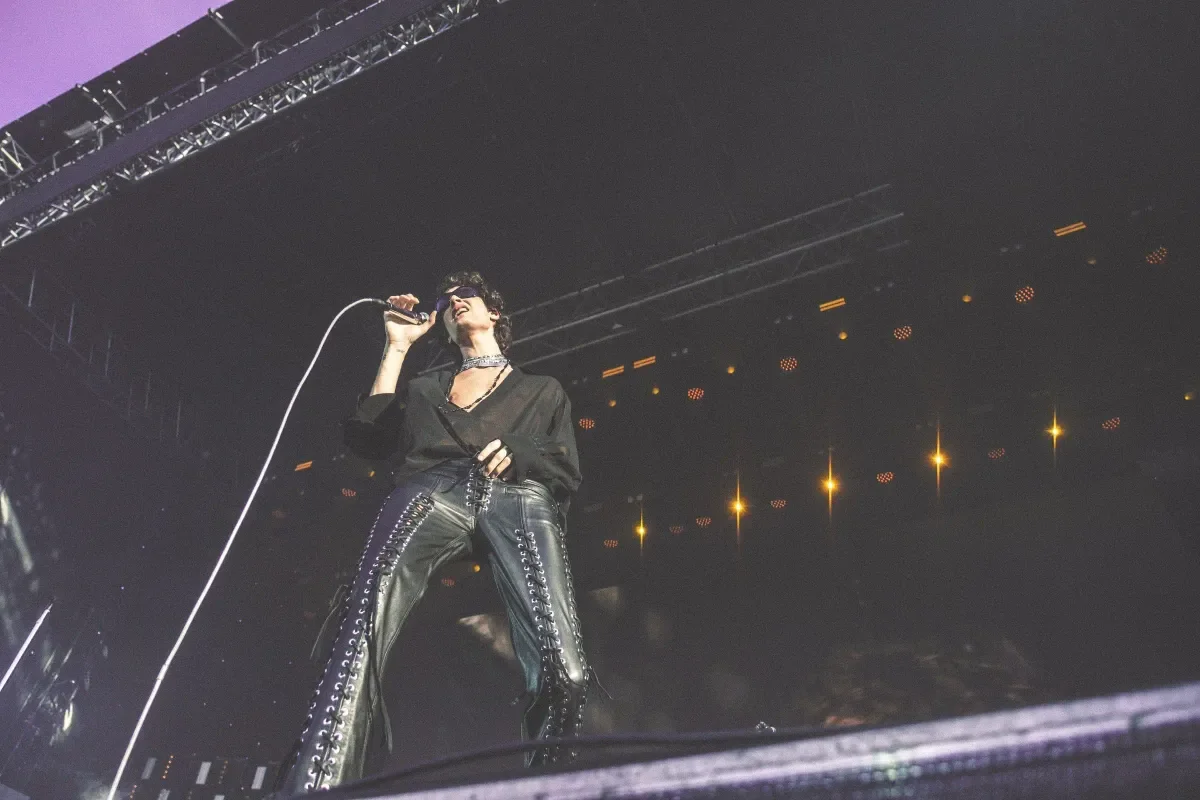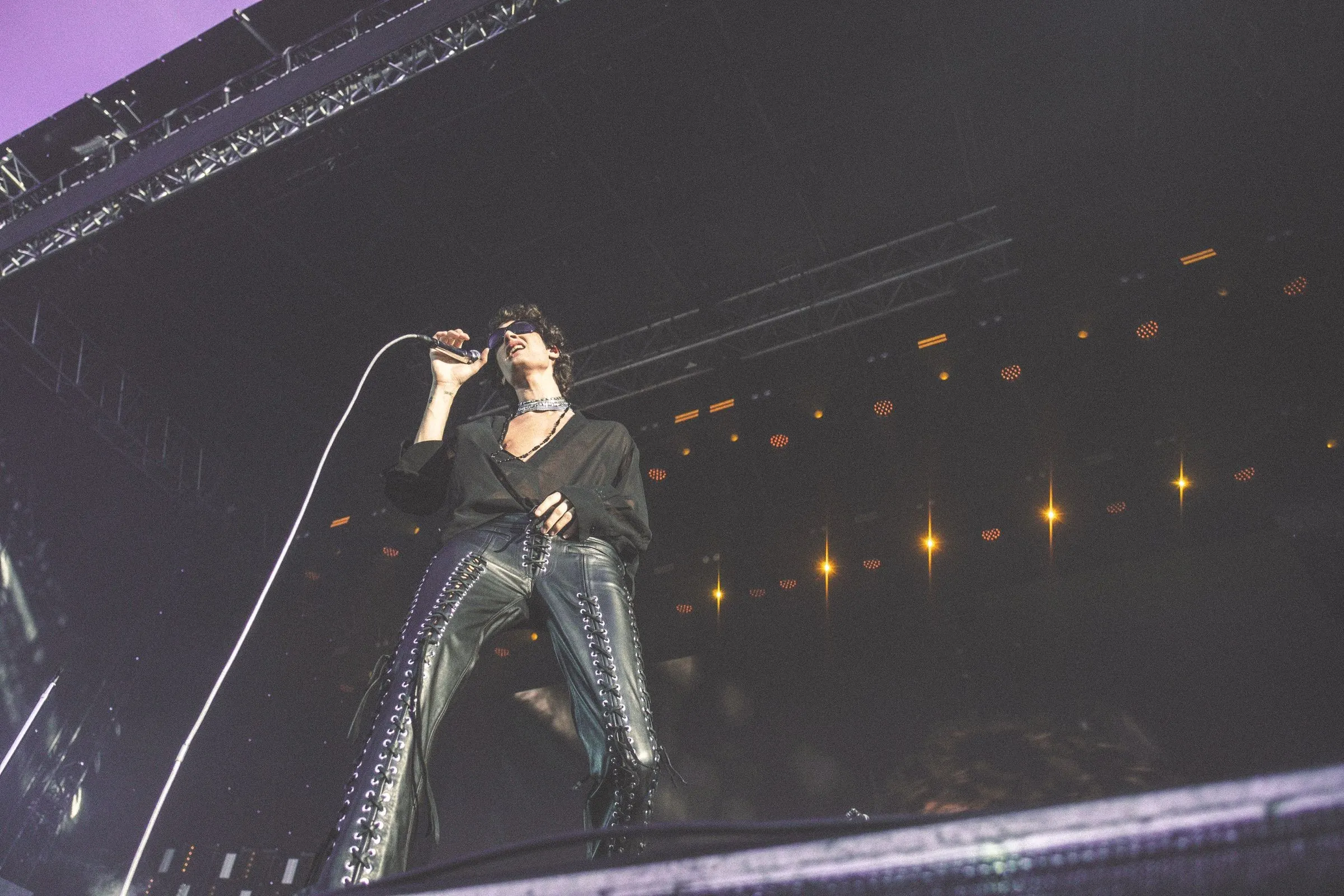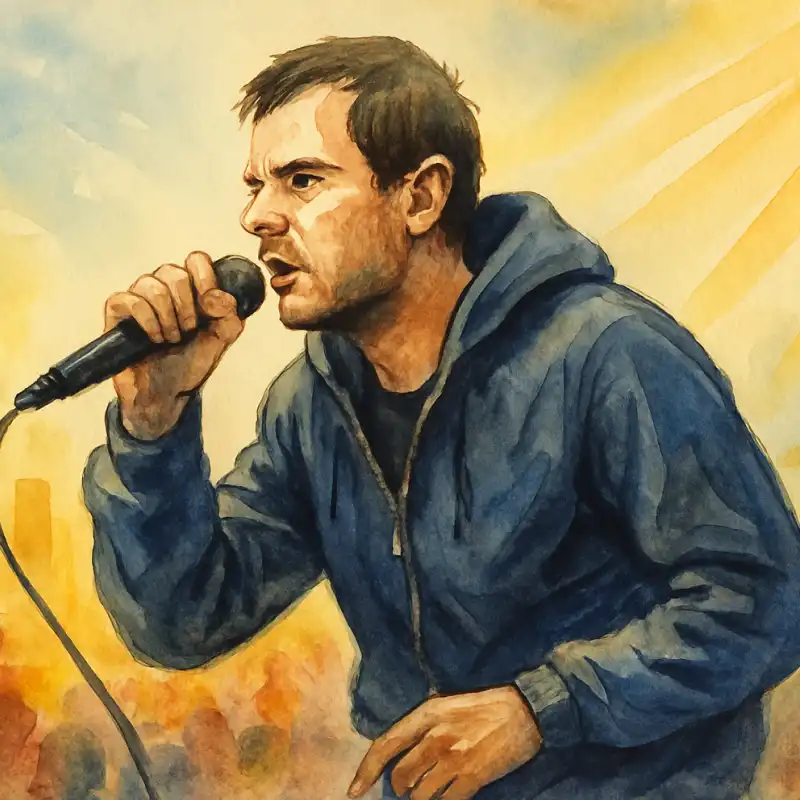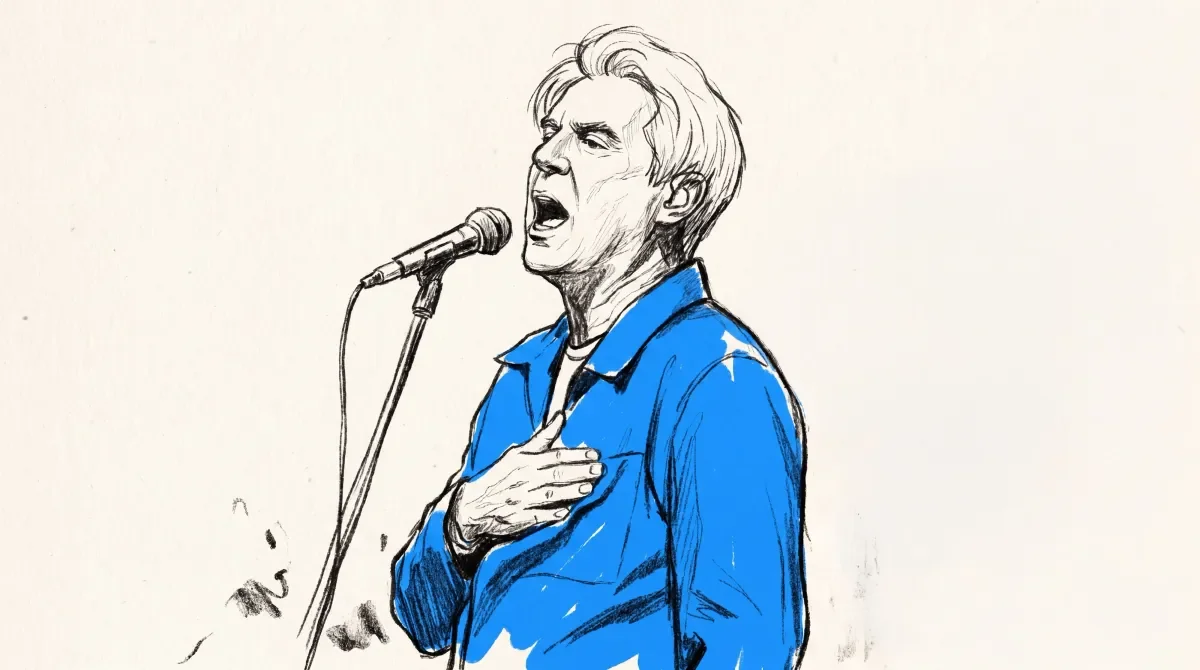
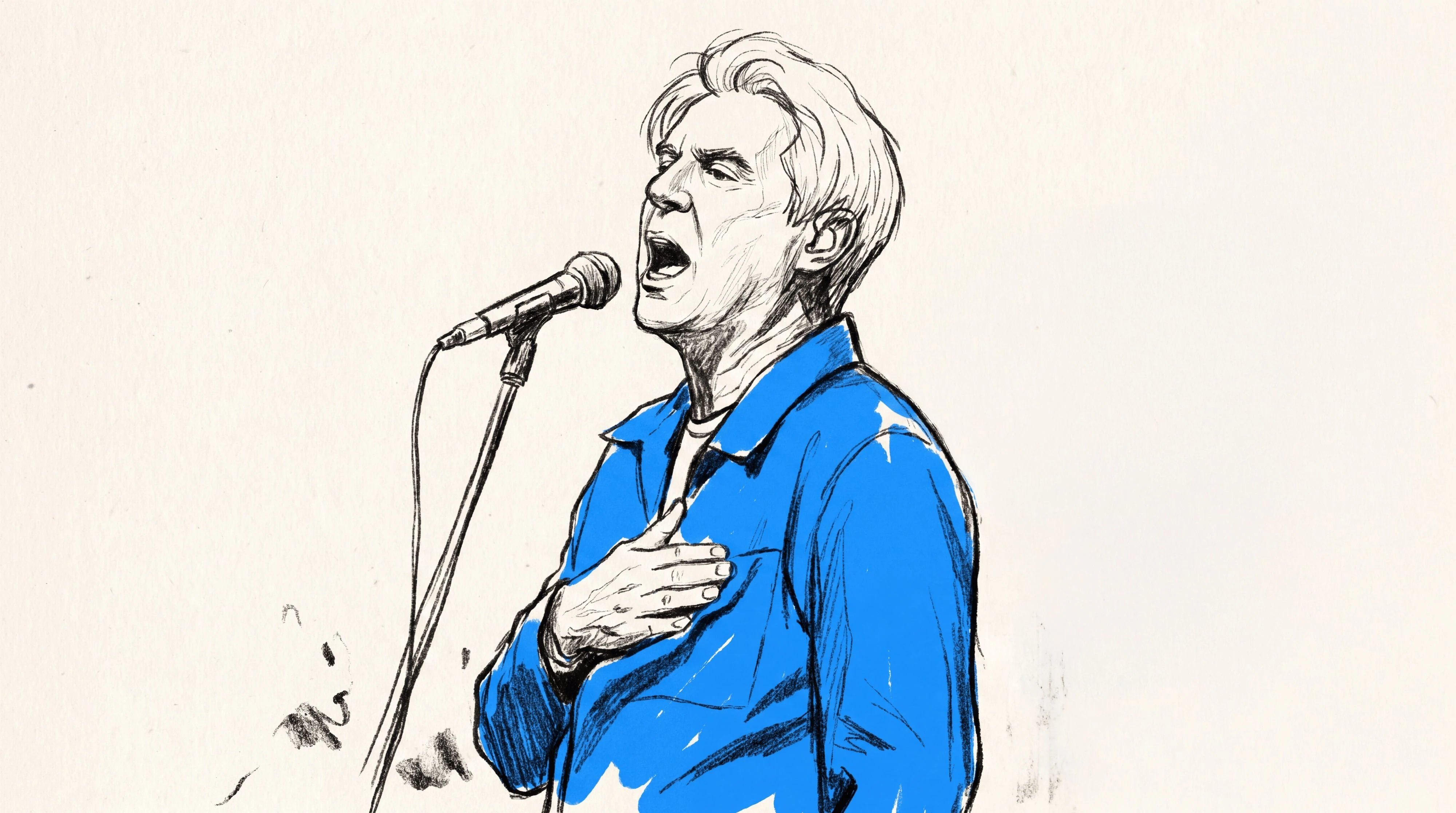
David Byrne was one of those bookings at Roskilde that made the whole programme look smarter just by being there. A living legend, yes, but thankfully not in that museum-piece way, where you pay to watch a man reminisce about himself. At Arena, we got something stranger and better: a concert that behaved like a performance.
One star
Two stars
Three stars
Four stars
Five stars
Disclaimer: Apropos Magazine received access or a review copy. As always, we share our own impressions — unfiltered.
Six stars
David Byrne may have been the most exciting booking at the entire Roskilde Festival. Not necessarily the biggest, loudest, or most algorithm-friendly. But the most interesting. The kind of name that makes a festival programme sit up a little straighter. As if Roskilde is quietly whispering: don’t worry, we can still come up with something.
Arena was packed. So packed that the question came up pretty quickly: was the tent actually too small? On paper, David Byrne could easily have carried Orange Scene. He has the songs, the history, the back catalogue, the myth, and that particular aura of a man who has both invented something and still seems genuinely curious about what happens if you move a drummer three metres to the left.
And yet Arena felt right. Maybe precisely because the concert was not only about scale. It was about movement. About detail. About watching people on a stage do something together while constantly shifting, changing places, and becoming part of a larger mechanism that never felt mechanical.
Byrne had assembled a rotating orchestra, with the musicians moving around in carefully choreographed patterns. No one stood still for very long. It wasn’t just a band. It was a small mobile society with a sense of rhythm. Instruments, bodies, and songs slipped in and out of one another as if someone had taken the idea of a concert and thought: what if we made it physical too?
It was fascinating to watch. Not in that strained way, where you sit there applauding the concept because you feel you ought to. More in the way you suddenly realise you’ve spent ten minutes following a percussionist across the stage as if it were an important subplot in an arthouse film. Which it perhaps was.
The audience also bore the mark of David Byrne being an artist with a very particular history. There were those who had followed him since Talking Heads. Those who came for the huge back catalogue. Those who had probably read a long article about him in a magazine with matte paper. And then those who just wanted to hear that song they once downloaded onto their computer, back when Windows XP still felt like the future. That is actually beautiful. A little chaotic, but beautiful.
The setlist balanced elegantly between Talking Heads classics and Byrne’s own material. It could easily have become a parade of “now we’re playing the one you know,” but the concert never felt like karaoke for old fans. The songs were tied together by small stories, and sometimes stories about the stories. Byrne didn’t just introduce numbers. He opened little rooms around them.
That may be what he does better than most. He doesn’t just play songs. He builds a system you’re allowed to step into. A universe with rules, movement, humour, and precision. The genres blended effortlessly, and the whole evening felt more like one continuous performance than a string of separate numbers. As if the concert format had spent an afternoon with a very gentle, very musical architect.
And then there was the ending. The symbolic closing credits. The audience stood there as if we had just stepped out of a film we hadn’t quite realised we were in. It could have been too cute. It could have been too much. But it fit. Because the entire concert had already insisted that a concert doesn’t have to be a straight line from song to song. It can also be a story, a choreography, an idea with a pulse.
Reflection:
Some artists play their songs and hope the story comes along with them. David Byrne does it the other way around. He builds the story first, and then the music starts moving around inside it. Arena may have been too small. But it was also exactly small enough for us to see the machinery blink, sweat, and dance.
En stjerne
To stjerner
Tre stjerner
Fire stjerner
Fem stjerner
Seks stjerner