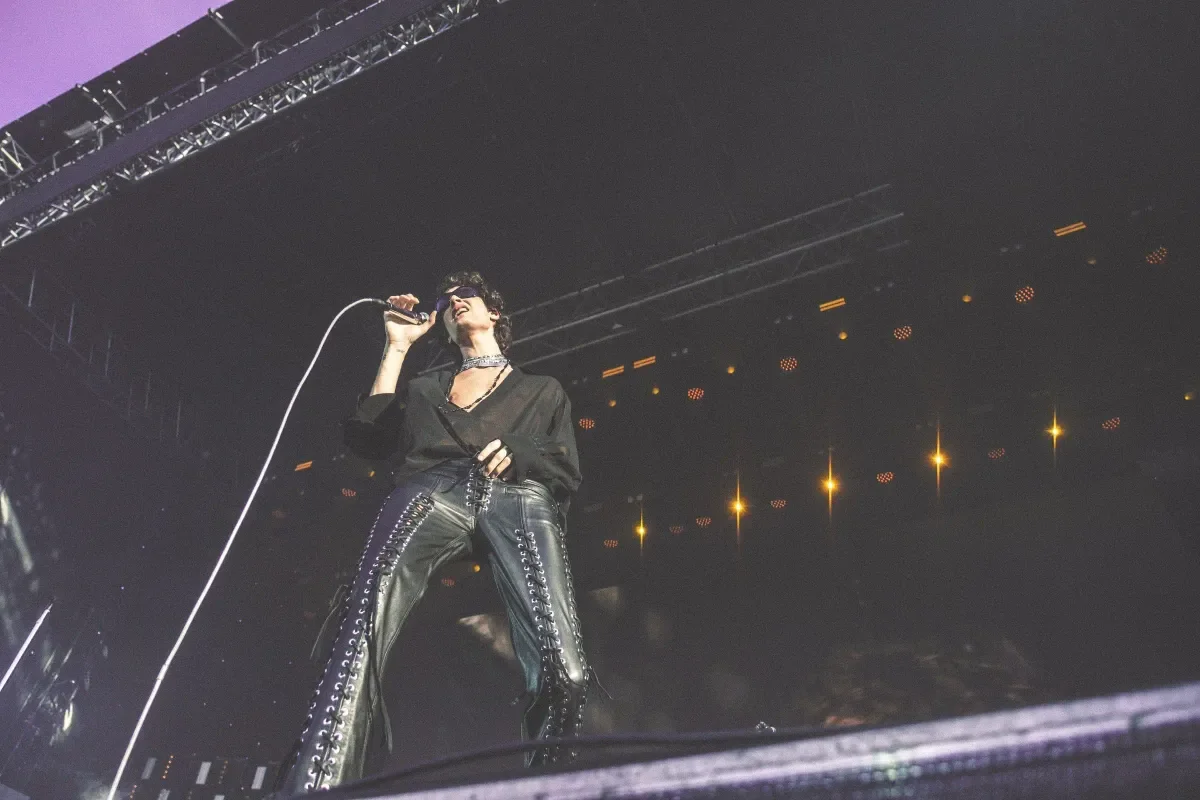
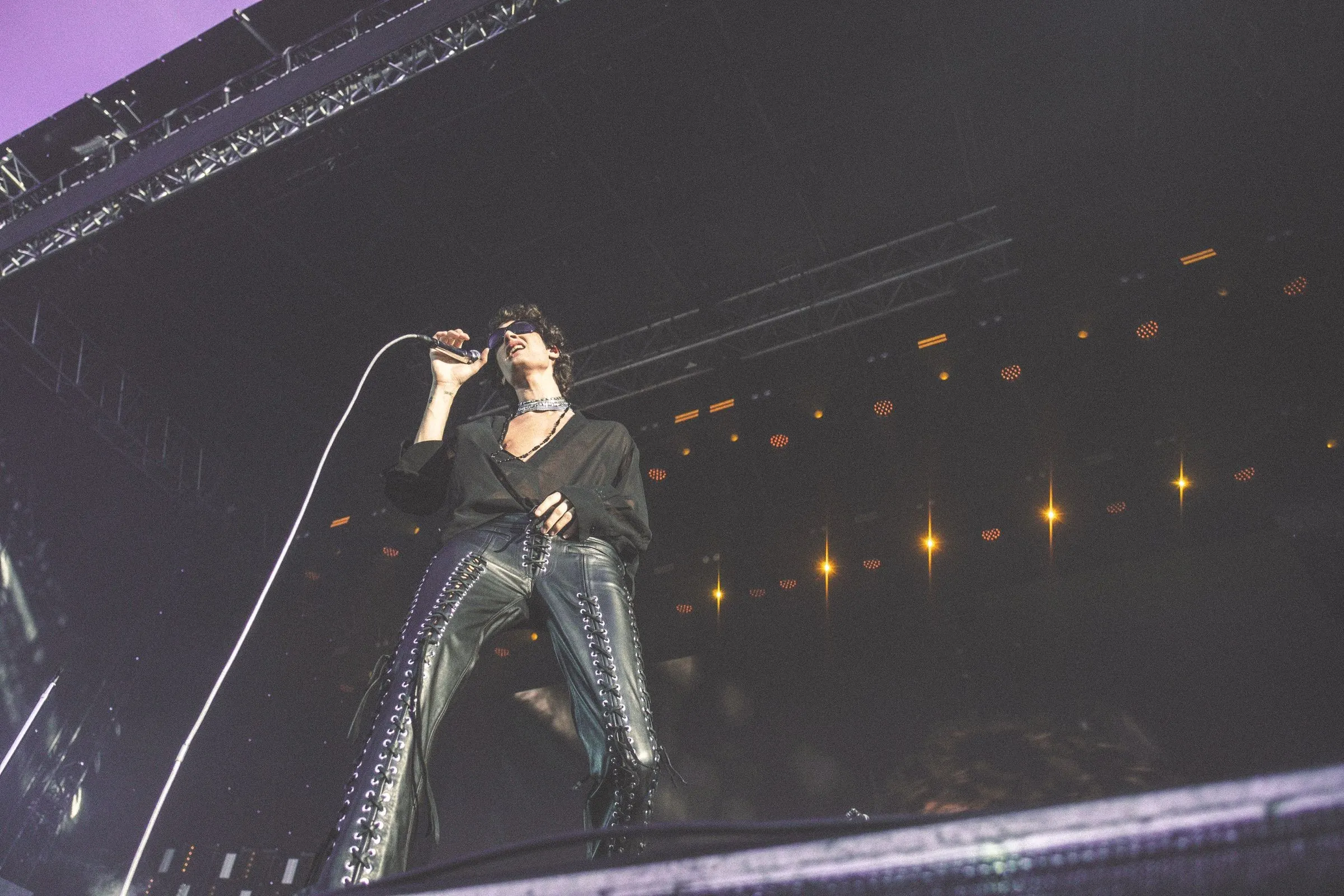
Sammy Virji at Poolen was not love at first drop, but the British DJ quickly turned the night into a heavy UK garage party in Copenhagen. For the first twenty minutes, we mostly stood there weighing up the distance to the stage, the crowd and the format. Then, thankfully, the set began to show why Sammy Virji is one of the hottest names on the international club scene right now.
One star
Two stars
Three stars
Four stars
Five stars
Disclaimer: Apropos Magazine received access or a review copy. As always, we share our own impressions — unfiltered.
Six stars
ELOQ did exactly what a good warm-up act should do, and what far too many support names either forget or try to overcompensate for. He got the room moving without trying to steal it. He didn’t come in with that annoying energy of, now we all have to understand how brilliant his reference tracks were. He just played well. Very well, in fact. There was UK garage, house, old trap detours and a general sense that he was having a good time himself, which honestly matters more than you’d think. Because a DJ who looks like he’s enjoying himself also makes other people enjoy themselves. It’s not rocket science. It’s just still rare.
It was the first time I’d seen him since AV AV AV’s final concert at Poolen (read the review here), and there was something deeply satisfying about feeling how he now stood there with a different kind of freedom in his body. Less concept, more drive. Less installation, more instinct. He felt like a DJ who’d been out getting a bit of European air in his lungs and had come home with a little more edge in his bag. If he’d played for another hour, I wouldn’t have complained. If he’d played an hour after Sammy, it probably would have worked too.

And then to Sammy Virji, who on paper is one of those artists you can easily end up describing a little mechanically if you’re not careful. UKG phenomenon. Viral. DJ Mag. Global garage. Fred again.. Skepta. Chris Lake. All of that is true enough. He’s not just a guy with some heavy basslines and a good tag. He has become a real figure in the newer wave of British club music, where garage is no longer just something you mention with a nostalgic glint in your eye, but something that actually drives big rooms, festivals and lineups. He’s made tracks with people that let him be read as both underground and export product at the same time. That’s impressive in itself, because most people end up on one side or the other. Either they become too niche to grow, or they get so polished that you lose the urge to dance to them.
Virji is from London and grew up in Witney in Oxfordshire. That’s not just something you can look up in a dry bio; it’s also part of the story he’s told in interviews about how he ended up making music. He has said, among other things, that he grew up in a home with soul, disco and jazz coming through the speakers, and that musical baggage still shapes the way he builds tracks. It actually makes sense when you hear him. There’s plenty of pressure, but also something melodic and almost friendly in his sound before the bass is allowed to do the rest. He studied biology at university, but dropped out to go all in on music, which now looks like an unusually good idea.
For many of the night’s concertgoers, it’s probably his collaboration with Fred again.. that really put his name on the radar. It has helped place him in a field where UK garage is no longer just a niche for people with very specific sneakers, but something that has slipped into a bigger, more international conversation. Virji still sounds like himself in that field. Less diary, more sweat. Less therapy, more floor.
But Poolen is Poolen. It’s a great venue. A really great venue, actually. Raw hall, good size, lots of air, proper weight in the room. But it’s also a venue that very quickly reveals what a DJ night is missing when the stage stands like a terminus at the end of a human motorway. For the first twenty minutes, I got a little stuck in that thought. Not because it was bad. Just because it’s hard to create intimacy when the man you came to see looks like a very well-paid USB stick on the horizon.
You could miss that Boiler Room logic our entire generation has now been brainwashed by. People around the decks. People behind the DJ. That illusion that we’re all in the machine room together. Here, instead, we stood neatly in front of the stage as if we’d come to watch a presentation of the accounting software of the future. Just with better smoke and more sweat.
But then it dawned on me that the audience had no intention of spending the evening analysing the stage setup. They were there to cause a scene. And maybe it was actually a good thing they weren’t packed right up against the table, because there were a lot of people, and at times the mood was more EDM schoolboy than cool Copenhagen house elite. There was less ironic nodding and more a straight-up “let’s go off”. And you know what? It suited the night.

Because what Sammy Virji did well was understand that this kind of crowd can’t be won over by finesse alone. They need to be steered. Curves need to be built. There has to be room for the first half, where people are still figuring out whether they came to stand with their arms folded or with their hands in the air. And then you have to deliver once the room is ready.
He did. Not with a big stage show. Not with visual revolutions. The visuals were, to be honest, a little flat. The screen did its job, the lights did their job, and neither felt like something anyone would talk about the next day. But the energy kept rising. Track by track. Drop by drop. And in the final part of the set, he hit that rare state where a hall suddenly stops being a hall and just becomes one shared body.
From there, it was hard to be precious about anything. He played the familiar stuff, the remixes, the obvious peaks, and by the end it had become almost harder than you first expected. Not quite drum’n’bass, but with some of the same euphoric violence. The same feeling that the crowd was no longer dancing to the music, but being pushed around by it. And that was where the whole night worked. That was where the distance made sense. That was where it didn’t matter that you weren’t standing up by the booth. The floor had become the booth.
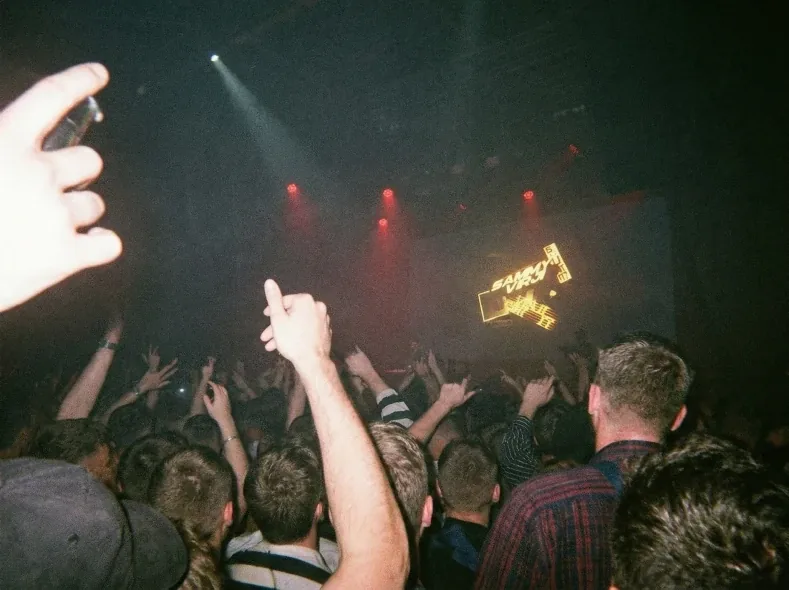
That may also be where the difference between a DJ set and a proper live show becomes clearest. Fred again.. can make you feel like you’re inside his diary. Sammy Virji makes you feel like you’re trapped in a very successful collective decision not to go home yet. It’s a different kind of presence. Less feeling, more function. But the function worked.
Conclusion without a conclusion:
It wasn’t a perfect night. The start was a little hesitant, the stage was a little too far away, and the visuals were mostly just there. But it was also a night that reminded you that a party doesn’t necessarily have to be elegant to be effective. Sometimes it just needs to be built properly and end with everyone forgetting what they were complaining about for the first half hour.
En stjerne
To stjerner
Tre stjerner
Fire stjerner
Fem stjerner
Seks stjerner