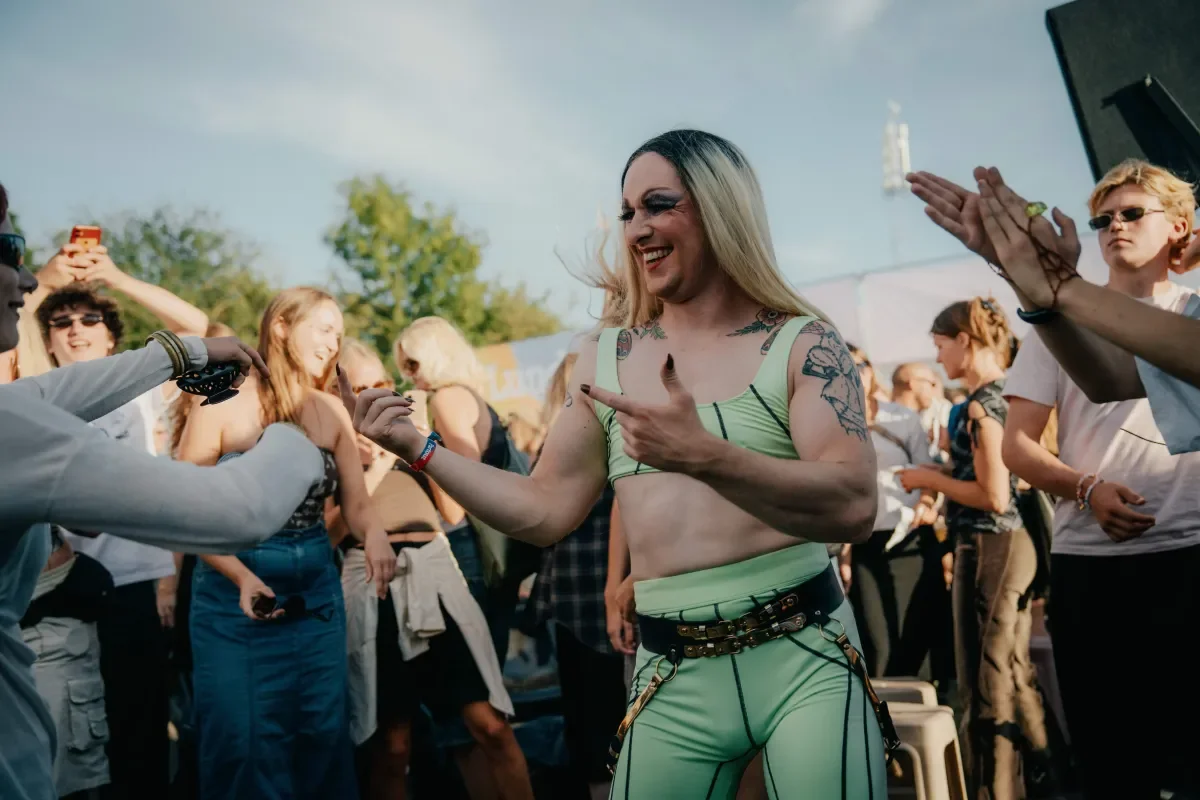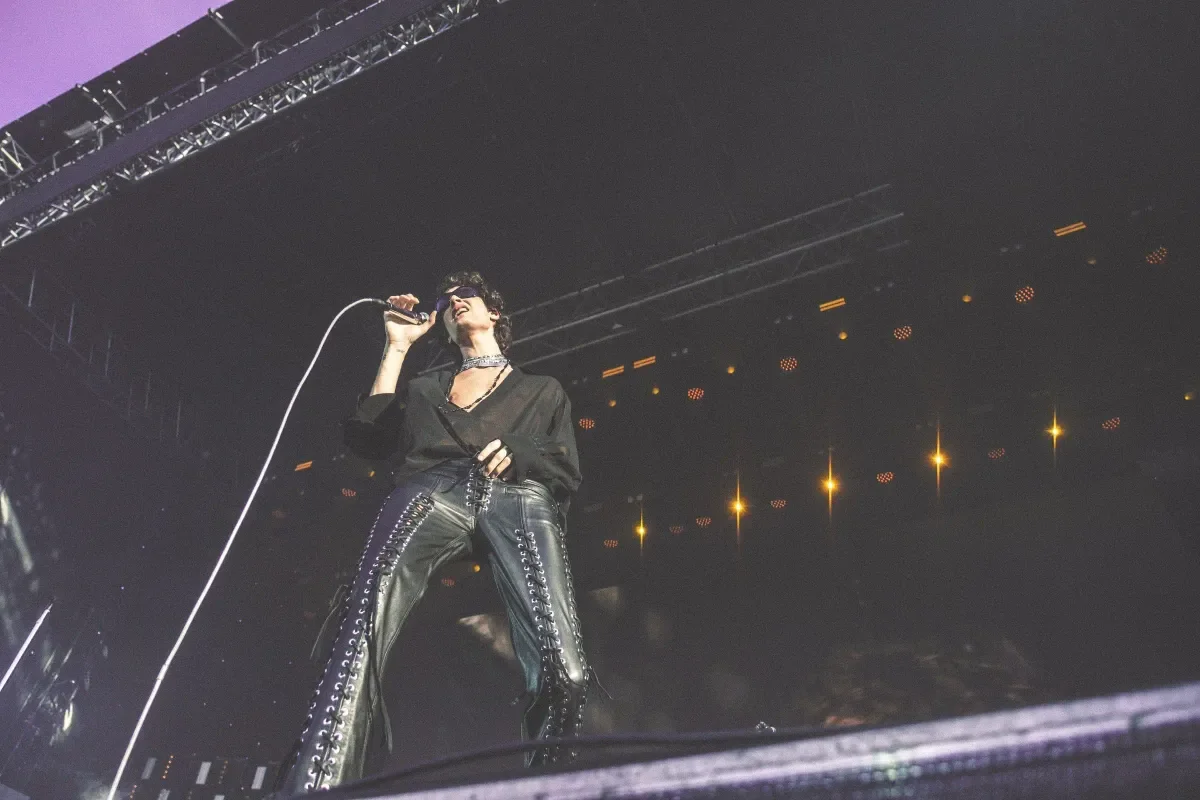
Saturday is always a little different at a festival. The body is worn down, the voice has been sanded to a rusty nod, and by now you know the shortcuts between the stages a little too well. In return, it’s the day when you stop chasing the schedule and let the festival come to you. And that’s exactly what happened. Saturday delivered one of the year’s most talked-about bookings, a reunion with real Californian punk, and a Copenhagen trio proving that you don’t need big gimmicks to make Helviti boil.
One star
Two stars
Three stars
Four stars
Five stars
Disclaimer: Apropos Magazine received access or a review copy. As always, we share our own impressions — unfiltered.
Six stars
Volbeat – home turf is not always an advantage
Volbeat was probably the most debated name on this year’s poster.
The credentials are beyond dispute. Gold and platinum records, sold-out arenas, the biggest festivals in the world and a back catalogue packed with singalongs. On paper, it should have been a no-brainer.
But it didn’t quite feel that way.
After only a few songs, quite a few people in the crowd started drifting toward Henret at Gehenna. Not because Volbeat were playing badly. Quite the opposite.
They delivered exactly the show they had promised.
Michael Poulsen’s unmistakable voice was recognisable from the first line, the band played with confidence, and they know every stadium-rock trick in the book. Maybe a little too well.
At times, the concert felt like an arena show that had simply been moved to Refshaleøen. Even when Johan Olsen joined the band twice and drew huge applause, the home advantage never quite came into play. Michael Poulsen almost seemed too big to be on home turf.
Then there’s the eternal Volbeat debate. How much can you lean on the big crowd-pleasers? Some loved them. Others stood there with their arms folded.
The best moment came when Martin Leth from Strychnos joined them for Evelyn. Volbeat called him Denmark’s best growler, and it was hard to disagree. Suddenly the concert had the metallic kick some may have been missing.
And then the rain came.
After the festival’s hottest day, the sky turned black, the storm rolled in, and the concert had to be cut short. Symbolic, metal as hell, or just terrible timing? That’s for you to decide.
The booking was still absolutely the right one. Copenhell had to try Volbeat. The fact that it divided the crowd so sharply may have made it even more interesting.
★★☆☆☆☆
Social Distortion – three chords and plenty of swagger
Some bands no longer need to prove anything.
Social Distortion is one of them.
Mike Ness looked nothing like a 64-year-old man. He looked more like Tom Hardy, if Tom Hardy had spent the last 40 years playing West Coast punk.
Three chords, plenty of attitude and a nice shirt. Apparently that’s all it takes.
The band repeatedly challenged the crowd to sing louder and fill more of the space, and of course there were a few comments about Donald Trump too. When you’ve made a living out of being punk since the early ’80s, it would almost be strange not to take a swipe at power now and then.
The concert was raw, honest and stripped of all fuss.
Maybe it was a little niche for parts of the audience, but it was still impressive to see a band whose heyday lies decades behind them still carrying so much charisma and relevance.
The scorching heat may have taken the edge off the party.
But not the soul.
★★★★☆☆
Katla – love, Satan and a knight’s castle
There’s a volcano in Iceland called Katla. And a famous, very dangerous papier-mâché dragon.
Fortunately, a slightly more peaceful version stood on Helviti.
The Copenhagen trio had just returned from a long European tour and seemed red-hot. They had built their own knight’s castle on stage, and behind them stood the words "Love & Satan". A combination that somehow made perfect sense.
The best thing about Katla is really how little they try.
No big gimmicks. No over-explaining.
Just music.
Drummer Rasmus Bang looked for all the world like an ordinary Copenhell guest who had been picked up straight from a food stall and placed behind the kit. He played with enormous ease, sang at the same time and made the whole thing look infuriatingly simple. The Phil Collins trick still works — even when the tempo is significantly higher.
Bassist Theis Stenberg Thorgersen also delivered vocals that changed the mood of the concert dramatically every time he took over.
The band knew how to pace the energy. They let the songs do the work, and the dark, simple weight filled all of Helviti.
Not quite as ascetic as a Dying Fetus concert.
But close.
★★★★★☆
Saturday’s other highlights
Alestorm did exactly what Alestorm always does. Pirates, party vibes and a crowd that seemed utterly unconcerned with whether they were singing in tune, as long as they were singing loud.
Saxon once again reminded everyone why classic heavy metal never really goes out of style. Experience can be a quality in itself.
Reflection – see you in hell
Four days.
About forty concerts.
A heatwave, dust storms, wrestling, battle jackets, draft beer and a thunderstorm that shut down the festival on the hottest day of the year.
Copenhell has long since become much more than a metal festival.
It’s a place where you can see the world’s biggest metal bands, a Danish trio with a cardboard knight’s castle, wrestling between sets and surprisingly good food — all without losing the sense that the music is still what matters most.
Perhaps the most striking thing is the crowd.
People still look dangerous. But they rarely act that way. Quite the opposite. Copenhell remains one of the most polite and safe festivals you can wander around. People apologise in the mosh pit, help each other up from the ground and toast with strangers as if they’ve known each other for years.
Fifteen years is no age for a festival.
But it’s long enough to feel that Copenhell has found its identity. It dares to experiment, it dares to fail, and it still dares to book the names that get people arguing all the way home.
That may be the healthiest sign of them all.
See you in hell next year.
En stjerne
To stjerner
Tre stjerner
Fire stjerner
Fem stjerner
Seks stjerner