

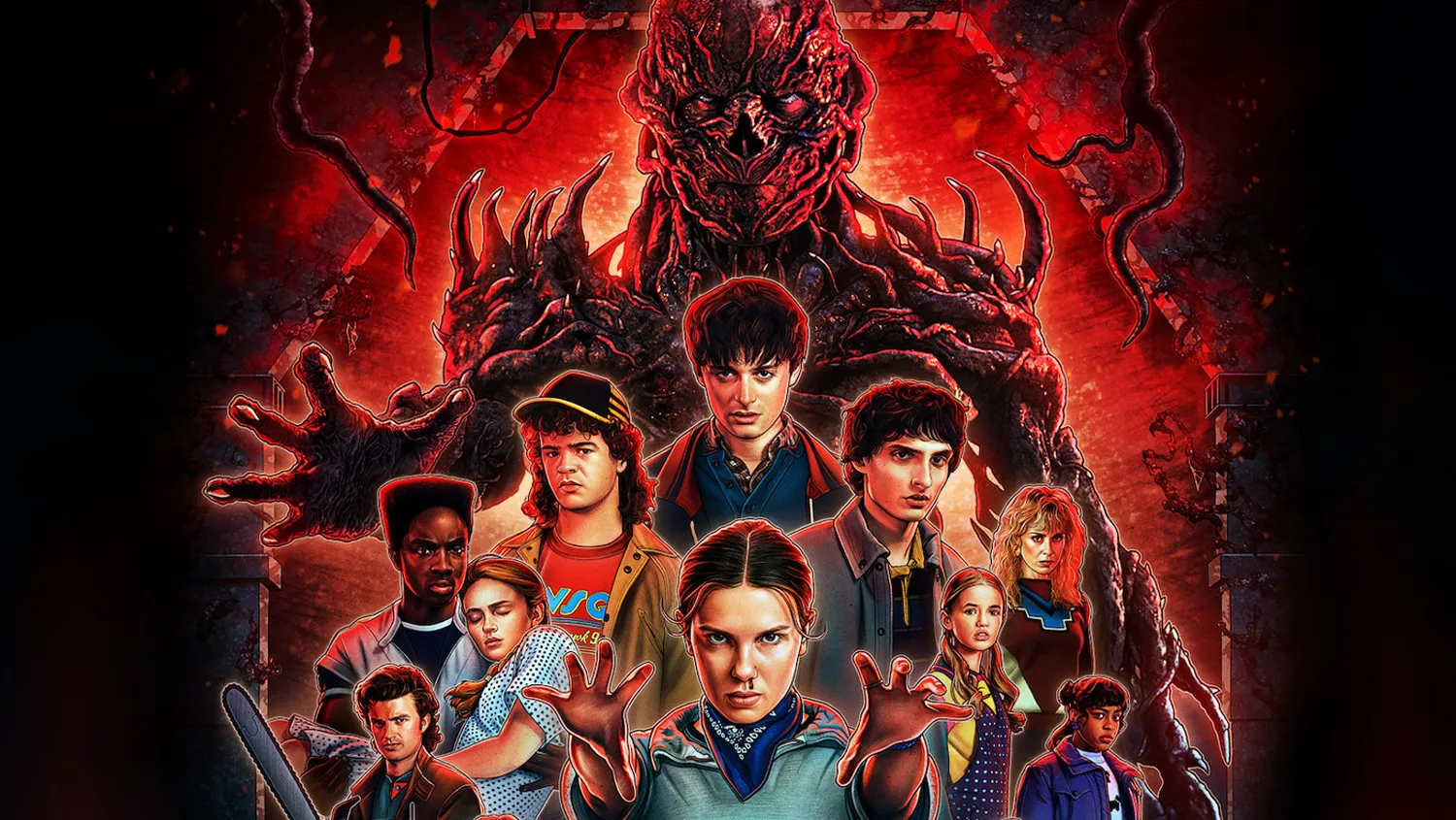
After more than three years of waiting, Stranger Things returns with its fifth and final season. A finale that promises answers, catharsis, and one last reckoning in Hawkins—and delivers on scale, spectacle, and fan service. But the bigger the series has grown, the harder it has become to hold on to its core. Season five is an ambitious, often entertaining, yet ultimately cluttered farewell to a universe that once thrived on mystery, restraint, and genuine dread—and now struggles under the weight of its own success.
One star
Two stars
Three stars
Four stars
Five stars
Disclaimer: Apropos Magazine received access or a review copy. As always, we share our own impressions — unfiltered.
Six stars
The fifth and final season of Stranger Things is not just another season. It is a cultural full stop. A farewell to a series that, for nearly a decade, has functioned as a shared reference point, a nostalgic safe haven, and a blockbuster with a child’s heart. You can feel it from the very first moment: this is not a show that merely wants to entertain. It wants to conclude. And it wants to do so properly.
The season once again unfolds in Hawkins and in the increasingly porous borderland between our world and the Upside Down. Chronologically, we are set a year after the previous season, and the tone reflects that distance: darker, heavier, more serious. Hawkins is no longer just a small American town—it is a wound. Military presence, secret operations, and a latent paranoia have replaced the 80s idyll. Our heroes attempt to live something resembling a normal life, but nightfall—and Vecna—won’t allow it.
It is ambitious. Perhaps too ambitious. The Duffer brothers clearly want to gather everything: all threads, all themes, all emotions. And here lies the season’s greatest weakness. When everything is important, something inevitably loses weight. The plots grow unnecessarily complex at times, the dialogue explanatory, almost didactic. The series shows less trust in the audience’s ability to connect the dots, and that comes at the expense of tension. What was once suggested is now explained.
Still—and this matters—I never found myself checking the time. I was invested. Not out of loyalty or obligation, but because Stranger Things still does something fundamentally right: it makes you care about its characters. Even when they say things that are a little too explicit, or move through storylines that could have been tighter, there is a human warmth that carries the series forward.
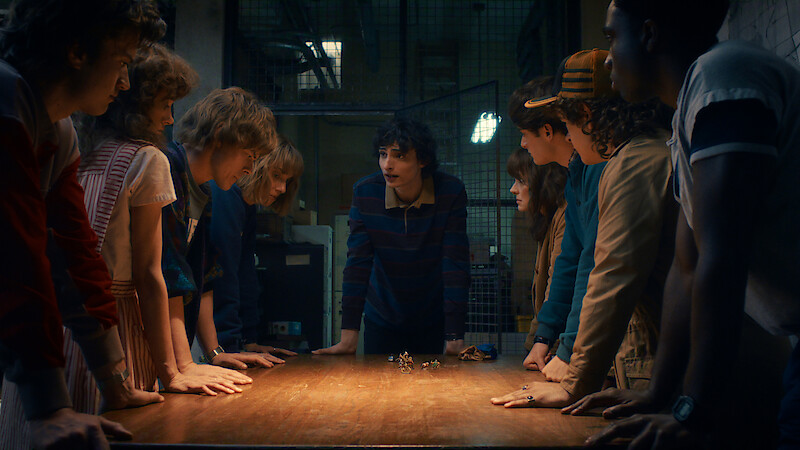
This is especially evident in the handling of the central characters. There are emotional high points that work precisely because we have followed these people for so long. A major character moment for Will in episode seven is admittedly over-explained—what everyone already knows is spelled out with near-Hollywood bluntness—but the emotion behind it is genuine. The problem isn’t intention. It’s dosage.
The introduction of new layers to the mythology, including “The Abyss,” points in the same direction. The idea is strong and visually compelling, but the execution feels like a universe expanding faster than the story can sustain. There is a clear sense of wanting to match contemporary franchises in scale and complexity. The result is a season that sometimes feels overcrowded. Not constantly chaotic—but pressured.
That said, the series hits its mark when it remembers what it is made of. The nostalgic elements remain seductive. Small callbacks to earlier seasons reward loyal viewers, and the Hawkins universe still feels alive. The 80s tone, the music, the pacing—everything that made the series iconic—is intact. Even supporting characters and temporary antagonists who never gain true narrative weight still function as pieces in a larger emotional mosaic.
The finale is, as one might hope, grand. Long, intense, and clearly conceived as the series’ climax. The confrontation with Vecna and the Mind Flayer delivers both visually and dramatically, and although it’s evident that much has been building toward this moment, the tension holds. The epilogue is moving without becoming saccharine, and the final scene—centered around D&D—touches the series’ original nerve: community, imagination, and childlike seriousness.
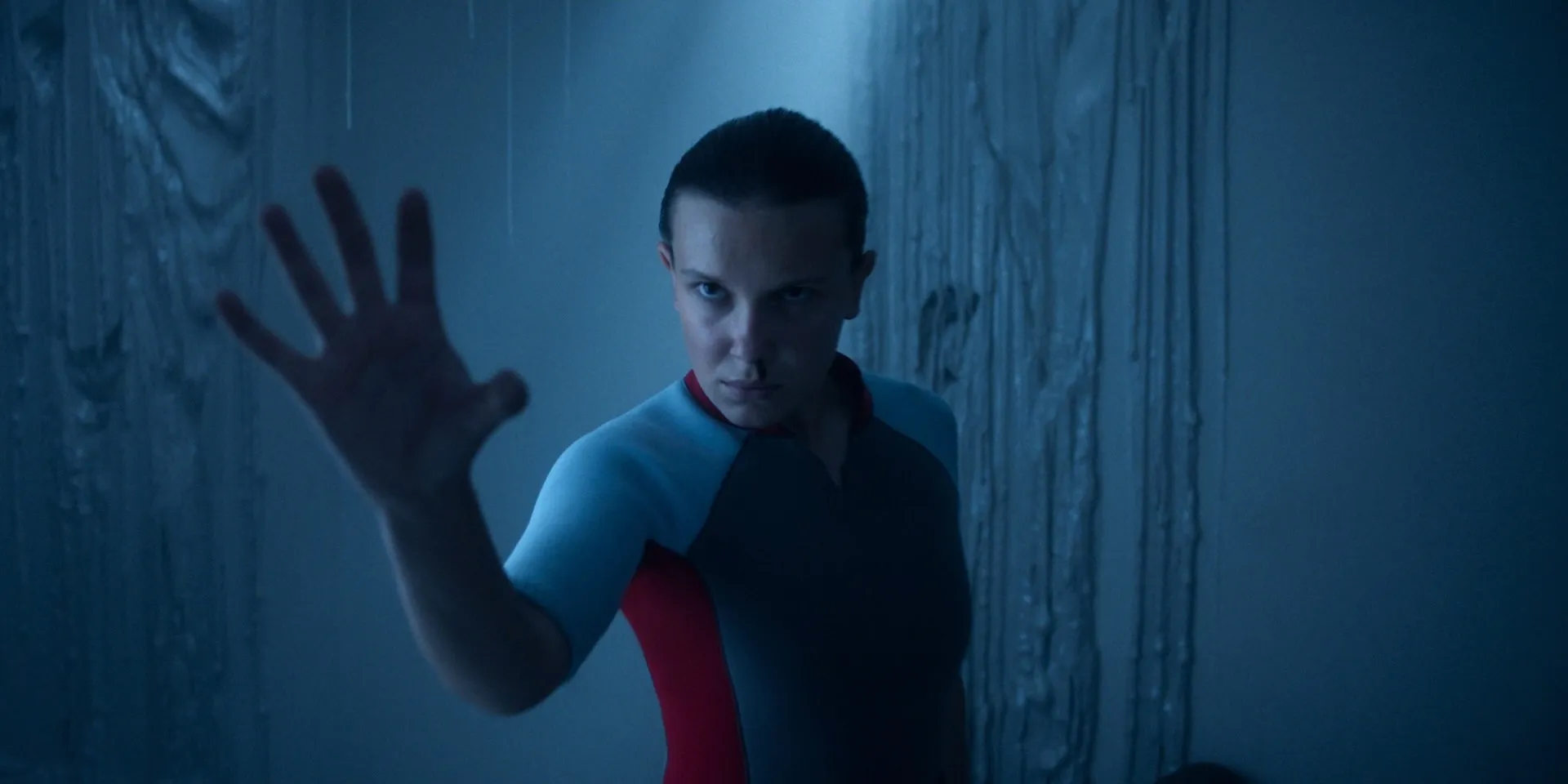
When compared to season one, the difference remains striking. The first season was simple, tight, and unsettling in a way that crawled under the skin. Over time, the horror has become more spectacular and less intimate. That’s not necessarily wrong—just different. And here lies the season’s paradox: it is simultaneously too big and still deeply charming.
Season five of Stranger Things suffers under its own ambition, but it does not collapse beneath it. It stumbles, yes—but it does not fall. The entertainment value is high, the emotional payoffs are real, and as a conclusion it feels honest. I didn’t feel cheated. And for a series of this magnitude, that alone is an achievement.
The Duffer brothers deserve respect for choosing to end things while interest is still alive. Not everything works. But enough does.
In reality…
Maybe it’s not the series that has grown too large. Maybe it’s our expectations of what an ending should accomplish that have outgrown us. We want resolution and mystery at the same time, answers and afterglow, a full stop and open space. Very few stories can carry all of that—and Stranger Things, at the very least, tries honestly.
I’m not left with a sense of loss. Rather with a quiet acceptance that some things must be said too loudly for others to be felt at all. Along the way, the series loses some of its original tightness, but it keeps the most important contract: it takes its characters seriously and allows us to say goodbye. Not perfect. But dignified.