There are concerts, and then there are shows. Jason Derulo chose his side long ago. On the Last Dance Tour, Royal Arena was turned into a pop theatre where fire, dancers and LED surfaces mattered just as much as the melodies. And maybe that is exactly the point. When you have 17 years of radio hits behind you, it is not enough to simply walk on and sing them. You have to stage them. And Derulo does — uncompromisingly.
One star
Two stars
Three stars
Four stars
Five stars
Disclaimer: Apropos Magazine received access or a review copy. As always, we share our own impressions — unfiltered.
Six stars
Before the main man himself steps into the light, LZ7 have already warmed up the room. It was a slightly odd booking — a kind of Macklemore light with Christian festival energy and a QR code mentioned so many times you almost started to suspect a sponsorship activation. But they delivered what they were there to deliver: pace, smiles and singalongs. The audience met them with openness, and the promise of returning to Copenhagen later in the year was greeted with polite applause. It was professional. Not memorable — but functional.
Then came the countdown.
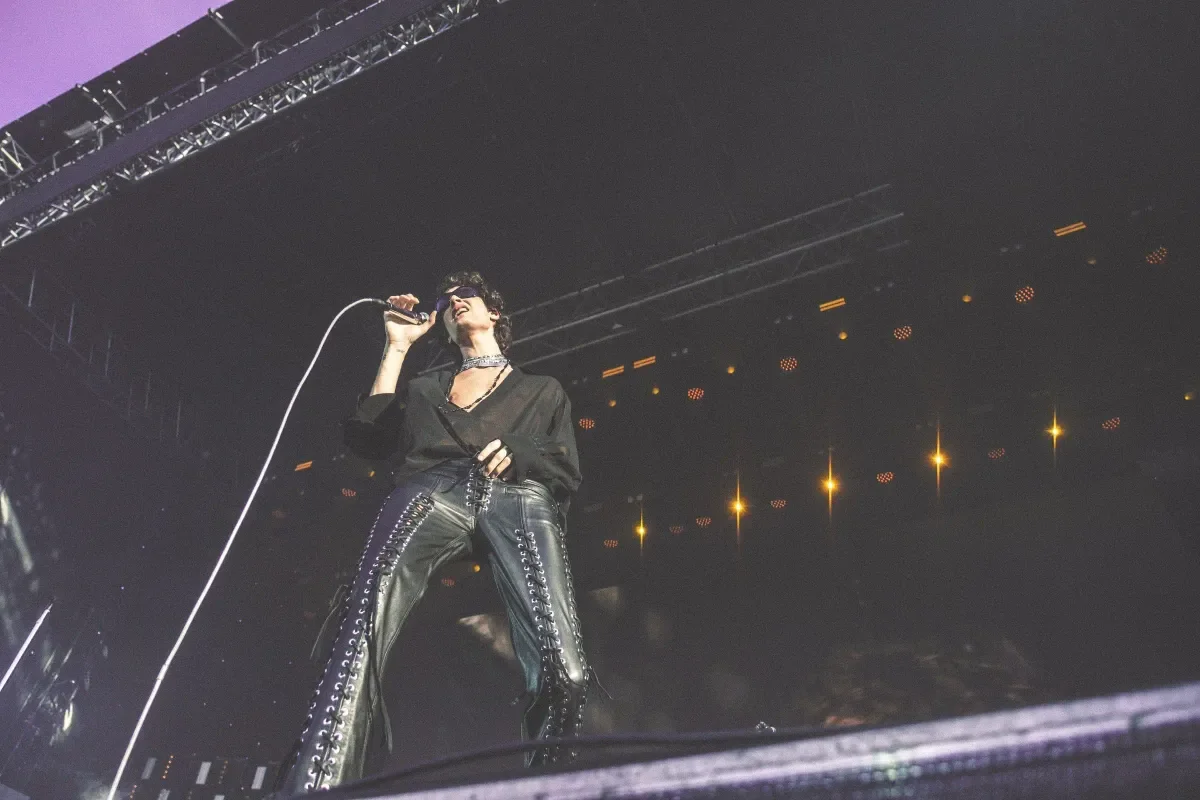
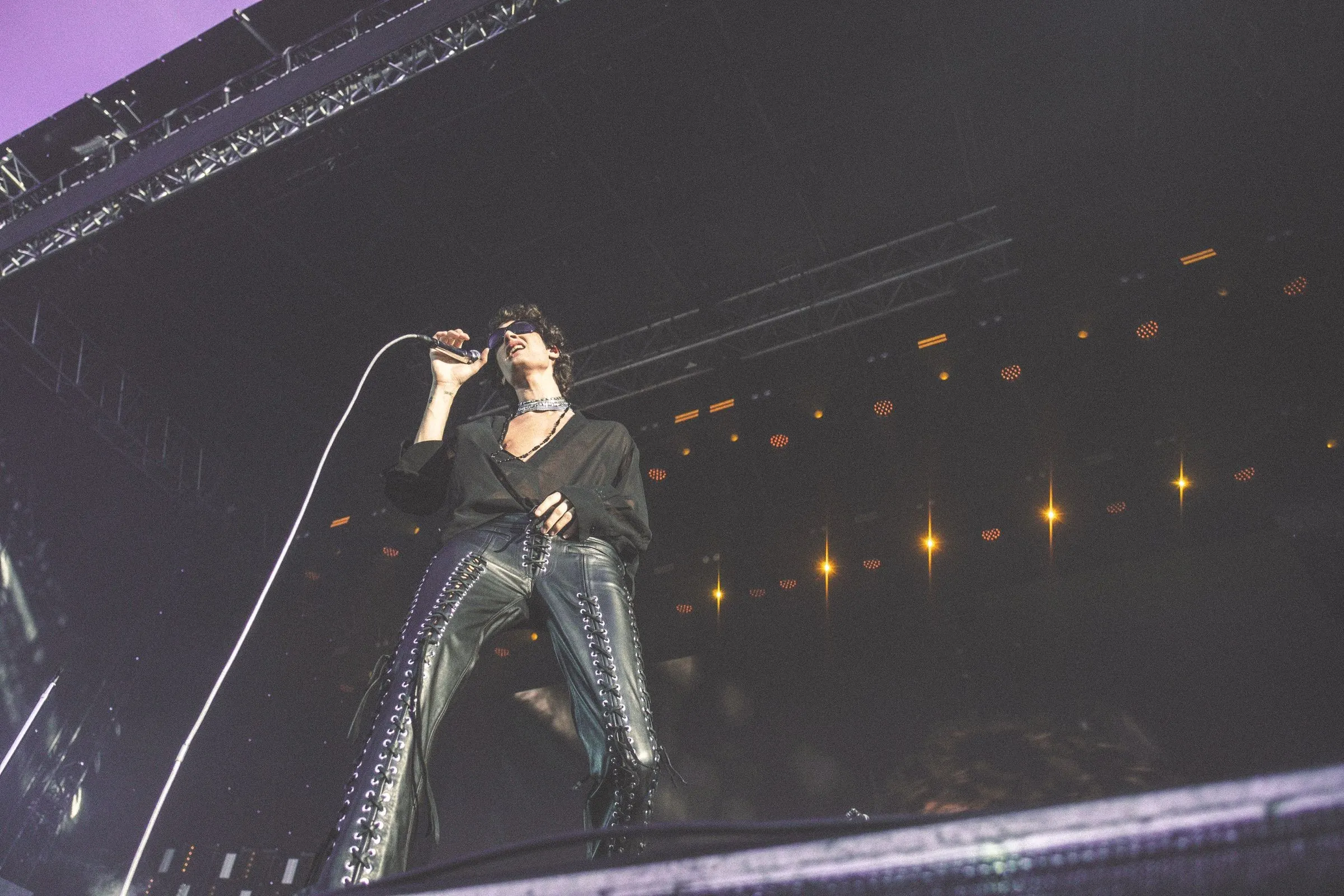
Dystopian visuals. Sirens. An almost apocalyptic intro that culminated in flames and a tangle of dancers — some placed in glass cages like futuristic installations. And then him: Jason Derulo, moving with a physical control as if gravity were a matter of debate rather than natural law.
He is still an extreme performer. Supple, explosive, precise. The choreography lands with millimetre accuracy, and the scenography is built around constant motion. There is never any stillness. Never any empty space. Royal Arena is used like a canvas, with each song given its own aesthetic universe.
About ten minutes in, the thank-you speech arrives. The classic one: humility, gratitude, “Day 1 fans.” It is routine — but delivered with genuine enthusiasm. The transition into “Whatcha Say” is dramaturgically well chosen, but the timing feels slightly rushed. The audience has not quite settled into the rhythm yet, and the emotional moment does not quite get the resonance it might have had.
Derulo is constantly working with scene changes. The long LED screens are lowered and raised to mark the transitions — smartly done, but also a little too frequent. More than once it feels as though he disappears from the stage before you have had time to anchor yourself in the current song. After a shirtless video interlude, we find ourselves in what can best be described as “Derulo Jungle”: tropical aesthetics, fire again, dancers in matching costumes. It is thorough. But also bordering on overstuffed.
“It Girl” becomes one of the more ambivalent moments. A visual illusion, with Derulo projected in circles behind the stage, creates an almost kaleidoscopic effect. The problem is that several times you genuinely do not know where the real Derulo is. The song — which ought to be one of the safe bets — loses momentum, not least because, like several other numbers, it is cut short. That is true of many of the hits overall: they appear as medley fragments rather than full narratives.
This is where you feel the difference between concert and show.
A strong moment arrives during “Savage Love,” when the music is abruptly stopped because someone in the audience is unwell. Derulo handles the situation calmly and professionally, settles the room and continues the song without drama. It is sympathetic and speaks to experience.
Along the way, other artists’ songs are woven into the set. The audience responds — especially when the recognition factor is high — but at times it feels a little arbitrary. The band, which actually delivers solidly, is hidden away for most of the show. Modern pop orchestra pits are apparently standard, but it is a shame when there are competent musicians there who deserve to be seen. A video intro of the band on the lowered screen is meant as a spotlight moment, but comes across more as a technical interlude than a genuine tribute.
The evening’s climax comes during the segment Derulo himself calls “Derulo Vulcano.” “Cheyenne” erupts in a rock version, giving the band more room and raising the intensity significantly. “Breathing” in the same sequence is also a highlight — here, the balance between vocals, choreography and live energy is close to optimal.
And yes: there is the worm. There are flying somersaults. There is a gigantic outro. The DJ steps forward at the end with a medley of further hits — including an unexpected love letter to Black Eyed Peas’ “I Gotta Feeling” — before “Talk Dirty” and “Want to Want Me” close the party. The audience gets what it came for.
Jason Derulo is, and remains, a showman. His physique, timing and audience contact are professional at a level few can keep up with. But there are also moments when the Britney Spears headset makes it a little too obvious that backing tracks are taking over. Some passages are so tightly choreographed that spontaneity disappears. Everything is designed for perfection — but also for control.
That may be the concert’s paradox: it is extremely well composed. Every beat, every flash of light, every dance step is calculated. But precisely because of that, it can also feel distant. You miss a little unpredictability. A crack in the machine. A moment when the show is not controlling him — but the other way around.
That said, it is hard not to acknowledge the craft. Jason Derulo delivers exactly what he promises: an international pop show with pyro, visuals, dancers and hits by the metre. Royal Arena was heated up on a cold day in Copenhagen, and the audience left the hall with sweat on their brows and melodies in their bodies.
It is not artistically radical. It is not intimate. But it is effective.
And sometimes that is enough.
Reflection
Jason Derulo at Royal Arena was not a concert that tried to surprise. It tried to impress. And for the most part, it succeeded. It is a pop machine in top form — with room for adjustments, but with a core of genuine excitement and physical presence.
En stjerne
To stjerner
Tre stjerner
Fire stjerner
Fem stjerner
Seks stjerner