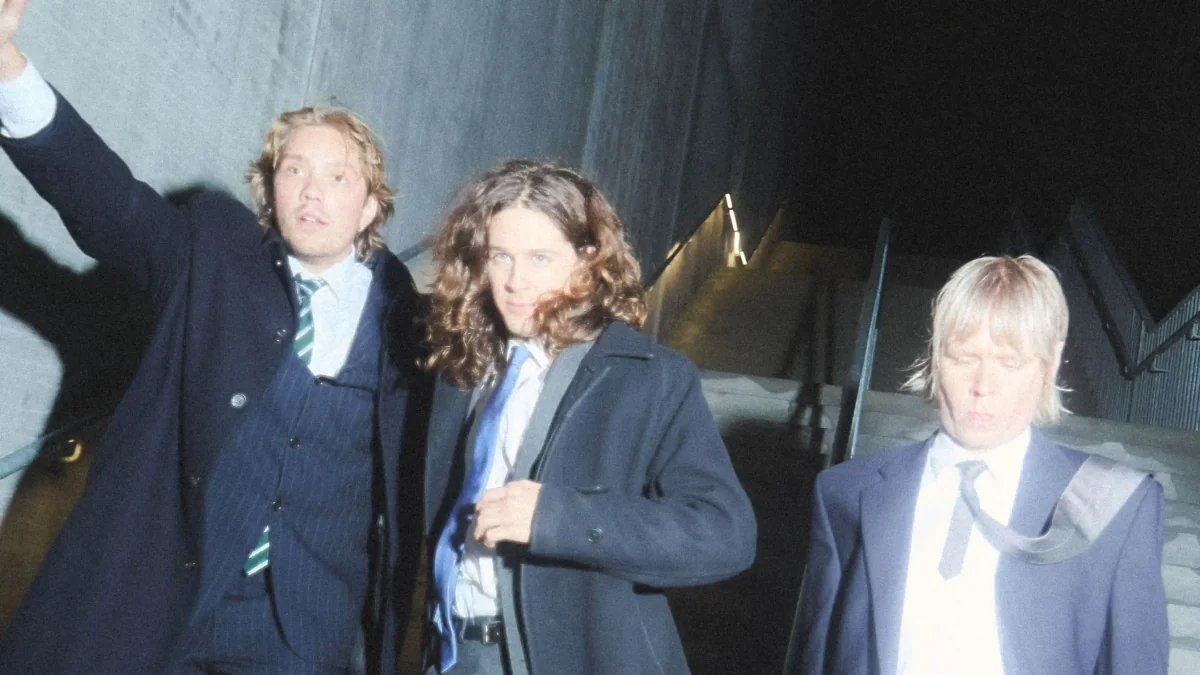

I expected Farveblind to make a racket. They do. But Micro Pleasures does something rarer: it makes a racket with purpose. Three men in suits, a studio on Tagensvej, a distortion knob and the idea that small pleasures may be the last taxable income we have left. I expected energy. I did not expect to be sitting there on my fourth listen thinking: this is the year Danish music stopped apologising for itself.
One star
Two stars
Three stars
Four stars
Five stars
Disclaimer: Apropos Magazine received access or a review copy. As always, we share our own impressions — unfiltered.
Six stars
Back in 2022, Farveblind released the EP All Clubs Are Bastards, a record that sounded like going out dancing in safety boots. Punk attitude, rave drums and a fistful of breakbeats. It was a band that wanted to blow up the club. On Micro Pleasures, they sound like people who have built their own club, locked the door, invited the right guests in and set fire to the sprinkler system. The difference is not ambition, because that has always been sky-high. The difference is that the madness is now composed. Every overload is deliberate. Every bassline has papers.
That is the hardest thing to do, and it is what they have done. Farveblind have gotten better without getting prettier. They have not changed direction, not found a more “mature” sound, not sat down with the branding department. They have simply dug into their own soil and discovered there was far more in there than they perhaps knew themselves. They have expanded Farveblind without diluting Farveblind. It sounds banal, and it is, until you try it.
The press material describes the record as “small flashes of chaotic happiness in a world of apathy, fear and war,” a phrase that in other hands could have ended up in a curated void of matcha and gratitude journals. But it doesn’t. Because the “micro pleasures” on Farveblind’s record are not the kind of pleasures you cultivate on a yoga mat. They are the kind you commit. The cigarette. The club. The impulse. The desire. The little thing you tell yourself doesn’t mean anything. “It’s not an addiction, it’s just a small pleasure.” I have heard people say that about everything from nicotine to confrontation anxiety, and in truth that sentence is what the whole album is built on.
The band is Anders Norre Arendt, Jens Asger Lykkeboe Mouritzen and Magnus Pilgaard Grønnebæk. On paper, three completely ordinary Danish men. On stage and in the listener, something far less balanced. The album was recorded at Studio Tagensvej 85G and mixed and mastered by Gustav Brunn, who has also left his mark on the sound of Viagra Boys and Yung Lean. You can hear it. There is a metallic clarity to Micro Pleasures, an edge that does not hide, but also does not cut for the sake of cutting. It is overdriven with intent. The ugliness is designed.
The album features guests on nine of its eleven tracks. On paper, that sounds like an industry dinner. In practice, it is a collective breakdown with good sound. The guests are not strategic flags in an export plan. They work as different entrances into the same universe. Elliphant pulls out the pop instinct. K.Flay delivers a consumer diagnosis in deadpan. Sebastian Monti sounds as if he has been standing inside the machine all along and only now gets the microphone. Foreign Air makes Battle Lady-Like battle-ready. Django Django gives the ending air and echo. It is rare to hear features used so little decoratively and so much compositionally.
Do You with Elliphant may be the album’s most immediate moment, and that says something about Farveblind’s level, because their pop song still sounds like it slept three hours and woke up in a warehouse. It is a crazily well-composed track that stands out without falling apart. The reference point is not straight radio pop, but rather Justice around Cross; that feeling that even the rush has personality, and that melody is not a concession but a weapon. Elliphant makes the song bigger. She does not make it smoother.
Battle Lady-Like sounds as if Boys Noize had been locked in a punk rehearsal room in Berlin with three Danish men in suits and a faulty smoke alarm. Overdriven without being sloppy. Ugly in all the right places. There is fuzz, pressure and electrostatic aggression, but everything is placed with a precision that borders on annoying. This is not noise. This is noise with a master’s degree.
On Things, the album’s critique of capitalism becomes almost embarrassingly concrete. K.Flay delivers a lyric about consumption as self-medication, and the line “Woke up feeling shitty, so I opened up my wallet” ought to be tattooed, in tiny shame, on the back of every debit card we own. It is funny because it is true. And it is ugly because it is true. The song is not about buying things because you need them, but about buying things because you need yourself for five minutes. AirPods, socks, Amazon, TikTok, VISA statement. The whole modern dopamine chain is there, ridiculous and horribly familiar. Farveblind are smart not to make the track moralistic. They make it sound like the impulse itself: hard, restless, repetitive, stupid in the intelligent way. “My things” becomes not just a chorus, but a small possessive collapse. An adult in foetal position with a parcel locker code.
Salary Man with USERS is the album’s hamster wheel, and that is not a metaphor. It is beat, bass and programming. Farveblind do not write about office culture; they program it. When the breakdown hits, it sounds like the exhaustion the song is describing. This is capitalism critique as pulse. It works because it does not try to explain anything. It just tries to feel it.
The title track is the album’s black heart. Micro Pleasures with Sebastian Monti sounds like Underworld meeting Soulwax on the way down a fire escape; that long, bodily sense of night, asphalt and people dancing their way out of something they cannot put into words. It is club music that knows what it is trying to numb. It does not try to solve anything. It just wants to keep it open for five minutes and forty-eight seconds, and when it is over, you are left with the faint feeling that something in your own body has changed room temperature.
Natural Behaviour with Emmeline is the album’s most open moment, almost spiritual. What is nature? What is instinct? What is just a bad habit with good marketing? Emmeline’s vocal is haunting in that way where you cannot decide whether she is comforting or warning you. The bass gallops. The track lifts off, spirals outward, and suddenly you start thinking about your own calendar with a kind of grief.
All of the Atoms with Django Django closes the album, and it is a fine decision. After all that club, all that machine, all that bodily resistance, Micro Pleasures does not end in triumph. It ends in air. It is a song that feels a little like Low on HEY WHAT in its spacious, existential mood. You are left standing there as after a breakdown that was not your own, but which you still took home with you.
The most impressive thing about Micro Pleasures is almost how close it comes to being too much, without ever becoming that. The album stands right on the edge of overstimulation and looks down. Instead of falling, it starts dancing. Every kick has identity. Every bass figure has intention. Every synth sounds like something that is either about to be born or about to break. It is production of the kind where you can neither hear the details disappear nor crush each other. It is a record that has eaten itself on the way into the studio and come out in its own shape.
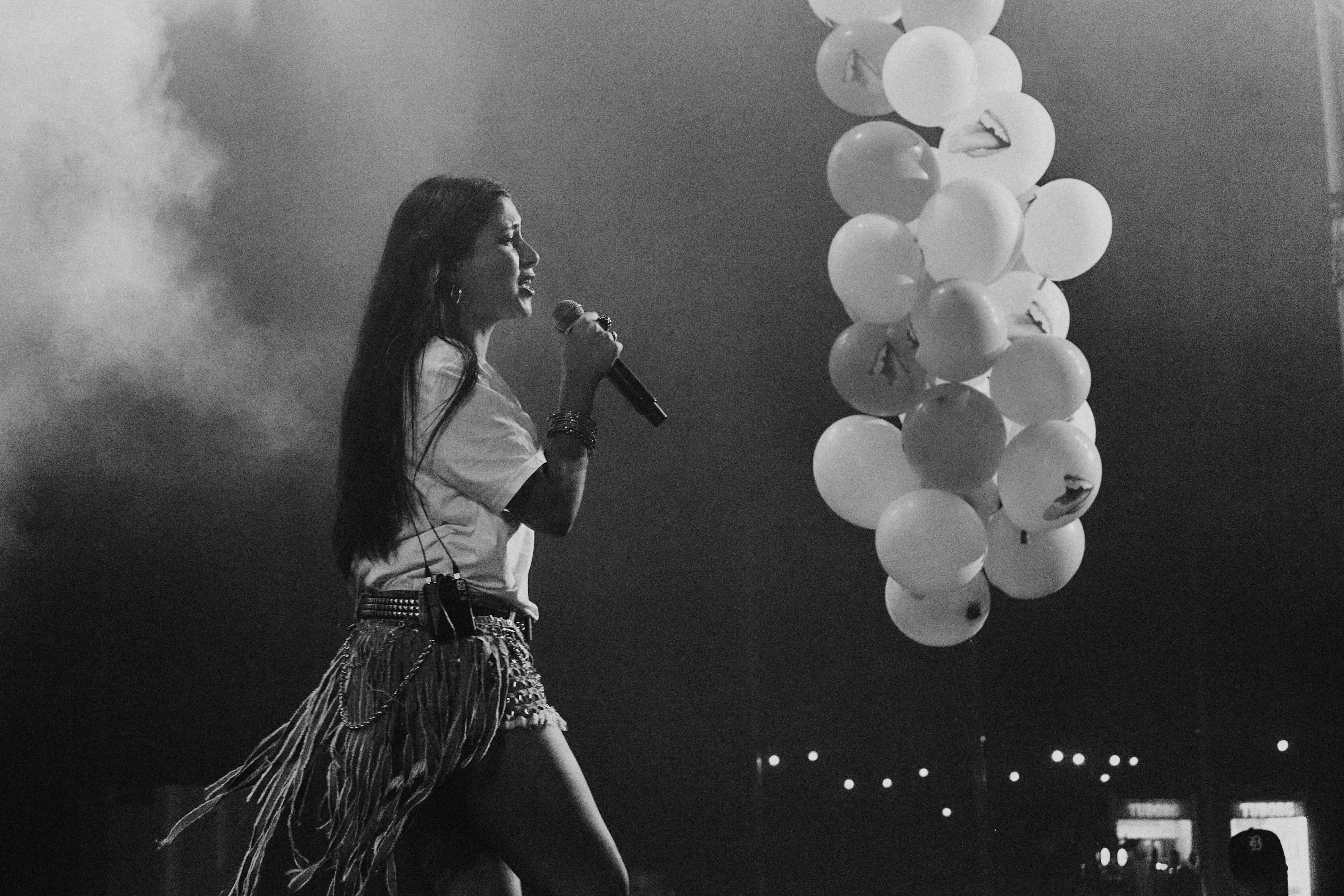
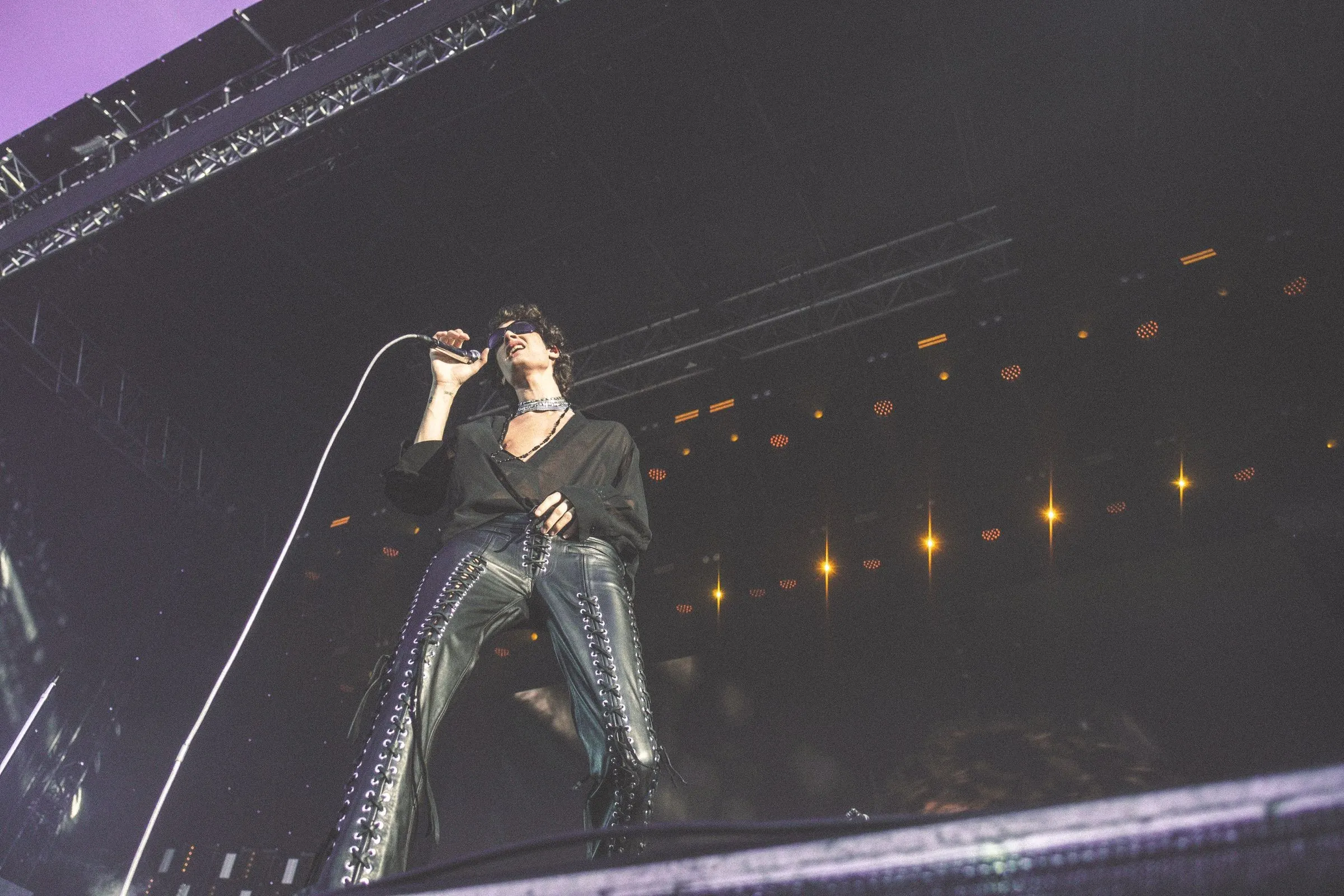
And now comes the part I want to say directly to Danish festival bookers: wake up. If Farveblind are not on more and bigger Danish stages in the near future, they will end up as yet another Danish export we only learn to love once someone in Germany, the Netherlands or England has said it is okay. That would be embarrassing. And very Danish. They should not be hidden away as a niche project for people in black trousers with Resident Advisor notifications. They should not be served up as “an exciting Danish name” at a point when the rest of Europe has already figured them out. They should be out there now, while we still have a chance to call them our own. They should be on stages where people did not know they needed to be knocked sideways. Farveblind can handle it. It is the bookers who are asleep at the wheel.
The danger of debuting this strongly is, of course, that you risk building your own monument too early. Justice still have Cross hanging over them like a French leather jacket they can never quite take off. Farveblind may well have made that kind of record here. A debut that does not feel like a beginning, but like a work they will one day have to struggle against themselves. Can a debut album be too fucking good? It sounds like a stupid question, but I feel like asking it. Not because they cannot get better, but because Micro Pleasures already feels like the kind of record that could end up standing in the way of everything they make afterwards. Their Cross. Their big, dirty, fluorescent problem.
Reflection
Maybe that is the feeling that lingers: that Micro Pleasures is the sound of a band getting better without becoming more civilised. That is harder than it sounds. The Danish cultural landscape is full of projects that mature into caution. Farveblind mature into themselves. And when I sit here, slightly dizzy in the ears, trying to explain what I have just heard, I keep ending up in the same place: this is an album about small pleasures in a world where pleasure is becoming illegal. And it is an album that is itself a small pleasure. Just not a healthy one.
En stjerne
To stjerner
Tre stjerner
Fire stjerner
Fem stjerner
Seks stjerner