

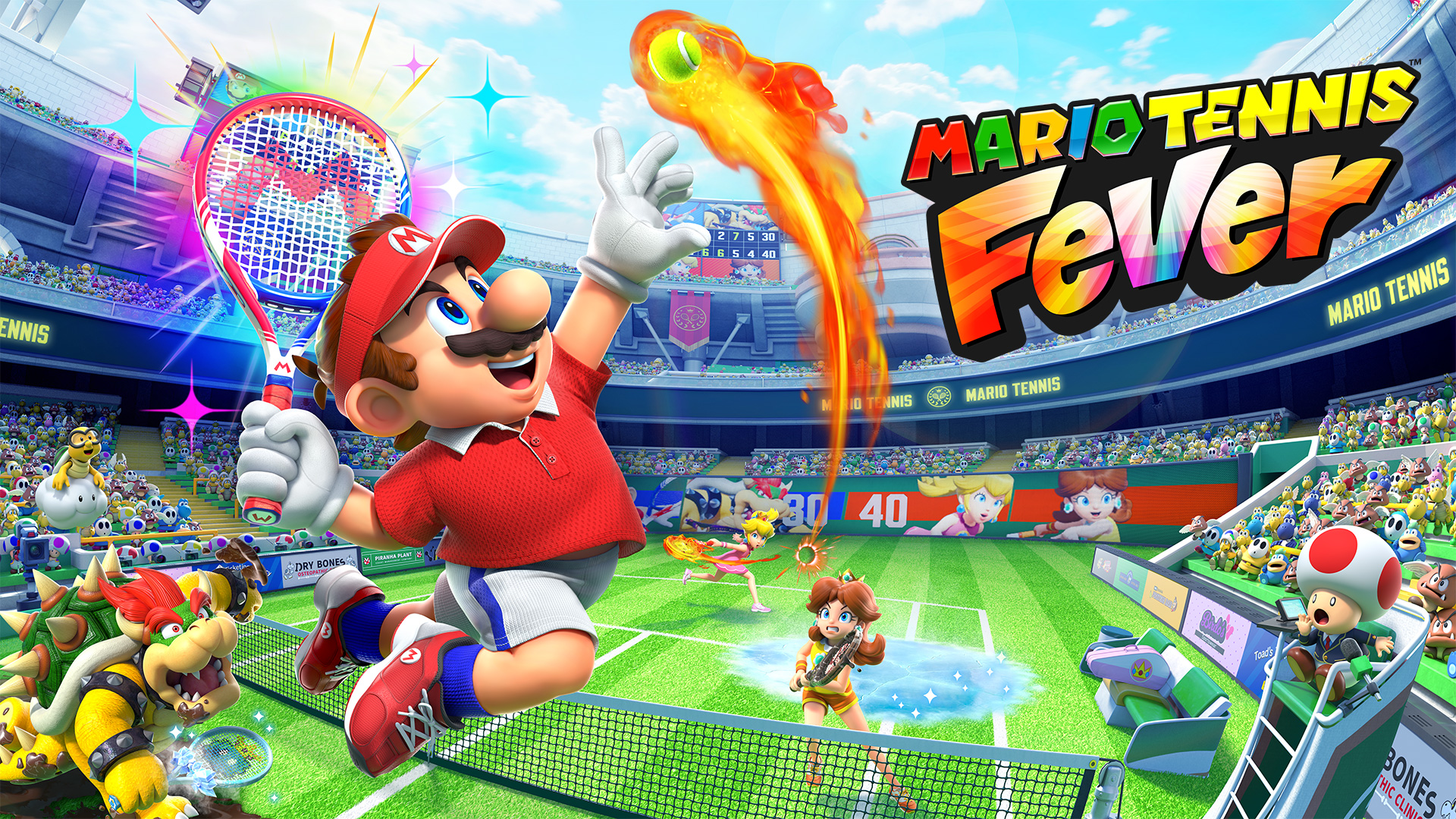
Nintendo has always treated sport less as simulation and more as spectacle. And nowhere is that clearer than when Mario steps onto a tennis court. With 38 characters, 30 power-up-inspired rackets and a February 12 release date, Mario Tennis looks ready to once again turn polite rallies into controlled chaos.
One star
Two stars
Three stars
Four stars
Five stars
Disclaimer: Apropos Magazine received access or a review copy. As always, we share our own impressions — unfiltered.
Six stars
Mario Tennis launches February 12. Here’s what to expect from Nintendo’s latest blend of accessibility, strategy and chaotic competition.
Nintendo has had sport in its bloodstream since the NES era, and Mario has long been the company’s most reliable multi-athlete. Baseball. Golf. Football. The Olympics. And perhaps most naturally of all: tennis. The rigid etiquette of a gentleman’s sport colliding with an Italian plumber in red should not work. And yet, decades later, it still does.
This time, 38 characters from the Mushroom Kingdom step onto the court. Familiar icons and deeper-cut oddities share the baseline, each with distinct playstyles and attributes. It’s fan service, yes – but also a subtle nod to how differently Nintendo approaches competitive design. Variety isn’t cosmetic here. It’s mechanical.
Alongside the roster comes a set of 30 new rackets, each with unique traits inspired by classic power-ups. The implication is clear: this isn’t just reflex tennis. It’s tennis filtered through Nintendo logic, where mushrooms, fire flowers and improbable physics bend the boundaries of the sport. Strategy and spectacle blend. Chaos is part of the calculus.
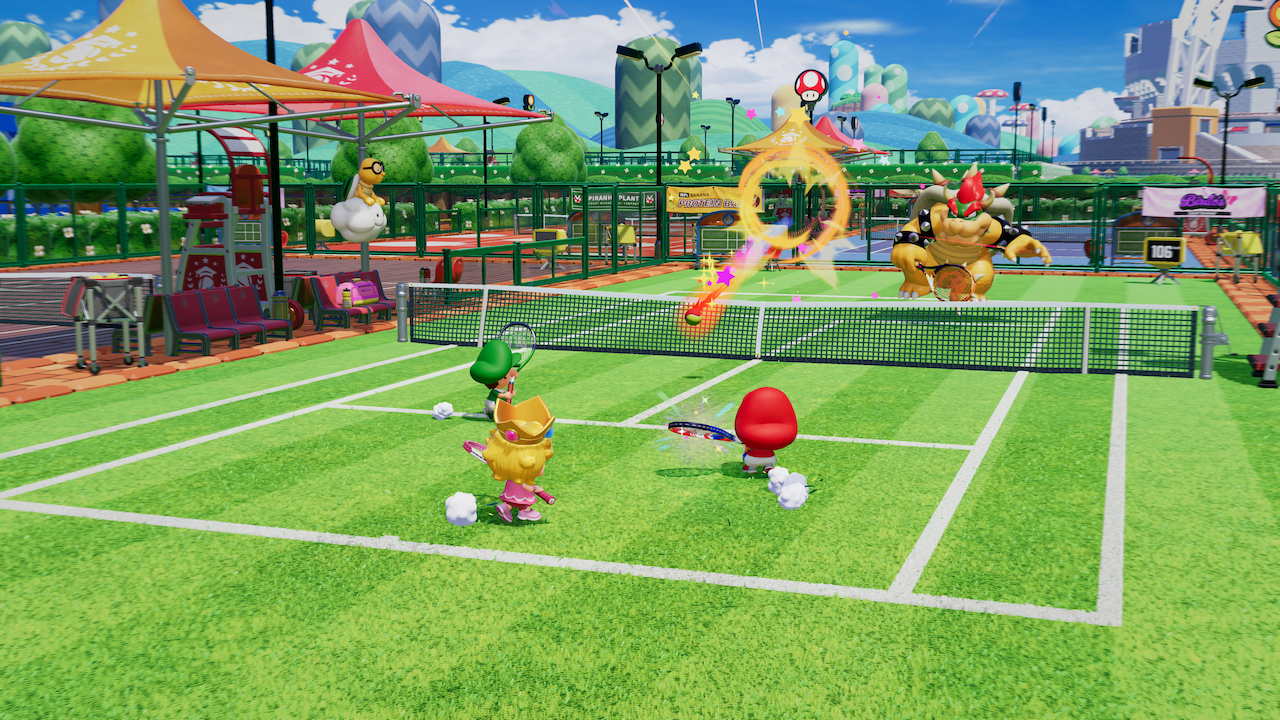
Mario Tennis traditionally lives in the tension between accessibility and mastery. Anyone can pick up a controller and rally within minutes. But to truly dominate requires timing, anticipation and a certain psychological cruelty. Reading your opponent’s patterns. Baiting them wide. Punishing hesitation. For many players, the sports mini-games in Mario Party have acted as a light appetiser. Here, tennis stands alone – exposed, sharpened, and far more demanding.
There’s also an Adventure Mode, and this is where Nintendo’s tonal elasticity once again surfaces. Mario and company are transformed into babies and must, quite literally, learn to master tennis before they can even crawl. Absurd? Absolutely. On-brand? Entirely. Beneath the cartoon logic lies a structured progression system, one that gently introduces mechanics while wrapping them in narrative whimsy. Nintendo rarely explains itself. It simply commits.
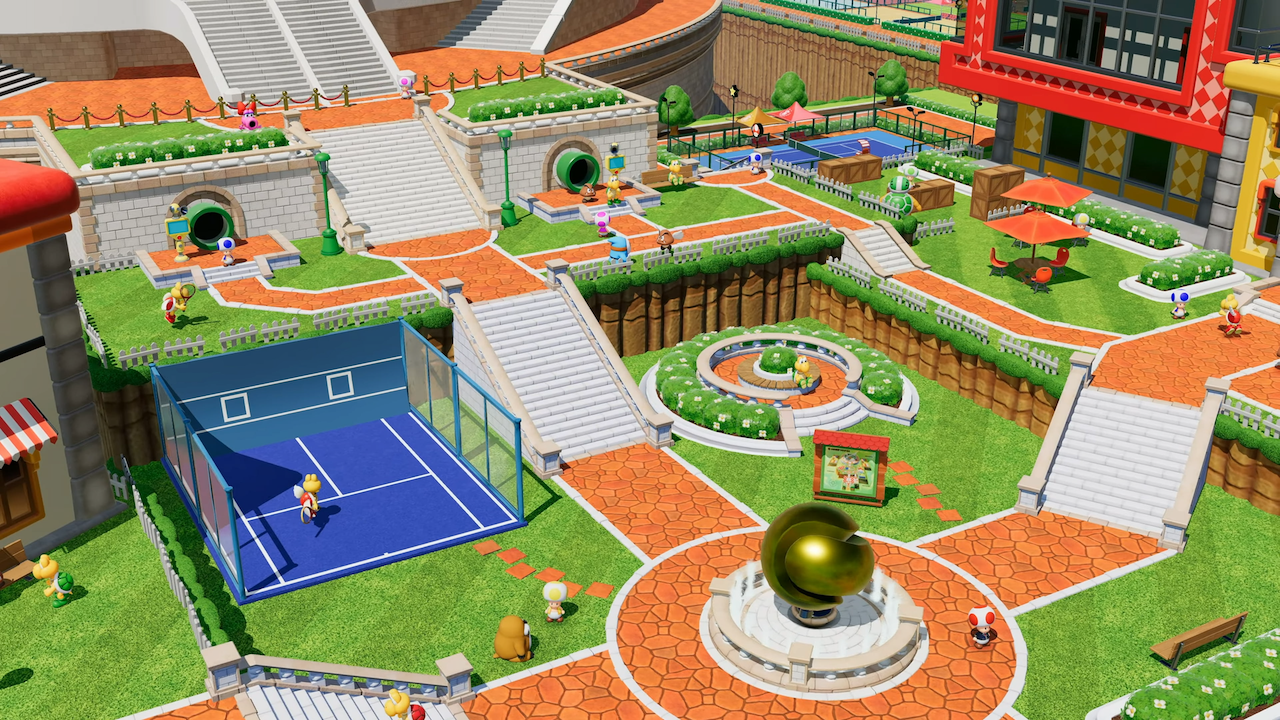
The game also introduces a Trial Towers mode – challenge-based sequences designed to test precision and control – alongside multiple alternative match types. These variations suggest a layered experience: surface-level fun for local multiplayer nights, deeper systems for those who want to grind their way toward technical proficiency.
Online functionality, unsurprisingly, will be central. And here, the tone shifts. What feels playful in the living room can turn ruthless online. Precision becomes paramount. Frame windows matter. Nintendo’s bright colour palette won’t soften the competitive edge once rankings and matchmaking enter the equation.
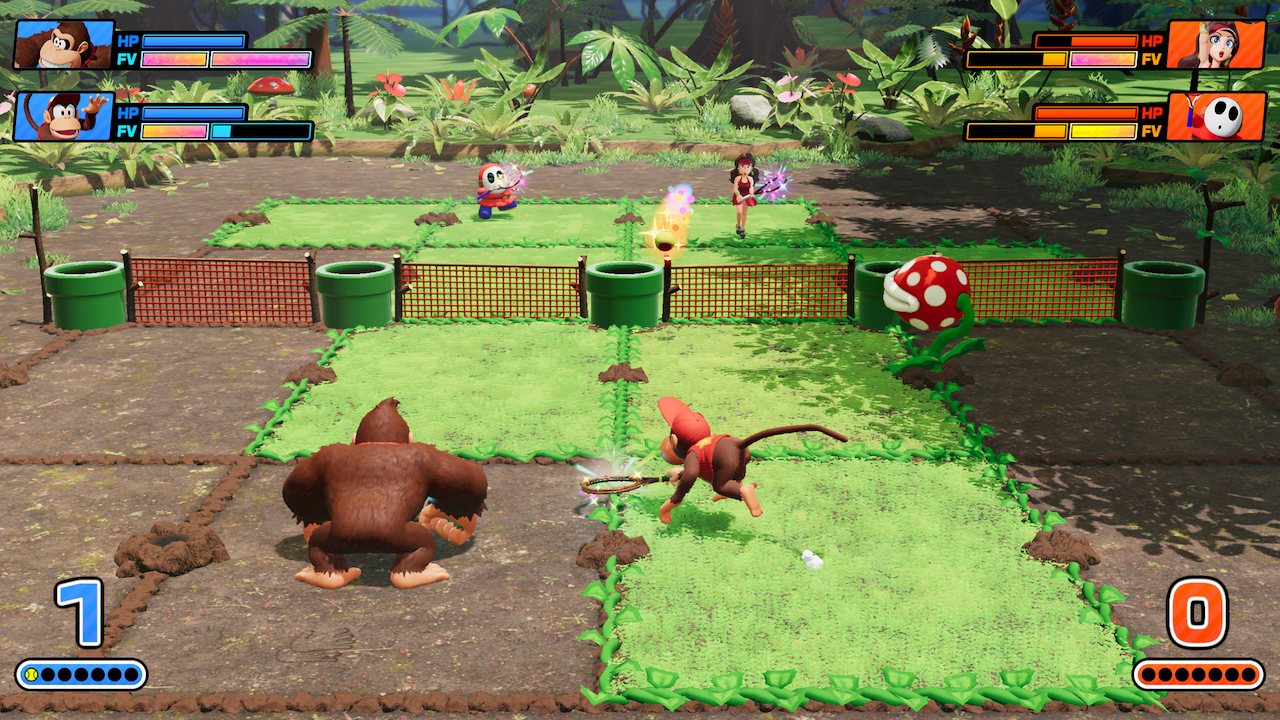
As always, the hardware itself becomes part of the design philosophy. Joy-Con motion controls allow players to physically swing the racket, translating movement into action. It’s a feature that leans into the party atmosphere – less about surgical precision, more about embodied fun. Meanwhile, GameShare support enables local players with their own Switch systems to join in seamlessly, reinforcing Nintendo’s persistent belief in shared spaces over isolated screens.
What emerges is a familiar yet recalibrated proposition. Mario Tennis appears to once again attempt the delicate balancing act between inclusive multiplayer entertainment and systems deep enough to reward dedication. It looks vibrant. It looks competitive. It looks like the kind of game that will start as “just one match” and quietly consume entire evenings.
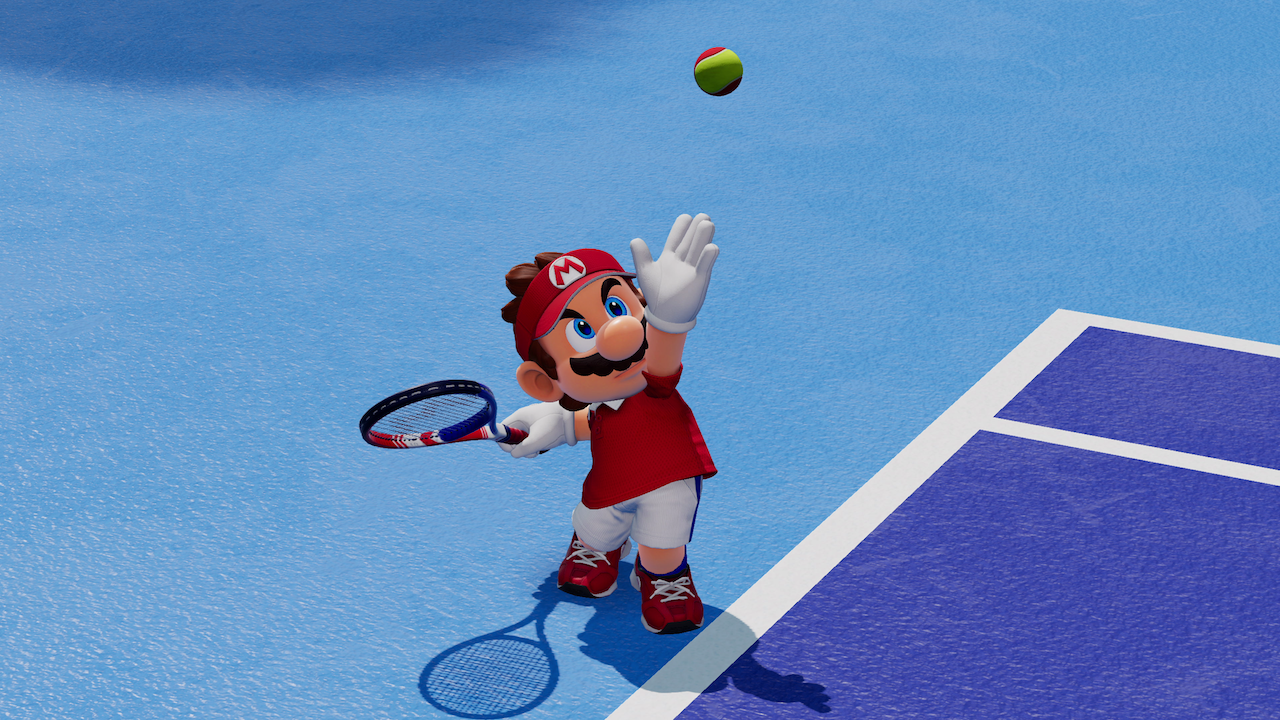
There’s something reassuring about Mario returning to the court. In an industry increasingly obsessed with realism, simulation and hyper-detail, Nintendo continues to operate in a parallel dimension where sport is less about authenticity and more about expression. Timing still matters. Skill still separates the casual from the committed. But spectacle is never sacrificed.
The plumber is ready to serve.
The only question is how hard you intend to return it.
Mario Tennis launches February 12.