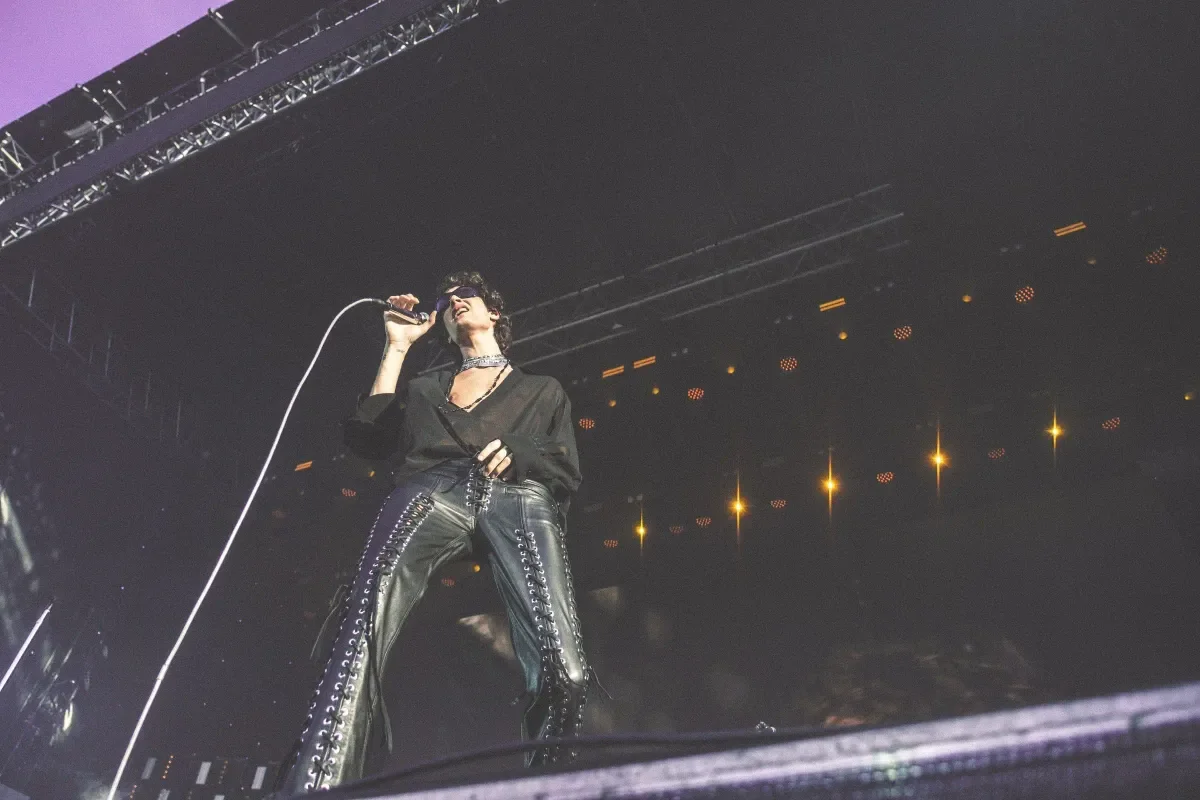
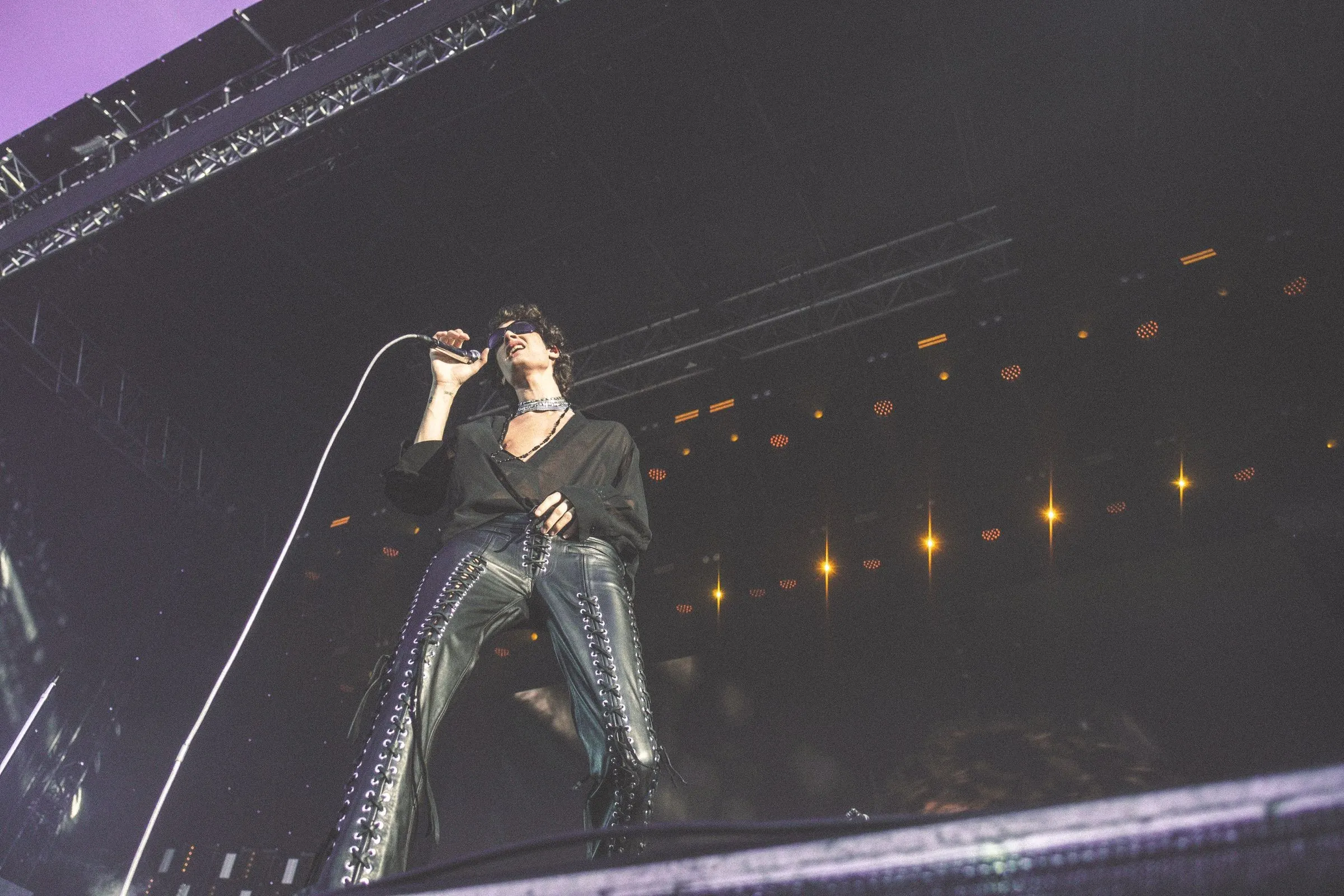
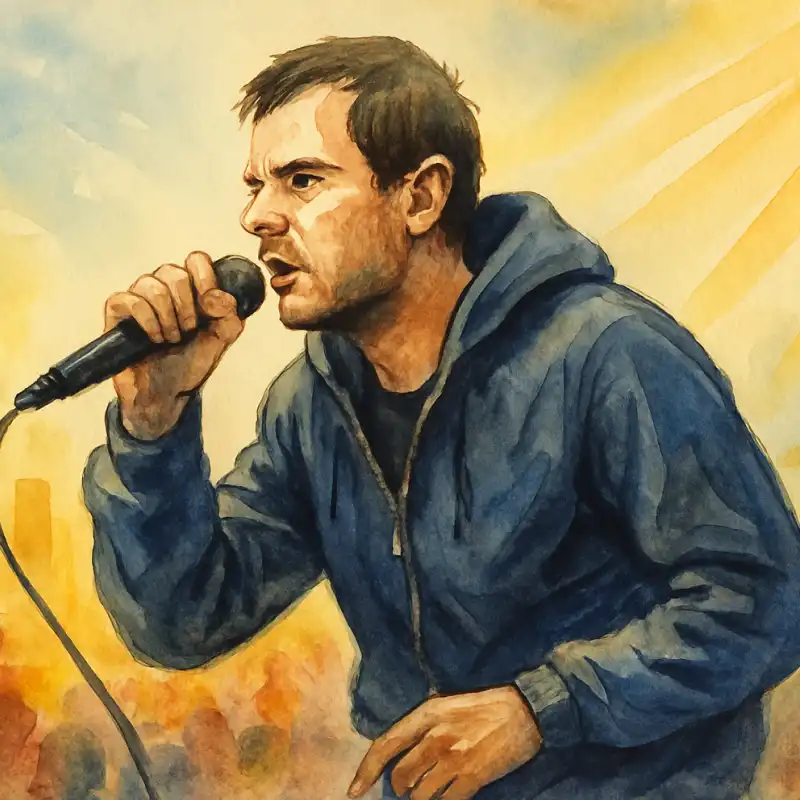
Kesi took the stage like a man who had invited the whole city to his own coronation — and everyone showed up, ready to bow. Royal Arena was sold out, it was Saturday night, and Danish hip-hop suddenly looked like something you could take seriously with champagne in your glass. It smelled faintly of a milestone. And that’s exactly what it was.
One star
Two stars
Three stars
Four stars
Five stars
Disclaimer: Apropos Magazine received access or a review copy. As always, we share our own impressions — unfiltered.
Six stars
Rap with backup
The whole thing was staged like one long flex: of career, of catalogue, of colleagues. Kesi had split the concert into acts, and it worked surprisingly well. From the pop-leaning charm offensive of “Søvnløs” and “God dag” to the Supernova noise of “Flad af grin” with Noah Carter and on to the more contemplative “Blå himmel.” It was a tour de force — or at least a very fine ride in a familiar Mercedes.
But this wasn’t a solo act, and it wasn’t meant to be. Because what really gave this concert its weight was the sense of community. The stage filled up with Gilli, Benny Jamz, Artigeardit, Lamin and, finally, Hans Philip. “Brutalt” was delivered with so many microphones and so much energy that you could almost feel the floor give way. It looked important — and it felt that way too.

A back catalogue that can carry the weight
It dawned on you — somewhere between the verses and the shifts from trap to romance — that Kesi has actually made more hits than most people. Quietly, he has built a career that can carry an arena without having to limp along on guest stars alone. It’s a catalogue with range, one that can move between club energy and reflection without losing the crowd. Not everyone can do that. Not everyone tries.
And precisely because he doesn’t need to be groundbreaking, he can afford to be grand. It never felt like Kesi was proving anything. More like he was letting us into something he already knows he owns.
A genre that has grown up
There was an astonishing calm about Kesi. Not as in dead energy — but as in: “I know I’ve won.” And he was right. The audience was with him all the way, from beat drop to ballad, and people sang along to lines you once only heard in school corridors and on bikes in Vesterbro. This was something else. Danish rap was suddenly standing in the middle of Royal Arena under stadium lights and with real confidence, and it was hard not to feel a little moved by it.
The concert felt like a kind of official recognition that Danish hip-hop is no longer a counterculture. It is culture. And it was clear that Kesi hadn’t come to say thank you — he came to gather everyone together.
But maybe a little too choreographed?
If there’s a criticism to make — and of course there is — then the whole thing could have been… a little uglier. A little more improvised. A little less polished. It was a show, not a club night. A celebration, not a party. There was a lack of sweat, of mistakes, of shouting. Not much, but enough that you found yourself missing it.
It’s not that one wanted flattened cable drums and Jack D in plastic cups — but a bit of unpredictability would have suited the perfection.
Let’s just put it like this…
Kesi gathered a generation, honoured a genre and stamped his name into arena concrete in capital letters. It was beautiful, huge and united. Maybe a little too neat — but who said rap can’t be grand?
En stjerne
To stjerner
Tre stjerner
Fire stjerner
Fem stjerner
Seks stjerner