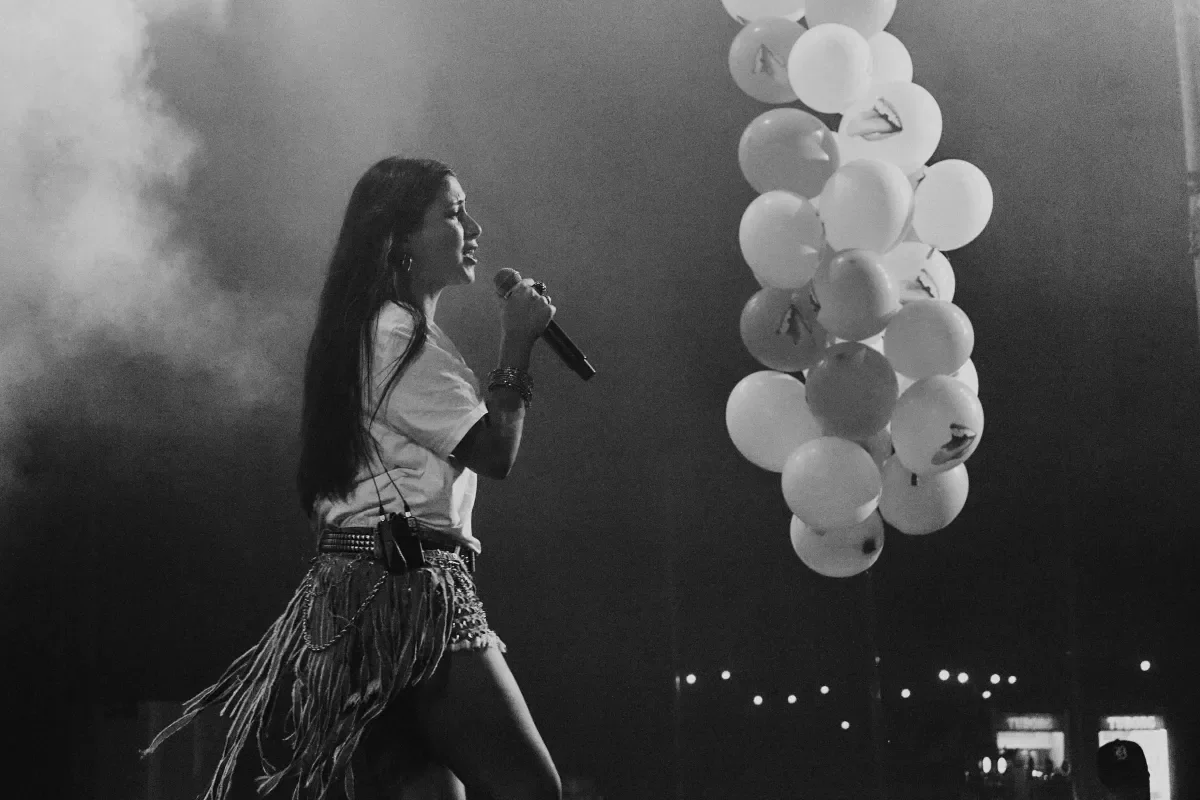
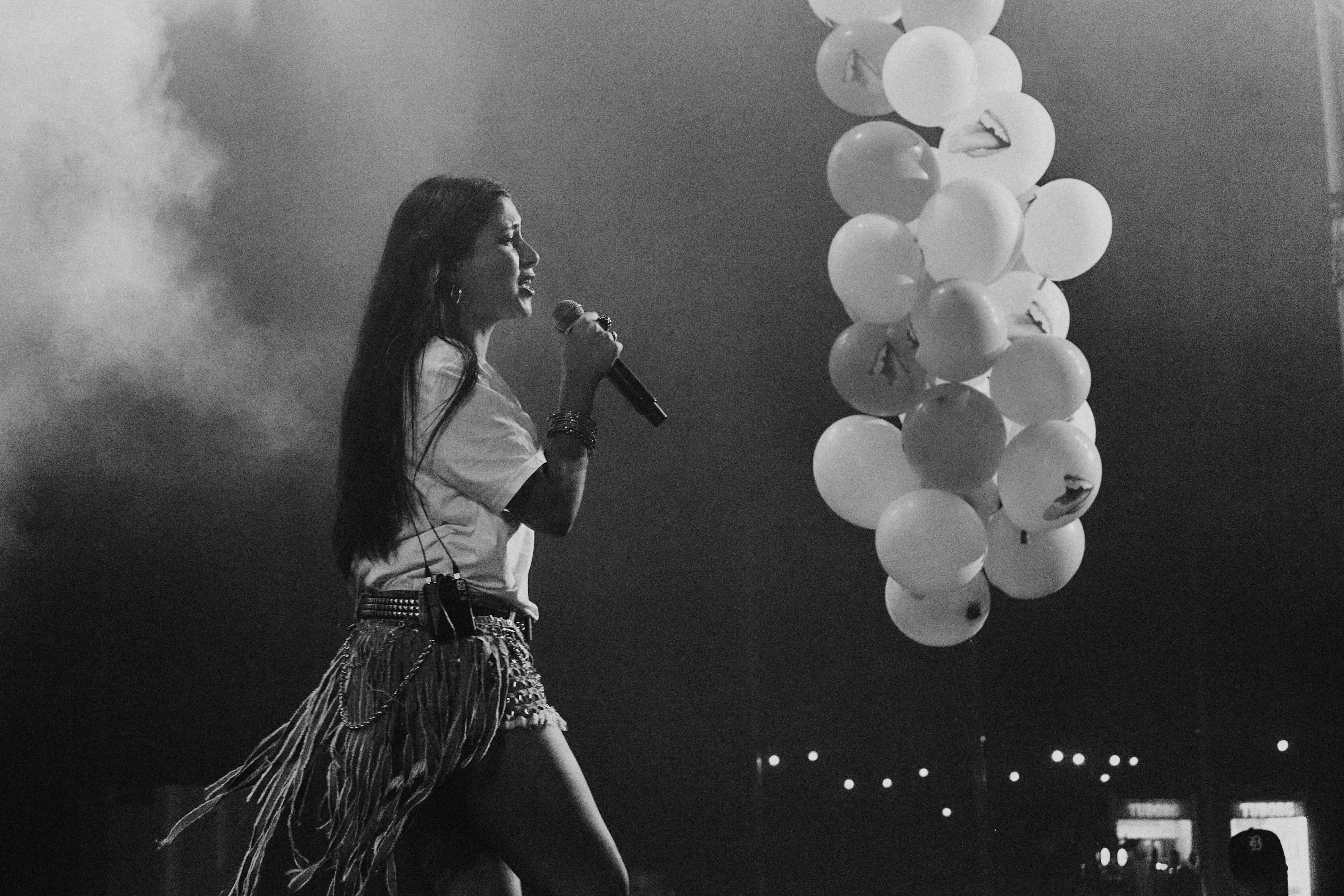
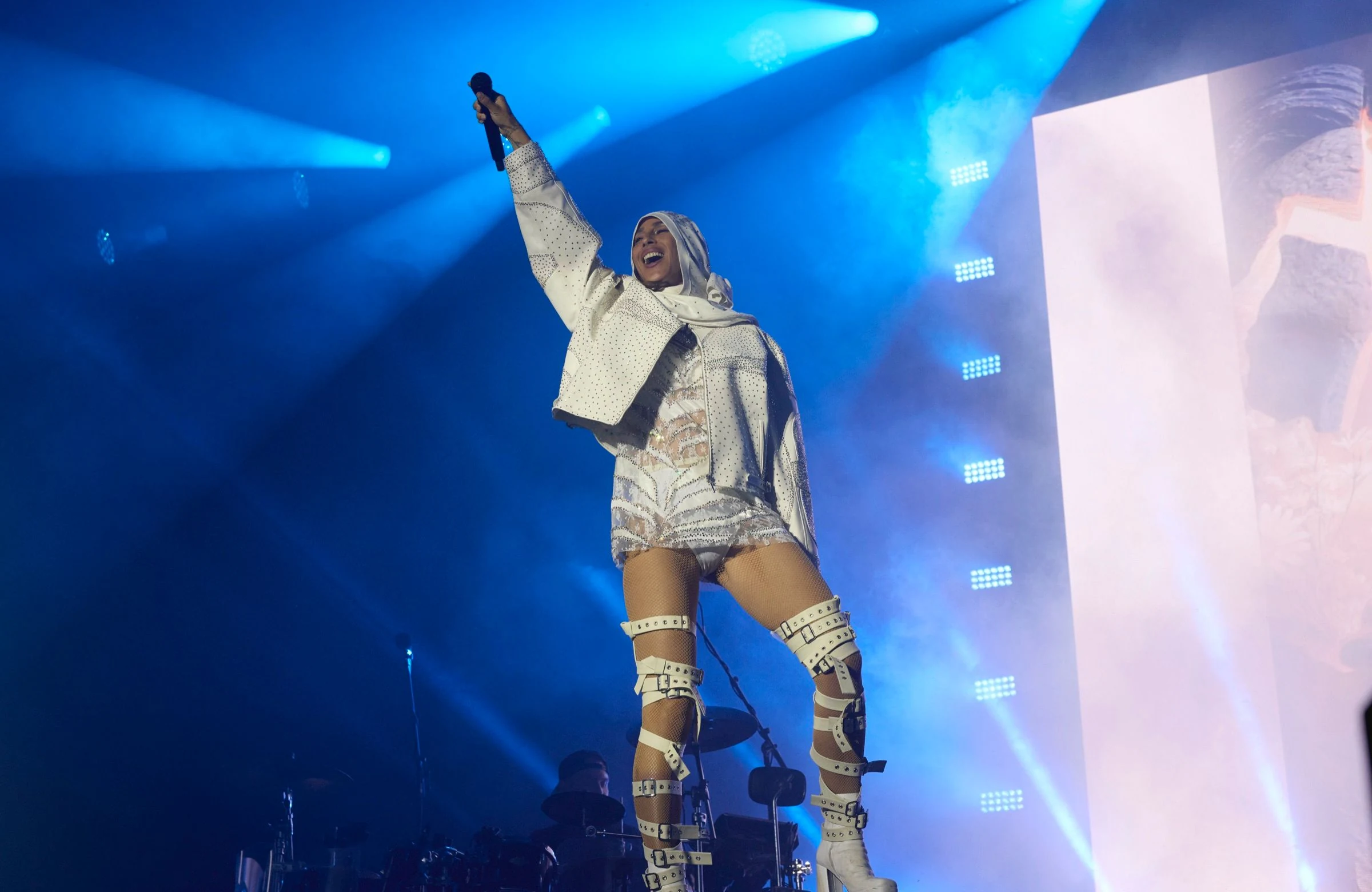
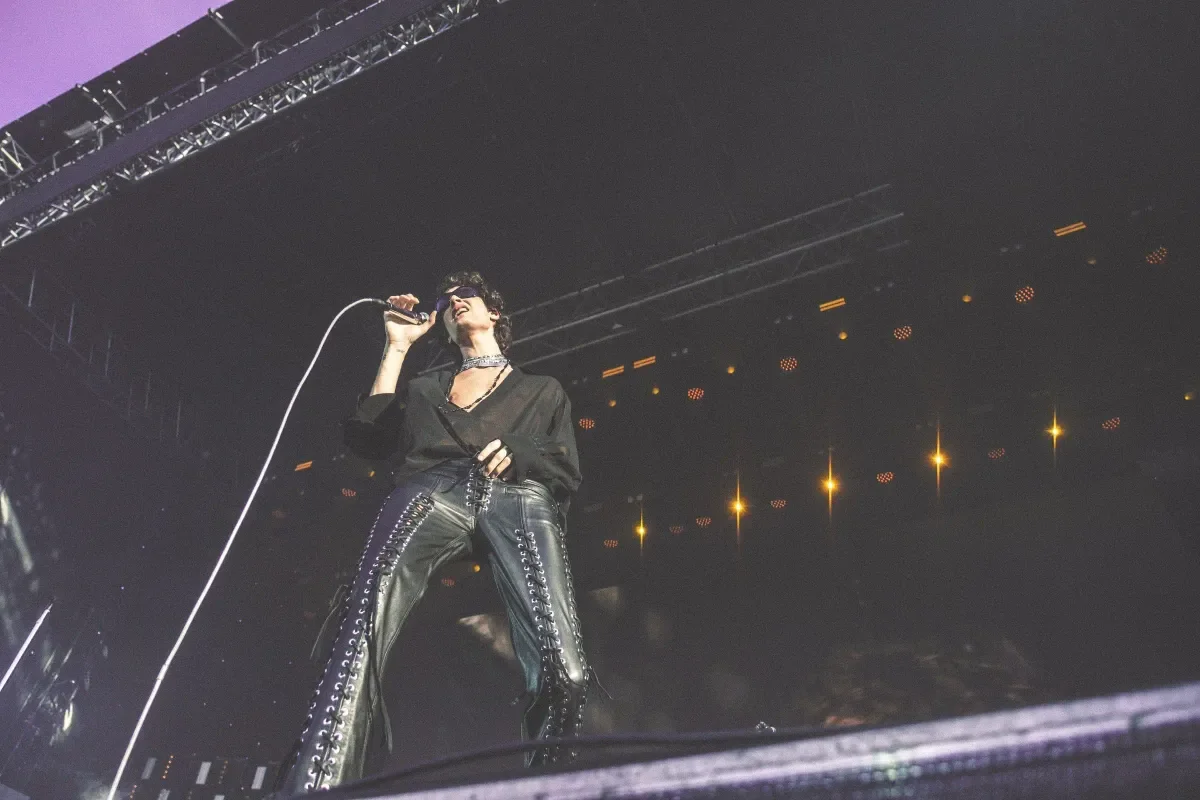
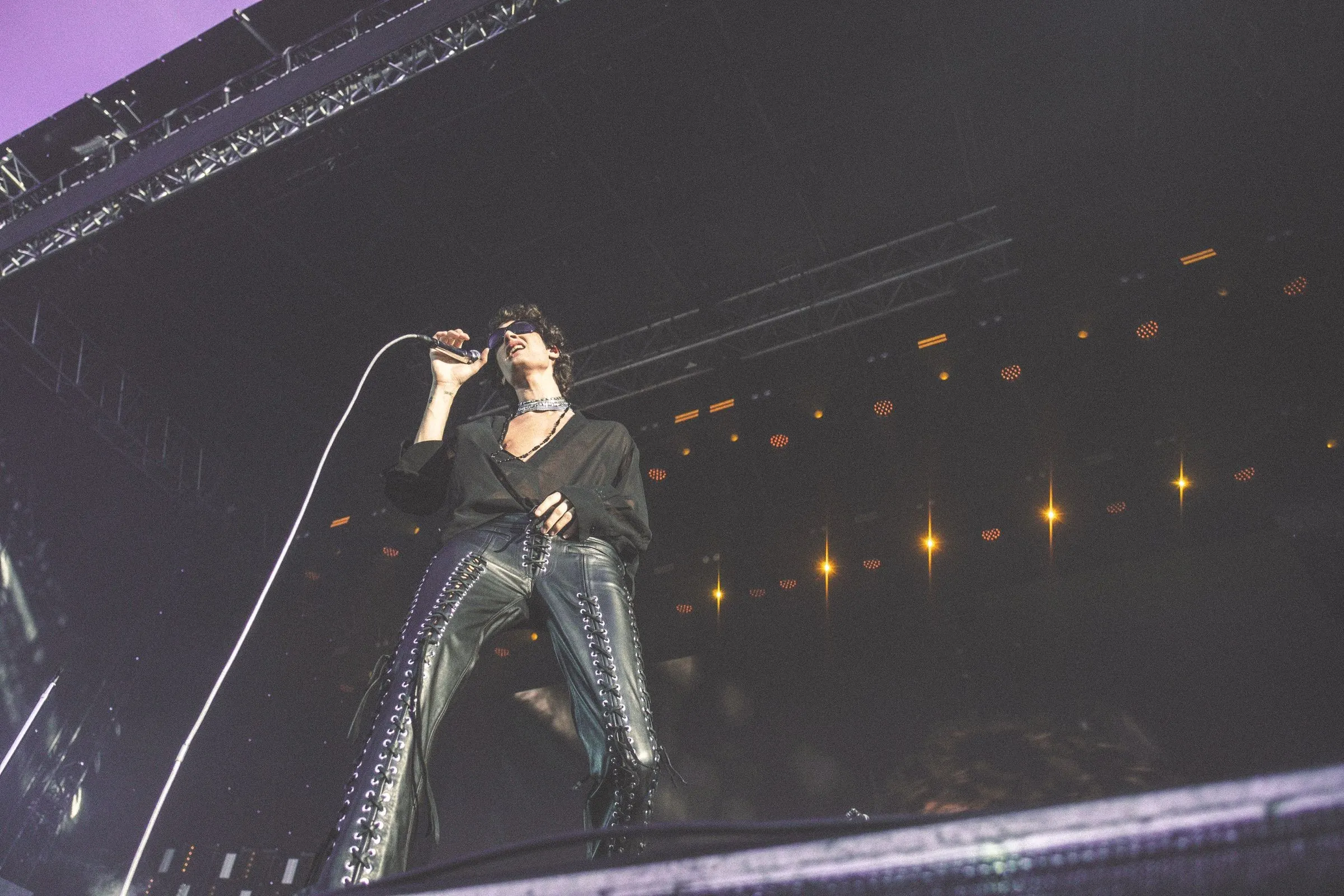
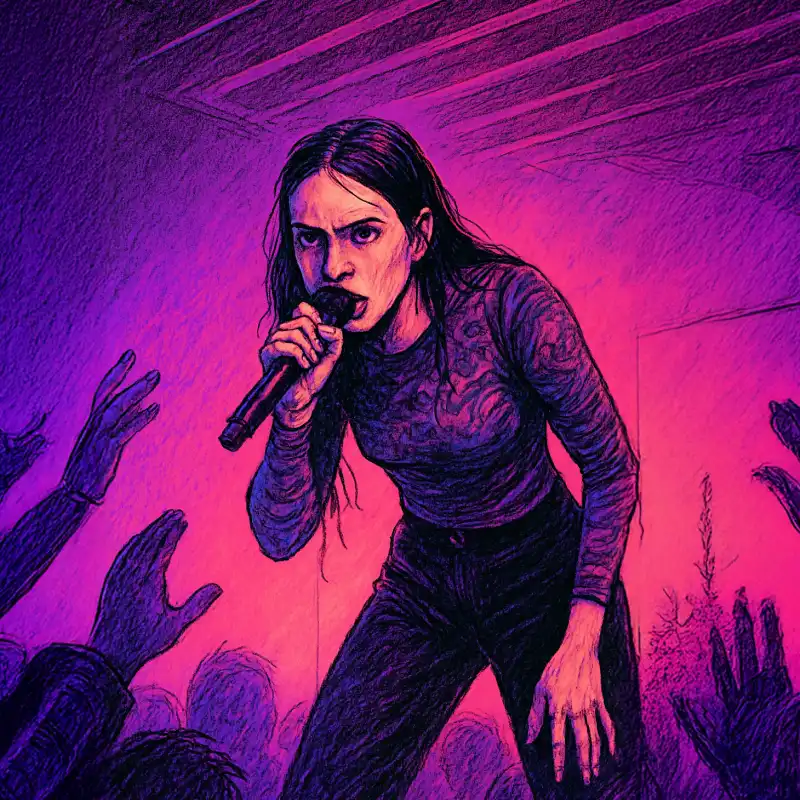
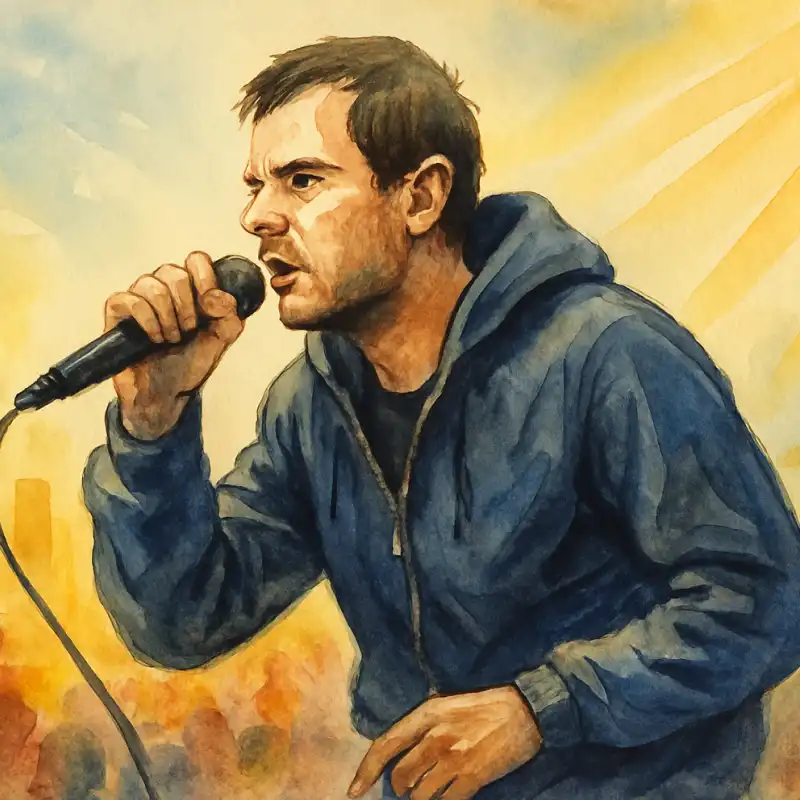
Jess Glynne took the stage after a brutal spell of weather, with Tinderbox still trying to find its footing again. It was a thankless task, yes. But also a chance. She had the hits, the voice and the crowd in front of her. And yet the concert never quite became the release the square needed.
One star
Two stars
Three stars
Four stars
Five stars
Disclaimer: Apropos Magazine received access or a review copy. As always, we share our own impressions — unfiltered.
Six stars
Jess Glynne had a pretty simple job at Tinderbox: get people back into their bodies.
After heat, storm, rain and a cancelled Charlie Puth concert, the crowd was ready to be gathered up again. Not necessarily impressed. Just woken up. She had the songs for it. She had the voice for it. She had the stage for it.
And yet the concert felt as if it never quite reached us.
It wasn’t because the crowd was against her. Quite the opposite. You could feel that people wanted to be there. There was a clear longing to move on from the weather, the rain and the slightly strange pause, when the festival had briefly felt more like an emergency drill than a music celebration. People wanted to dance. They wanted to sing. They wanted the evening back.
Jess Glynne has the material for that too. That should be said clearly. She didn’t come out of nowhere. She has been the voice behind some of the big British dance-pop moments of the 2010s, and her catalogue sits somewhere between soul, pop and electronic radio-friendliness. “Rather Be”, “My Love”, “I’ll Be There”, “These Days” and “Hold My Hand” are songs that have long since proved they work in headphones, on the radio, in shops, in taxis and on dancefloors where nobody asks permission anymore.

But live at Tinderbox, too little happened.
Not because everything was bad. It wasn’t. The setup was professional. There was a band. There were hits people knew. And Jess Glynne can sing. The voice wasn’t the problem. The problem was rather that the concert never really found a body. It stood in front of us like something that should work on paper, yet never became alive enough to really take hold of the square.
She didn’t really feel present. Not absent in an arrogant way, but as if she never quite made it over the edge of the stage. The connection was missing. Those small moments when an artist makes the audience feel that this exact concert could only happen here, at this moment, with these people in front of her. We never got that. Everything felt a little closed in on itself.
“I’ll Be There” should have opened something up. “These Days” should have been a shared breath. “123” and “Silly Me” should have lifted the tempo and made the square feel lighter. But the songs came and went without really sticking. The crowd received them, but without being swept away. You could almost hear how the songs wanted to be bigger than the concert allowed them to be.
That may be the most frustrating thing about the show: the potential was there. Jess Glynne has a voice that, at the right moments, can be warm, rough and powerful all at once. But here she didn’t seem like an artist who enjoyed standing in the middle of all the unpredictability that a festival also is. Weather, waiting, tired people, mud, distractions, people coming and going. That kind of setting requires you either to take over the space or embrace the chaos. She did neither in any real sense.

Instead, the concert lingered in a kind of neat professionalism. Not embarrassing. Not disastrous. Just strangely unresolved. Like a pop machine that was running, but without quite switching on the cabin light.
Only towards the end did something happen. “Rather Be” did what “Rather Be” almost always does. It brought people together. Suddenly there was more movement, more smiles, more recognition. The crowd finally got the dance party it had been waiting for, and you could feel how strong a song it still is. It was a moment when the concert briefly found its meaning.
But it came too late.
Because even if the crowd was having a party in those minutes, it never became a real party on stage. Jess Glynne still seemed uncomfortable, and the whole thing never quite held together. The concert lacked flow. It lacked ease. It lacked that simple, but crucial, sense that someone on stage really wants something from us.
Maybe the timing was difficult. Maybe the weather had stolen some of the energy. And maybe a more enclosed venue would have suited her better than a large festival square still shaking the water off itself. But a festival artist must be able to build a bridge between the imperfect and the grand. Here, that bridge was never finished.
Jess Glynne brought the hits. The crowd brought the will. Tinderbox brought a stage that, after the storm, needed waking up. But the concert never became the restart the evening was calling for.
Reflection
Jess Glynne had the material to lift Tinderbox after the storm, but not the presence to gather it all together. There were flashes, especially towards the end, but for too long the concert felt like something happening on stage without really reaching the square. The hits were there. The voice was there. But the party, unfortunately, remained somewhere between the rain and the edge of the stage.
En stjerne
To stjerner
Tre stjerner
Fire stjerner
Fem stjerner
Seks stjerner