They’re neither dead nor resurrected. Just persistent. Fourteen albums in, still angry, still poppy, still political — and still wearing eyeliner and leather jackets as if the world hasn’t moved on. Maybe because it hasn’t.
One star
Two stars
Three stars
Four stars
Five stars
Disclaimer: Apropos Magazine received access or a review copy. As always, we share our own impressions — unfiltered.
Six stars
It’s easy to call Green Day a nostalgia act. For many, their heyday was Dookie in 1994. For others, it was American Idiot in 2004, when punk rock became pop rock became a rock opera. A record about Jesus of Suburbia, the Iraq War and a new American apathy. And then came the trilogy ¡Uno! ¡Dos! ¡Tré! in 2012, reminding us that genre confusion can absolutely be intentional.
But after that? For years, Green Day have released albums at four-year intervals — without really disappearing, but without quite defining the era either. Billie Joe Armstrong, though, has never been the type to keep quiet. He still writes about war, Elon Musk and MAGA. And their greatest hits are still called “God’s Favorite Band.” That’s either arrogant or funny. Probably both.
Let’s just put it like this…
The Tinderbox concert was everything you hoped for and feared. A band with enough back catalogue for three sets. An energy that spread from the first note. A huge Star Wars–Queen–Ramones potpourri of an intro that, without warning, slid straight into American Idiot, while a sea of people tried to push closer to the stage.
And yes — it sounded fantastic. As huge and tight as the record, but with extra confetti, pyrotechnics and a giant clenched fist from the American Idiot cover art hanging in the middle of the stage. This wasn’t just a concert — it was staged indignation, wrapped in hooks and fire.
Holiday followed, and may have been the night’s most unsettling moment: a song about apathy and war that suddenly felt like 2004 again — and like 2025. The crowd knew every word, and it rang out strangely current when Billie Joe sang: “the representative from Denmark now has the floor”. A small, cheeky rewrite that earned laughter and screams, while for a brief second it felt as if Funen was the centre of the world — and Denmark part of the band’s rebellion.
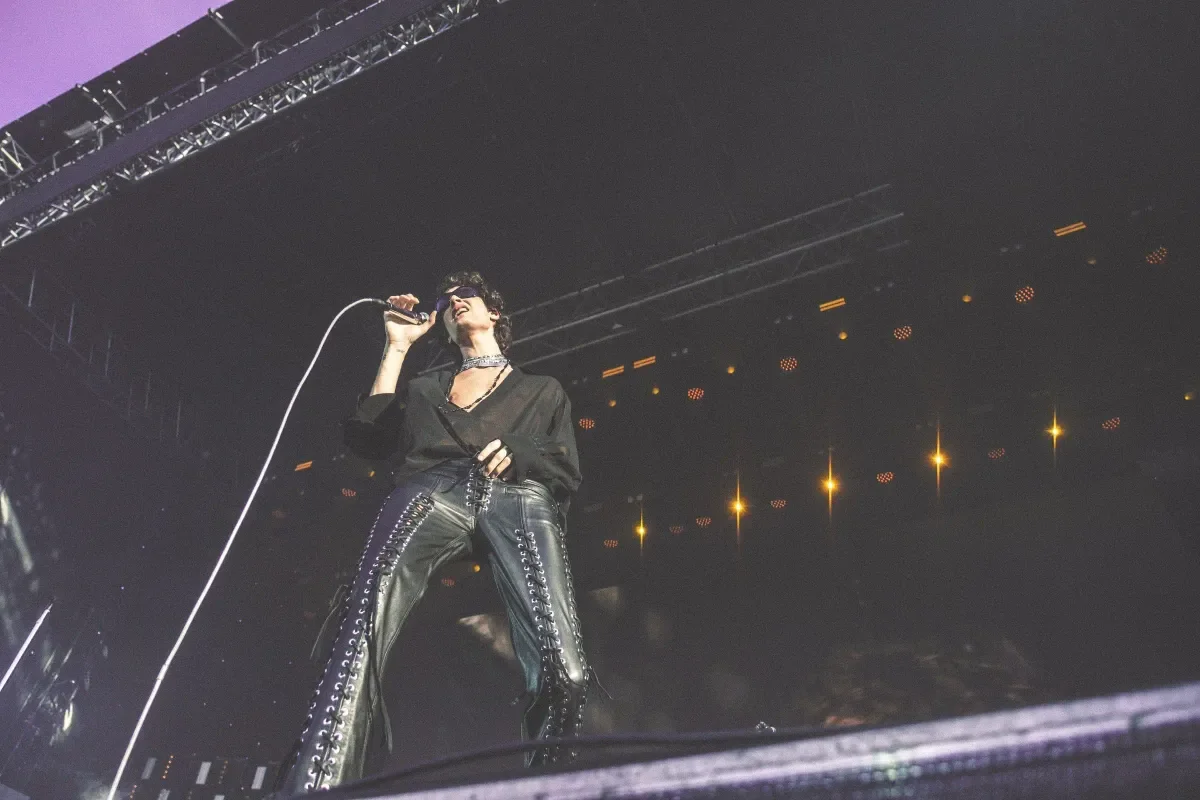
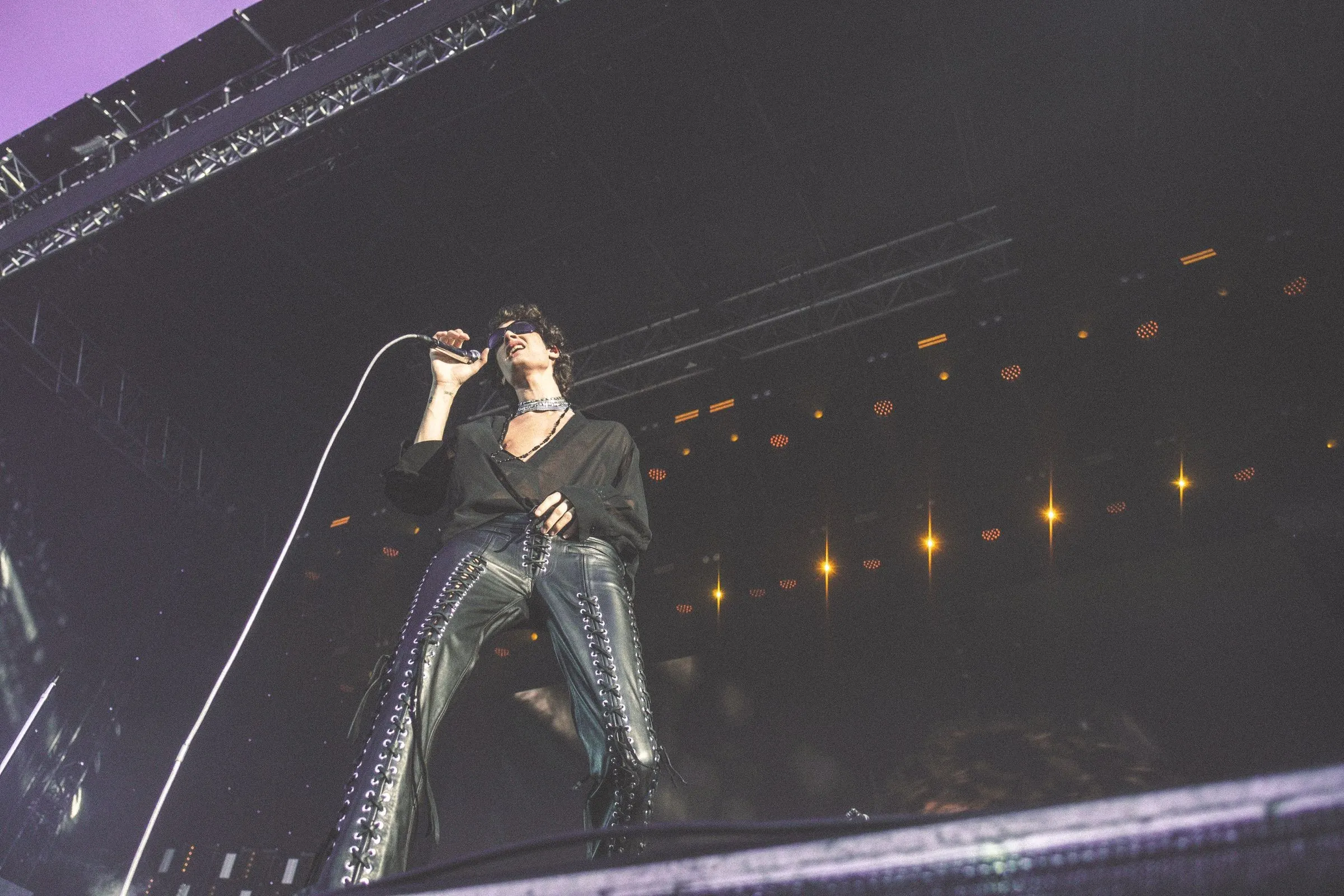
Visually, it was a hybrid of punk and stadium rock. The light rig flashed in time with the drums, and the three giant LED towers on either side showed raw clips of the audience, close-ups of the band and little glitchy animation snippets, reminding you that Green Day are still playing with the format. And in the middle of it all stood Billie Joe — red shirt, bleached hair and the energy of a 25-year-old angry poet from the 2000s.
The setlist stretched impressively wide. From Boulevard of Broken Dreams and Wake Me Up When September Ends to older tracks like Longview, When I Come Around and Basket Case. It never felt like an obligation. Quite the opposite. Green Day played with a genuine love for the material — and with a sense of what the audience needed.
And who was actually at the concert? Hard to say. ’90s kids in Basket Case T-shirts, post-emo types with septum piercings, and families who’d just found someone to watch the kids and wanted to tick Green Day off the list before heading to DIZZY. For most people, it didn’t feel like a nostalgia trip — more like a collective need for something loud and opinionated.
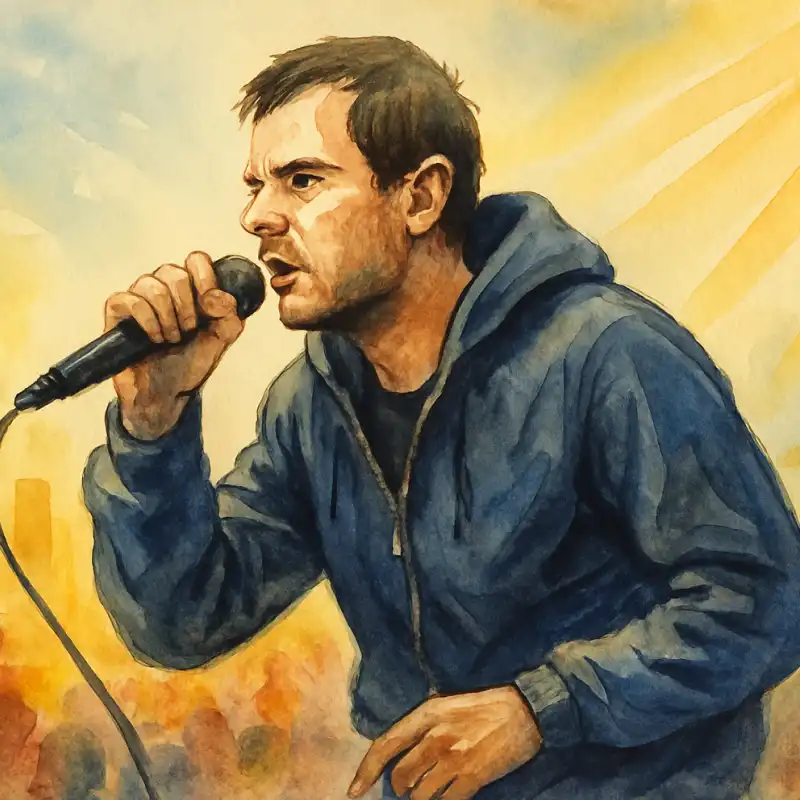
That’s probably the most important thing. That Green Day still have something to say. That the music isn’t just a TikTok sound or a festival souvenir. Billie Joe Armstrong is still a fantastic frontman. Not charismatic in a polished way, but punk and irresistible. He still looks like someone who might throw a beer in your face, but would also apologise afterwards. His voice holds. His energy holds. And most importantly: you believe him.
Reflection:
Green Day at Tinderbox wasn’t just a punk time machine. It was a reminder that some anger is worth keeping. Especially when the world gets dumber and the algorithms make us softer. Their songs sounded the way they always have — and maybe meant more than ever.
It wasn’t the concert that changed the world. But it reminded us why we once believed music could. And if that’s not enough for five stars — what is?
En stjerne
To stjerner
Tre stjerner
Fire stjerner
Fem stjerner
Seks stjerner