The two French men behind Justice have trashed hotel rooms, won Grammys, and staged an opera with no audience. Now they’re playing O Days Festival — and I’m still hoping someone shouts “We Are Your Friends,” even though it’s been 20 years since that was cool.
One star
Two stars
Three stars
Four stars
Five stars
Disclaimer: Apropos Magazine received access or a review copy. As always, we share our own impressions — unfiltered.
Six stars
When † (pronounced “Cross”) came out in 2007, it wasn’t just an album — it was an event. Two French guys with death stars in their eyes and a cross for a logo drove so much bass into club culture that you’d have thought they were trying to topple the Vatican. “Genesis,” “Stress,” “Waters of Nazareth” — it sounded like a breakdown inside an electric cathedral. And then there was “D.A.N.C.E.”, a pop song disguised as an homage to Michael Jackson, with children’s choir and colourful visuals as the opposite of all that darkness. It shouldn’t have worked — but it did.
Justice emerged from Ed Banger Records’ glittering grotto of French electro alongside Kavinsky, Uffie and Busy P, and they looked like people who wanted to both steal your girlfriend and smash your sound system. And that is exactly what they did.
But how many people remember how far they went to keep that mythology alive?
In the tour documentary A Cross the Universe (2008), things go from ridiculous to semi-criminal. They get impulsively married in Las Vegas, trash hotel rooms, and on a Los Angeles sidewalk Xavier smashes a bottle of Havana Club over the head of a fan who allegedly stalked them across the United States. The police called it self-defence. The internet called it legendary. Justice themselves didn’t say much — they just stood there in the dark and let the cross’s light do the talking.
After †, they could easily have milked the same distortion for ten years, but thankfully they chose something else.
Audio, Video, Disco (2011) was their musical “I’ve got my own garden now and eat organic” phase. There were guitar riffs, prog-rock expanses and an ambition to sound like something you’d hear in 1976 — if you were high enough. Some fans missed the wreckage, but there was still something strangely irresistible about it all. It was Justice on unemployment benefits. Sunshine. Vintage synths. Mild confusion.
Woman (2016) pushed it even further. Here they stepped straight into a pastel-coloured 1970s soft-porn universe, complete with gospel choir, strings and something that resembled funk if you squinted hard enough. “Safe and Sound” sounded like Daft Punk on ayahuasca, and the whole album radiated a kind of kitschy confidence. It was odd, gorgeous and almost moving. Not because it was deep. But because it dared to be shallow on a grand scale.
And that was probably where it really became clear that Justice didn’t just make music. They made images. Visions. Experiences.
That was underlined by the concert film Iris: A Space Opera by Justice (2019), recorded without an audience. Why? Because it wasn’t meant to be a party. It was meant to be a work. An opera. A total installation of light, sound and crosses, something you could only wish had been staged at Louisiana instead of Vega.
And then it went quiet.
EDM died of self-satisfaction, TikTok took over the world’s sound aesthetic, and Justice went into hibernation. Until 2024, when they returned with Hyperdrama — an album that sounded as if it had been mixed in a spaceship but written in a vintage sports car. They brought in Kevin Parker from Tame Impala for “Neverender,” and the song won a Grammy. Because of course it did. Justice don’t do comebacks. They do entrances.
But what are they today?
Are they still relevant? Still dangerous? Or just two ageing Frenchmen with expensive gear and a PR team?
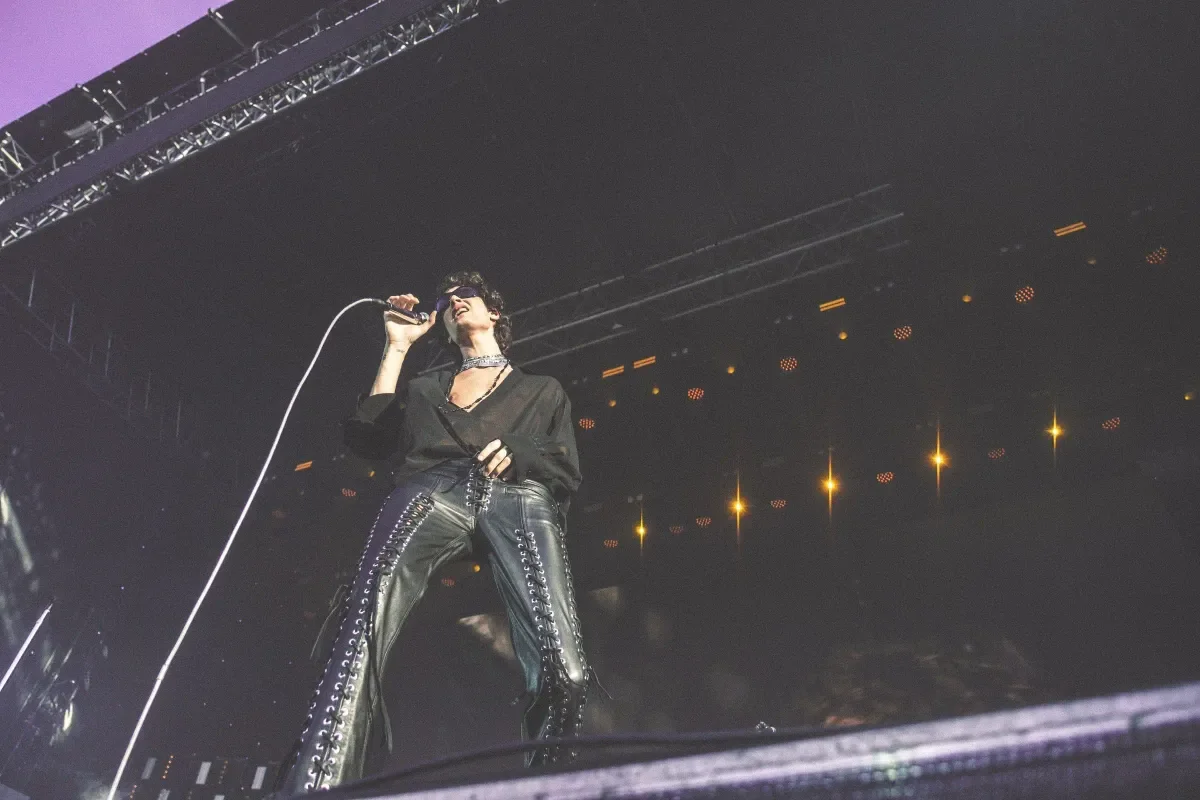
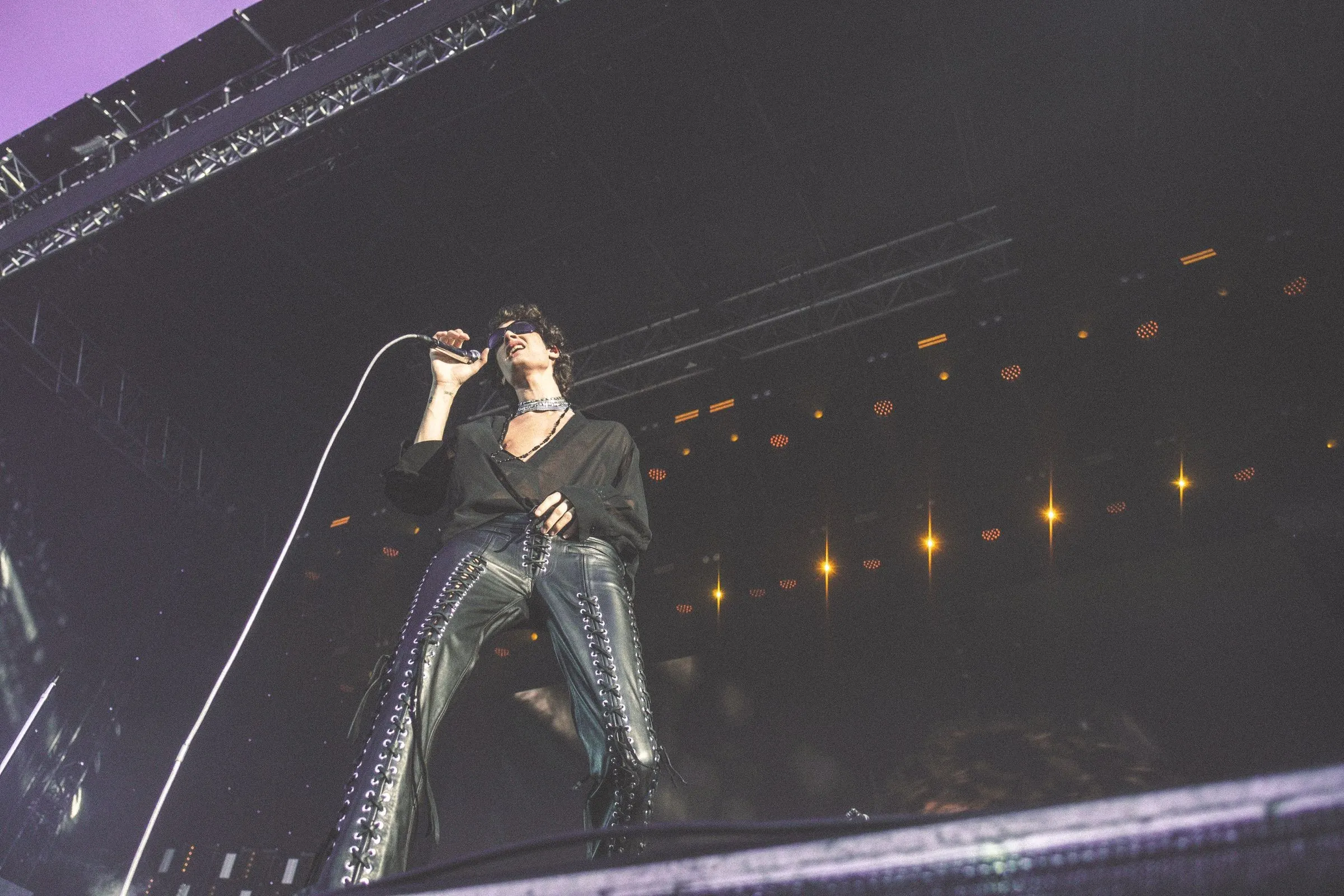
The answer is simple: yes. They are still relevant. And it comes down to one thing — their live shows. Justice live is not just a concert. It’s a state of being. An exorcism of bass and light. They stand there — perfectly still, perfectly cool, in leather jackets and the cross’s eternal glow — and then everything explodes. “Genesis,” “Stress,” “On’n’On,” and then a few new tracks from Hyperdrama that sound like Justice on microdosing.
And now they’re coming to Denmark.
To O Days Festival 2025, as a headliner. It’s their first Danish appearance in ages, and the only show in Scandinavia. It’s a bit like getting Daft Punk to Vordingborg. It doesn’t happen. But it is happening.
Refshaleøen’s rusty industrial landscape, combined with the cross’s cold glow and “Waters of Nazareth” pumping out over a sun-baked crowd? It sounds like something we should all be standing in the middle of. Because this isn’t just about nostalgia. It’s about feeling that something can still be bigger than us. That club music can be theatrical, violent, pathetic and magnificent all at once. And we need that in 2025.
Reflection:
It’s been almost 20 years since “We Are Your Friends.” And it’s still hard to say whether it was a joke, a manifesto or just a remix that got too big. But if the crowd — amid all that light and bass and visuals — still feels like shouting it in unison one more time, then something in me will believe that Justice are still doing exactly what they’ve always done best:
Setting fire to modern humanity’s hunger for meaning.
With a beat. And a cross.
En stjerne
To stjerner
Tre stjerner
Fire stjerner
Fem stjerner
Seks stjerner