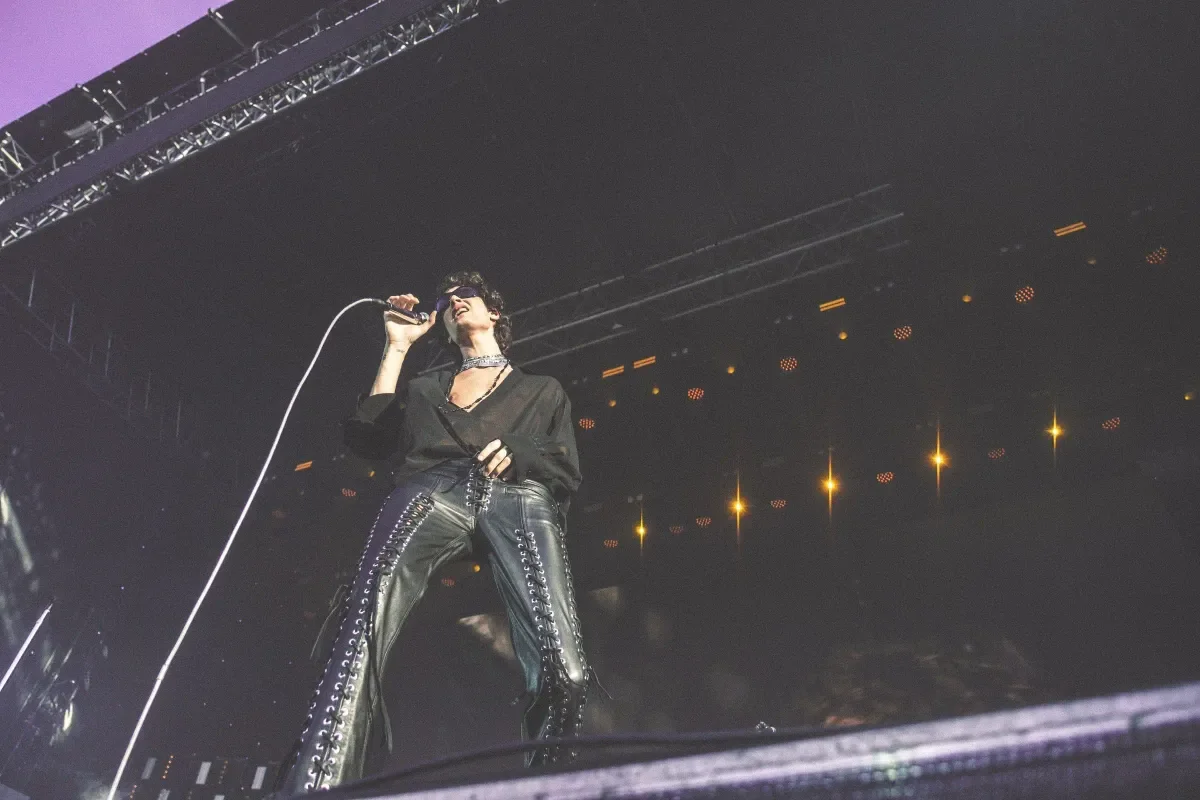
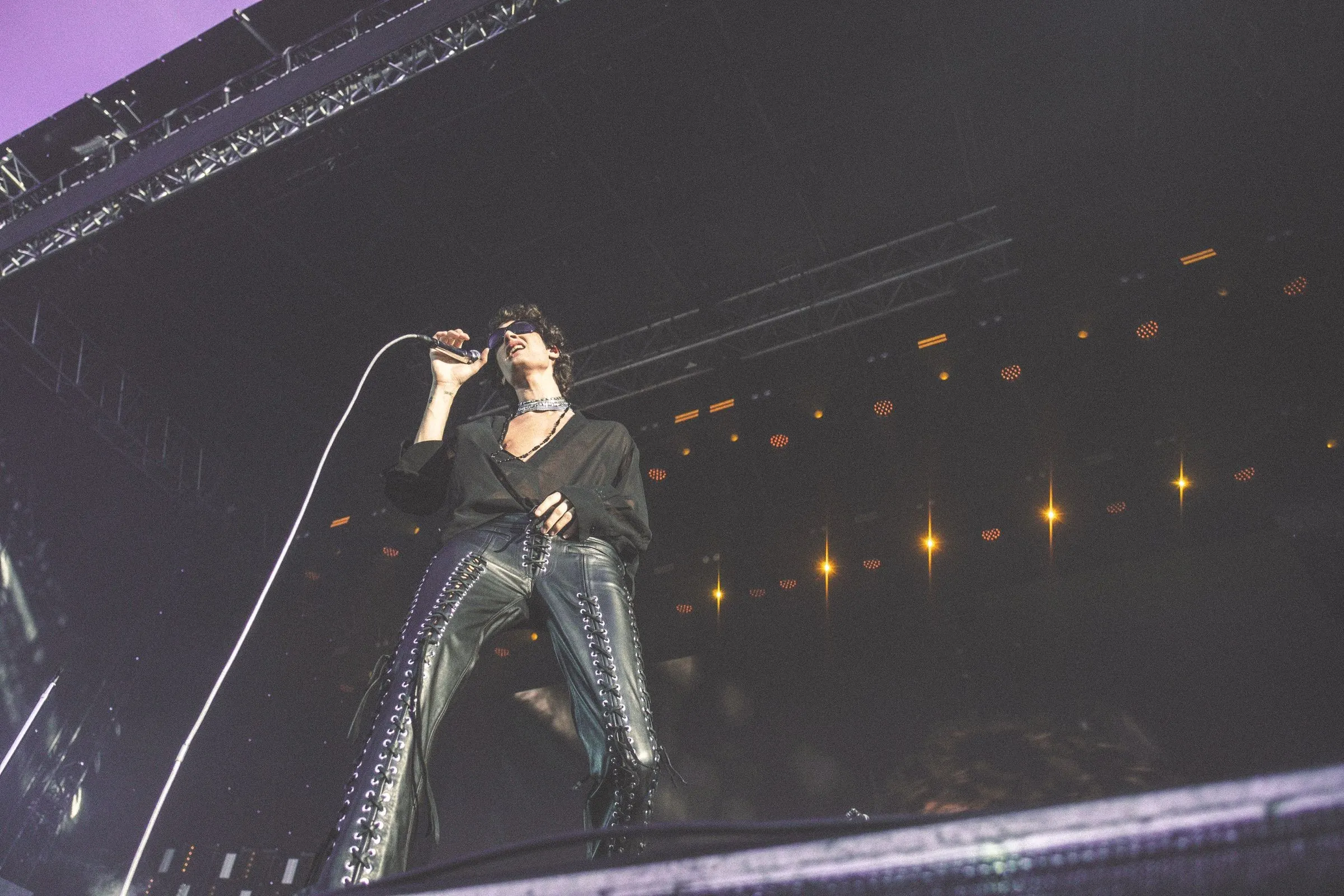
It felt like standing in the middle of a ritual. Not a concert, not a farewell, but a kind of electronic ceremony, where three men who once sounded like the future tried, one last time, to catch up with it.
One star
Two stars
Three stars
Four stars
Five stars
Disclaimer: Apropos Magazine received access or a review copy. As always, we share our own impressions — unfiltered.
Six stars
There are few places in Copenhagen where the air feels as electric as it does at Poolen on Refshaleøen when the room first wakes up. 2,000 people packed into concrete and bass. The cold outside makes the walls sweat, and under the first strobes from Lulu Rouge, the crowd begins to melt into one single organism. Lulu Rouge deliver one of those sets that feels like an entire world condensed into an hour: Arabic vocals, Spanish ghetto rap, thick beats and rhythms that shift the weight in your body before you even notice. This is music that reaches beyond the Danish, the controlled, the polite. A set so organic and warm that you could almost feel the heat of the Moroccan desert on your cheeks. When they leave the stage, it feels a little too soon — as if they had more to say, but deliberately held back so as not to overshadow what was to come.
And then came Den Sorte Skole. A booking that, on paper, sounded like a logical bridge between acts — but in practice felt like being ushered into a history lesson while standing in the middle of a techno cathedral. After Lulu Rouge’s deep, bodily journey, Den Sorte Skole’s set felt like a DJ mix run on autopilot. No nerve, no surprises. A flat ride for an hour, during which you mostly stood there looking around and thinking: why? Why play it so nicely when 2,000 people are hungry for one last bout of chaos? If this had been a competition, Lulu Rouge would have wiped the floor with them. And that says it all. Where Lulu Rouge built a world, Den Sorte Skole just pressed play.

But of course, we had come for AV AV AV. Their name had been written in neon across Copenhagen for a decade — not physically, but mentally. They were the symbol of what happened when Danish electronic music briefly became the language of the city. Eloq, Unkwon and DJ Er Du Dum Eller Hvad. Three boys, three machines, three universes. And now they stood here, in a circle of light, surrounded by an audience that wanted to party and mourn at the same time.
The stage had been moved forward so you could stand behind them. A simple but smart move. It made the whole room come alive. There was no front and back, no frontman, only rhythm. The audience as a 360-degree pulse. It looked like a crucible of energy, but in reality it may have been a form of dissolution. The three stood like statues behind their machines, faces focused, bodies making only small movements. Not a single “hello” in the first twenty minutes. Not a word. Just sound. A monotonous, hypnotic opening that slowly grew and grew until you forgot to breathe.
The techno gods of Kødbyen take their bow
If you have followed AV AV AV since the beginning, you could feel that this was not just another show. It was a full stop. And the strange thing was that they had already placed it before they even stepped on stage. There was not much left to prove. They had paved the way, set the standard, and long since overtaken it. Still, there they stood, as if performing their own legacy in real time. It was beautiful, but also oddly detached. There was magic in the air, but no emotion in the eyes.
And maybe that was what made the concert so wild: that it was total release and total coldness at the same time. They played for two hours. Two hours without mistakes, without fluctuations, without little pauses. A perfectly assembled mixtape, where everything worked, but nothing surprised. They have so much music in their catalogue that they could have done a greatest-hits show, but they didn’t. Instead, they chose to show how far they had moved from their own hits. They didn’t play “anthems”; they played moods. Beats in layers. Built up like cathedrals, torn down again. Somewhere between techno, gospel and something else entirely.
But also — and it has to be said — a little empty. Because this was no longer a band creating something in the room. They were executing. Martin as the conductor. August and Anders as the two who carry the legacy. They didn’t look at each other, they spoke very little to us. Everything was too neat, too controlled, too cold. The nerve, the chaos — DJ EDDEH’s wildness, ELOQ’s world, Dixen’s precision — all of that which once was AV AV AV’s DNA remained only as shadows. You missed the unease. That electric unpredictability that once made the whole thing feel like an experiment that could collapse at any moment. Now it was just beautiful sound. Excellent sound, to be sure. But also a testament to the fact that nothing has really changed in 15 years.

And yet: it was impossible not to be swept along. Because when they hit the mark — when the bass swallowed the room, when the synths unfolded like flames in the dark — it felt bigger than everything else. The crowd became one. People shouted, danced, held their breath. There were moments when you could almost feel how Copenhagen would have sounded if they had never existed. Quieter. Greyer. Because AV AV AV have been the soundtrack to an entire generation of nightlife, design people, music nerds and those who never quite grew up. They showed us that you didn’t need a hit to sell 2,000 tickets. That you could build your own gospel out of synths, without anyone asking you to tone it down.
And maybe that is why their farewell felt so strange: because they still sound like 2025, while they themselves insist they have nothing more to give. Their sound feels more modern now than when they started. But maybe that is exactly why they are stopping. To preserve the illusion. To avoid becoming a band that repeats itself.
The legacy of AV AV AV
AV AV AV’s importance to the Danish electronic scene can hardly be overstated. They have proven that you do not need a radio hit to build a devoted fanbase and fill 2,000 people in a cold hall on Refshaleøen — as long as the quality and uncompromising attitude are in place. The three producers paved the way for a new generation of electronic artists who dare to think big from the start. Names like the duo Bless You — one of the newest additions to Danish electropop and house — build on the foundation AV AV AV laid. The trio has set the bar high and shown that off-kilter experimental electronic music can also gather the masses. And along the way, they have inspired a host of peers through their playful approach and genre-free ideals.
That AV AV AV’s sound today, 11 years after they began, may be more relevant than ever makes it almost ironic that they choose to stop now. While many electronic trends have come and gone, AV AV AV’s sonic universe has developed organically and points straight into the zeitgeist of 2025. They started out sounding like the future, and in a way they are still the future — even on their final night. That is why the Poolen concert also felt like an unresolved full stop. The audience was left with euphoria in their bodies and a giant question mark painted across their faces: “Why are they stopping when they’re at the top?” Perhaps the answer lies precisely in their uncompromising nature — better to end before the flame fades than to run themselves into the ground.
AV AV AV’s last concert ever was not the intimate emotional outpouring one might have hoped for. Instead, it became a grand and professionally executed victory lap — a demonstrative manifestation of everything they have achieved and mastered. The magic in the air was real, the energy undeniable, and the legacy finally cemented. It was a six-star farewell to a trio that, from day one, refused to follow the manual for success and instead wrote their own. AV AV AV leave us with memories of eleven years of futuristic gospel beats and techno masses — and with the hope that the spark of their magic will continue to inspire long after the last beat has faded out.
They were not perfect, but they were ours.
And for a while, in the dim light, everything they had built was still intact.
For AV AV AV did not die. They simply disappeared into the night, the way they came.
En stjerne
To stjerner
Tre stjerner
Fire stjerner
Fem stjerner
Seks stjerner