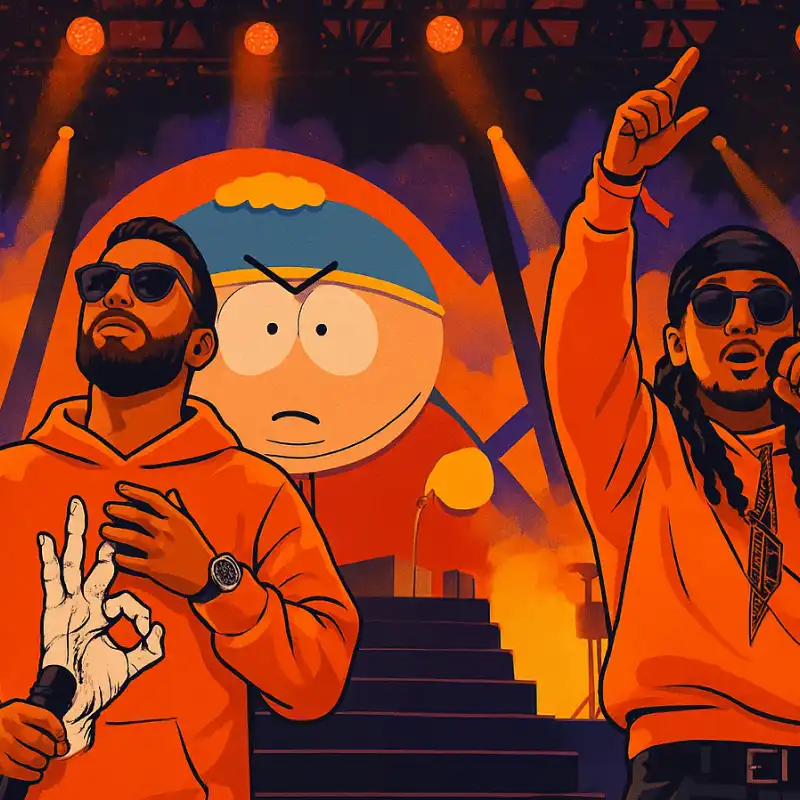
Royal Arena smells of reheated nachos and nostalgia. Fred Durst shows up in a neon-yellow T-shirt and pink shorts, looking like a dad who has just discovered rave culture. It’s charming and slightly awkward. Just like the concert itself.
One star
Two stars
Three stars
Four stars
Five stars
Disclaimer: Apropos Magazine received access or a review copy. As always, we share our own impressions — unfiltered.
Six stars
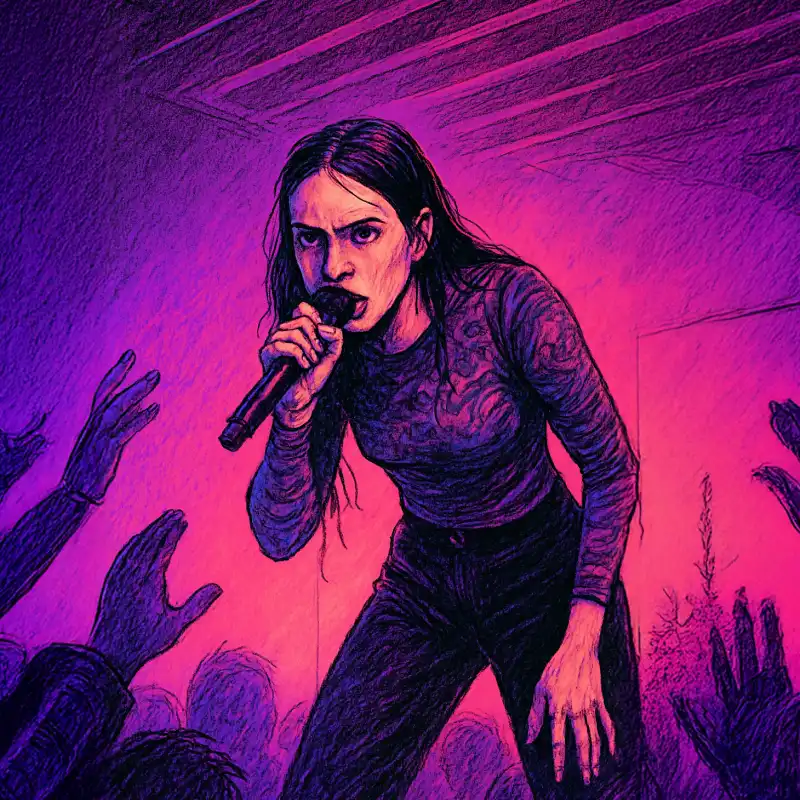
The evening kicks off with a so-called warm-up line-up that feels more like an ironic aside than a genuine musical appetiser: Karen Dió, BONES, N8NOFACE, Ecca Vandal and Riff Raff. The latter looks like an actor who has been told to play “a rap star with ADHD.” It’s far too much, and at the same time far too little. The audience starts wondering whether Limp Bizkit are actually going to show up.
But they do. At 9:45 p.m., with no drama whatsoever. They open with “Just Like This” and “Gimme the Mic,” and it’s hard not to feel a little happy. Not because it sounds good — it really doesn’t — but because it sounds familiar. The volume is low, the sound a bit grainy, and that takes some of the weight out of the songs. But hey, it’s still “My Generation,” and who doesn’t get a little soft-hearted over that kind of teenage rage delivered by men in their mid-fifties?
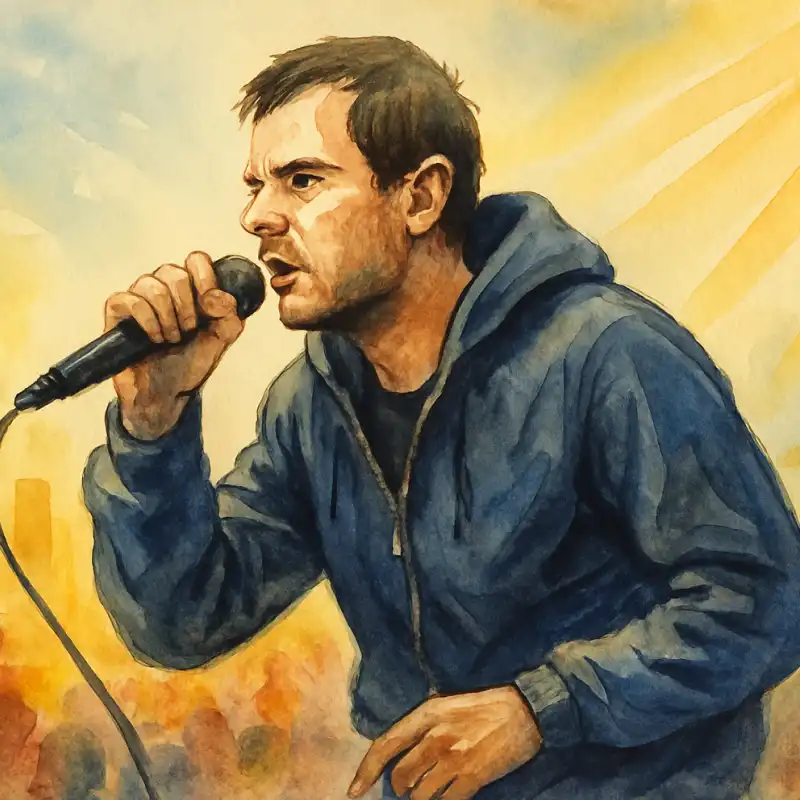
Fred Durst seems… tired. Not in a way that makes you worry. More like someone perfectly content with autopilot as an option. He cracks a few jokes. Talks a little. Gives the crowd pep talks in small doses. It’s cosy, but it’s not wild.
Wes Borland, on the other hand, is a sight to behold. A gold mask, a black suit, and the most theatrical body language in the arena. He plays as if it still matters. He is still a show. Maybe he should be in a completely different band. Maybe he should be a character in a video game. Either way, he is the most alive thing on stage.
The setlist is a greatest-hits bag mixed with a few covers: George Michael’s “Faith,” a Slayer riff here and there, Metallica’s “Seek & Destroy” in a shortened, ironic format. It’s a bit like a YouTube video you click on and, halfway through, can’t quite remember why you’re still watching. But you keep watching. Because it feels familiar. Because once, it meant something.
The crowd is mildly euphoric. Many have had these tickets hanging on the fridge since November. People know the lyrics. People shout along. People know when to jump. And when “Break Stuff” hits, plastic cups and shoulders fly into the air. That may be the highlight of the night. Not because it’s tight — it isn’t — but because it still works.
Reflection
If you came for the music, you went home a little disappointed. If you came for the experience, you may have left with a small smile. Limp Bizkit in 2025 is half rock band, half conceptual art. It’s karaoke in its own honour. It’s a midlife crisis disguised as a stage show. It’s still kind of funny. But it’s also kind of sad.
It was never meant to be perfect. It was meant to be Limp Bizkit. But you can still miss a little more rage. A little more ferocity. A little less “I paid to be here.”
En stjerne
To stjerner
Tre stjerner
Fire stjerner
Fem stjerner
Seks stjerner