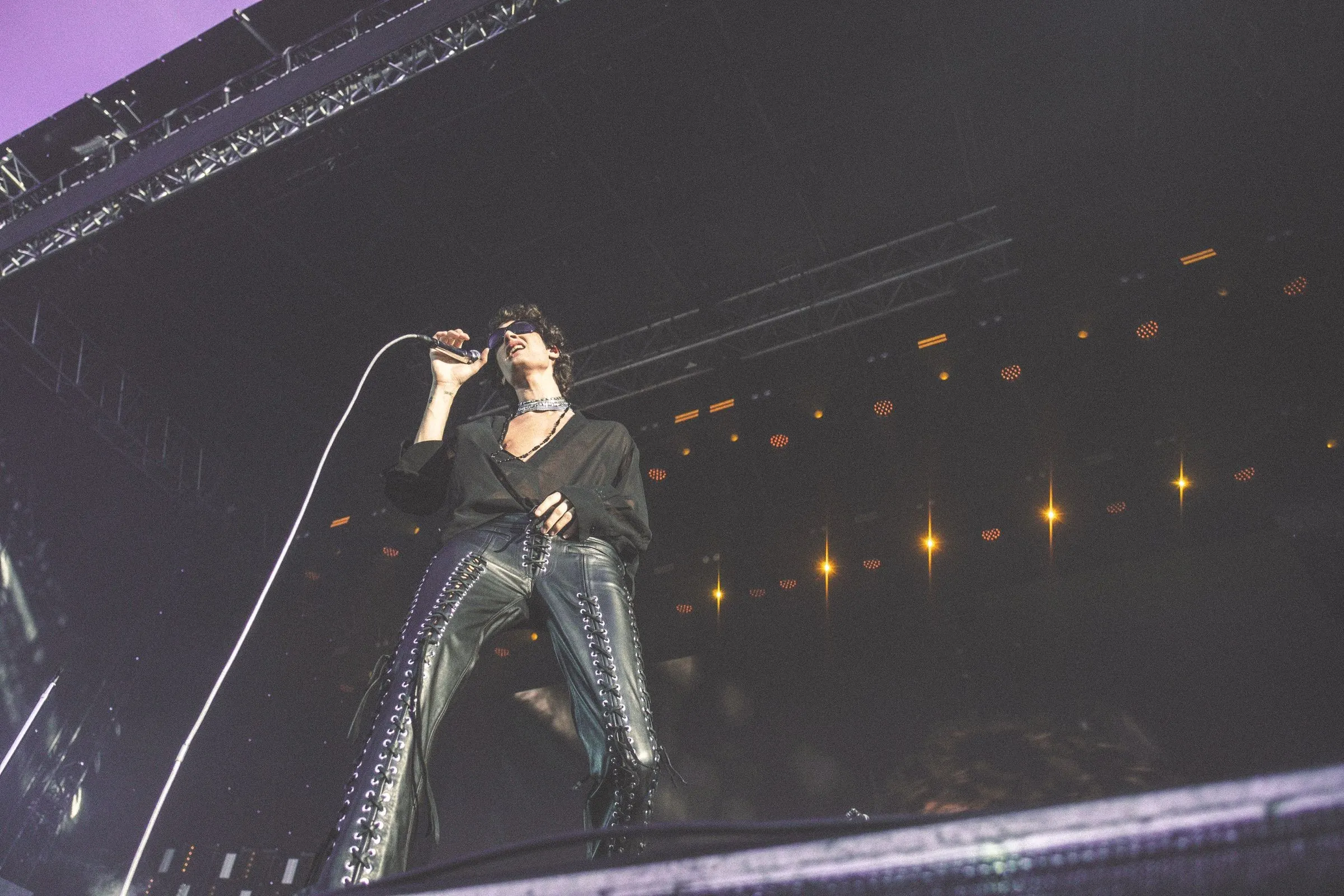
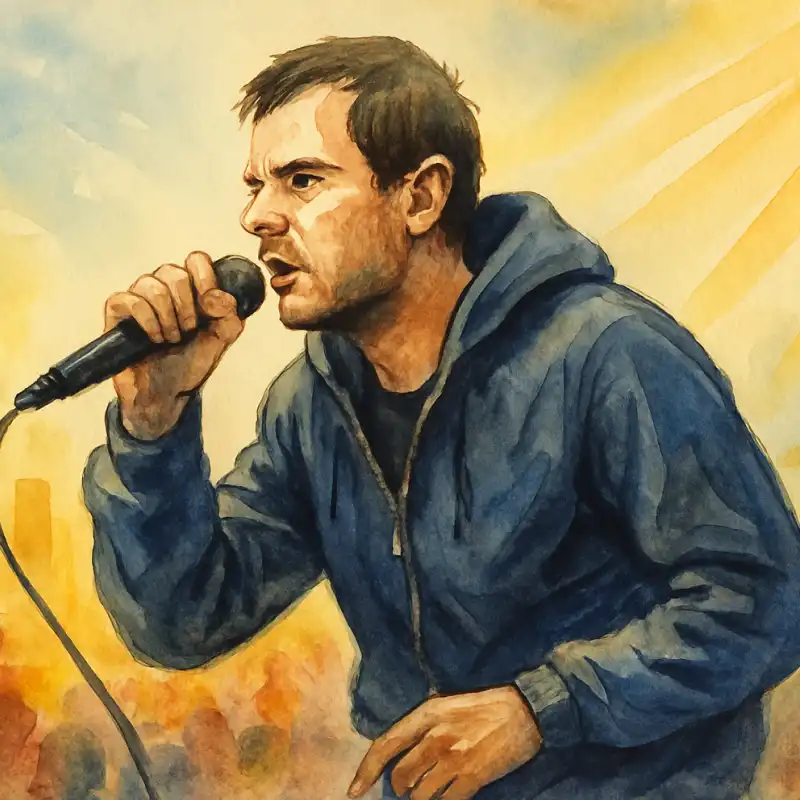
John Martin walked onstage as the man many of us know best as the voice behind other people’s biggest moments. But at Festegnen, something funny happened: suddenly Swedish House Mafia felt almost like a feature on his concert. Not the other way around. It was huge, warm, a little absurd, and far more moving than I had expected.
One star
Two stars
Three stars
Four stars
Five stars
Disclaimer: Apropos Magazine received access or a review copy. As always, we share our own impressions — unfiltered.
Six stars
There is something strange about seeing John Martin live. You know him, but slightly wrong. Or rather: you know the voice better than the face. It has lived in your life for years with other names at the top of the poster. Swedish House Mafia. Avicii. Alesso. Martin Garrix. The big EDM men, the big drops, the big hands in the air. And then John Martin’s voice, making the whole machine feel human.
John Martin Lindström is one of the almost invisible main characters of Scandinavian EDM’s golden age. He was the voice on Swedish House Mafia’s “Save the World” and “Don’t You Worry Child,” two songs that didn’t just become hits, but shared Nordic emotion installations with confetti. The kind of tracks that can still make a man in his thirties get a lump in his throat when someone shouts, “see heaven’s got a plan for you.”

But he is not just “the guy from Swedish House Mafia.” His name is scattered all over the Swedish and international EDM gang: Avicii, Alesso, Sebastian Ingrosso, Steve Angello, and the Dutchman Martin Garrix. That is really what you feel at Festegnen. Not just a man with a couple of huge features behind him, but a voice from the engine room of an entire era. A time when feelings were best delivered at 128 bpm and with one hand in the air.
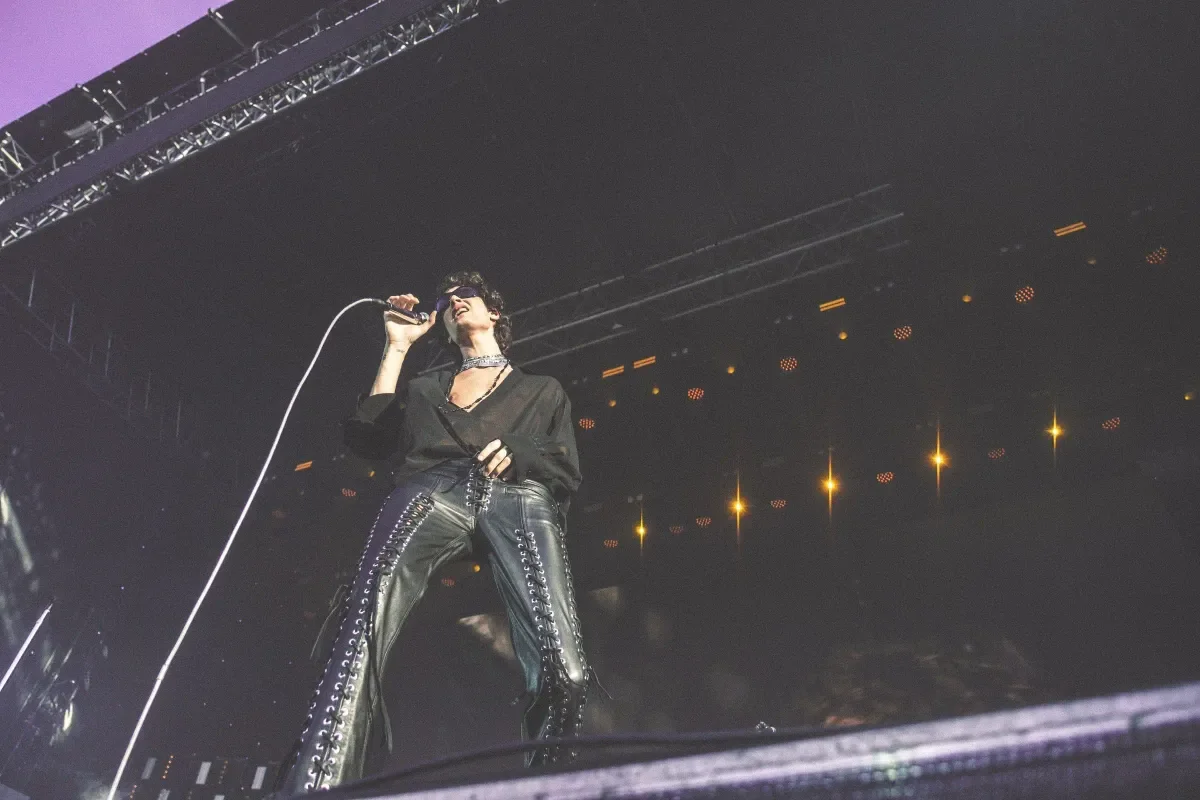
So there he was at Festegnen. Sunglasses, white sleeveless mesh top, hair falling over his shoulders, and a stage that looked like something between a slice of sky and an expensive après-ski dream. On the screen behind him, a white horse appeared, because of course it did. It was not subtle. But John Martin is not subtle in that way either. He is big feeling with open arms. He sings as if his heart has been given a delay effect and permission to fill the entire square.
And it worked.
The first thing you notice is how strong his vocal actually is. Not just “strong for EDM.” Strong strong. It has that special mix of roughness and purity, where you can hear both the stadium and the boy inside the song. There is something vulnerable in it, even when the production is pounding away. Maybe that is why his biggest hooks have aged so well. They are not built only for drops. They are built to be shouted by people who suddenly feel a little too much about their own lives.
The concert landed because it was not just nostalgia. Of course it was that too. The early 2010s hung heavily over the square: festival wristbands, sunglasses after dark, white T-shirts, big feelings, and very little self-awareness. I say that lovingly. I was there too. I have also stood staring at the sky as if a drop could give me a student grant increase and a personality.

But John Martin lifted the material out of pure hindsight. “Save the World” and “Don’t You Worry Child” were not just played as old festival relics. They were pulled back into something sincere. You could feel the crowd react before the brain had time to register it. First vocal phrase, and the whole square woke up like an old Facebook folder from 2012. Only with better sound and more children at home.
The most impressive thing was that he did not drown in his own collaborations. He could easily have ended up as a karaoke priest for Swedish House Mafia hymns, a man touring with other people’s greatness in his carry-on. But that is not how it felt. Quite the opposite. He owned the songs. He pulled them back to the voice, the melody, and the human centre that the whole electronic machine is really orbiting around.
There were moments when the concert became almost comically huge. Arms in the air. The sun. The horse on the screen. The smoke. The audience singing along as if they had all received a message from their younger selves. But it never quite tipped over, because John Martin felt sincere. He was energetic and fully present, but not desperate. He did not force the party with DJ hands and standard shouts. He let the songs do the work. And they still had muscle.

This was not six stars. Not because it lacked nerve, but because the show still had a bit of a “festival package” feel to it. A little more edge, a little more risk, a little less perfect sunset EDM, and we would have been all the way up there. But when it hit, it really hit. And it did so often.
For me, John Martin became one of the big positive surprises at Festegnen. Not as an ironic booking. Not as a “oh right, the guy from that song” experience. But as a genuine concert with a voice that can still make a large crowd feel something at the same time. Most artists struggle to get people to look up from their phones. John Martin got people to look into something they had forgotten they could still feel.
Reflection
John Martin reminded us that the biggest EDM hymns are not only about the drops, but about the voice that makes the fall feel like salvation. At Festegnen, he did not stand in Swedish House Mafia’s shadow. He stood in the middle of the light and showed why the songs still work. Five stars and a white horse in the back of the mind.
En stjerne
To stjerner
Tre stjerner
Fire stjerner
Fem stjerner
Seks stjerner