My worst nightmare has always been the try-hard festival uniform: cheap beer, mass singalongs, ’90s nostalgia and grown adults dancing as if their debit cards won’t be frozen until tomorrow. But at Festegnen, something annoying happened. It worked. Not all the time. Not without a few near-criminal detours. But enough that you had to admit Vestegnen has, in fact, gotten its own festival.
One star
Two stars
Three stars
Four stars
Five stars
Disclaimer: Apropos Magazine received access or a review copy. As always, we share our own impressions — unfiltered.
Six stars
On paper, Festegnen is a dangerous idea. A big festival in Vestegnen with Sophie Ellis-Bextor, John Martin, MC Clemens, Armand Van Helden, Scooter, Faustix and a whole Vi Elsker-style ’90s tent sounds like something you either review or run from. Preferably both. It’s a musical junk drawer of nostalgia, EDM, stadium chants, guilty pleasures and the kind of melodies you’ve tried to forget since high school, but that still live in your body like an old Nokia ringtone.
And yet: Festegnen works. Surprisingly well, even.
The most impressive thing is how professional it all feels. Entry, bars, toilets, sound, staff and flow are actually in place. It sounds unsexy, but at festivals logistics are like the bassline in a Scooter track: you only notice how important it is when it disappears. Here, it didn’t. People got in, got beer, found each other, lost each other, made new friends and shouted along to songs they only know the chorus of. That is, basically, the festival’s most important infrastructure.
Then there was the Vi Elsker universe, which had almost moved in as a festival within the festival. A smaller tent with a constant stream of ’90s and 00s bangers. Not quite Magicbox, but not far off either. It’s pretty wild how reliably that concept still works. It’s not subtle. It’s a confetti cannon with MitID. But it works because it never tries to be anything else. Pure recognition. Pure bass arm. Pure “la-la-la-la” energy.
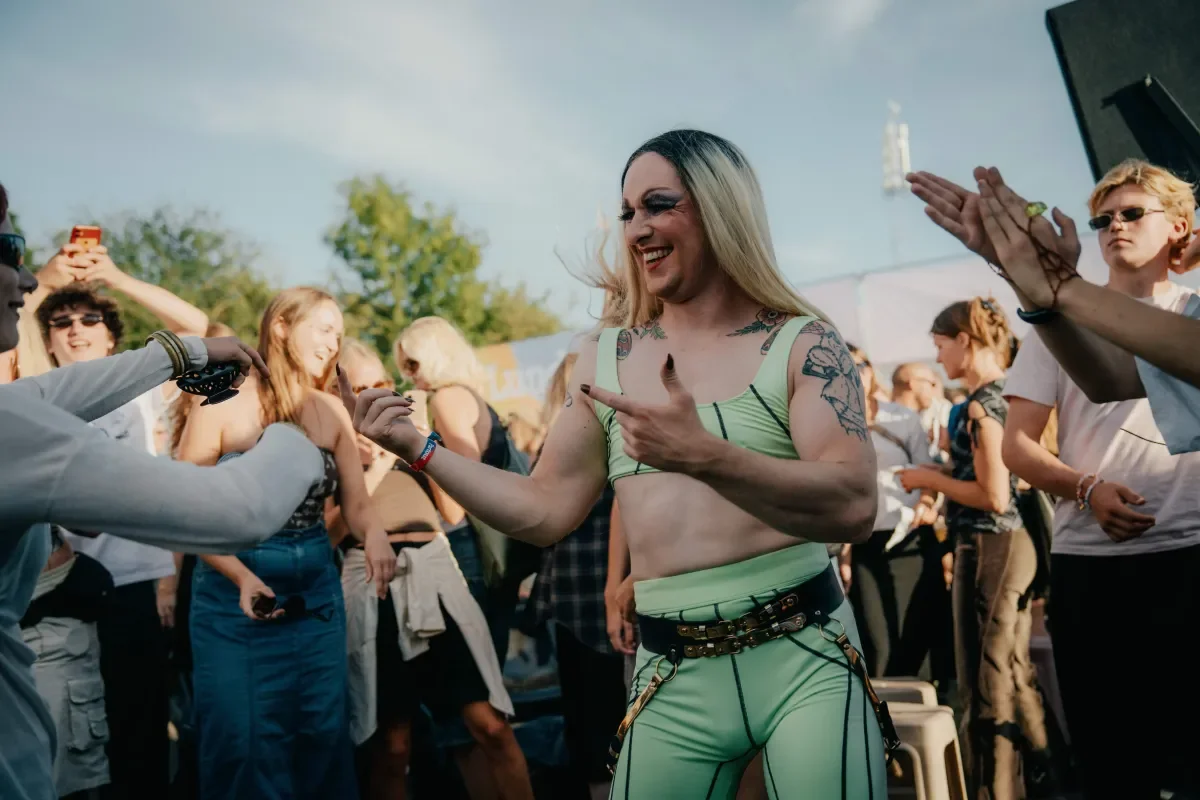
Sophie Ellis-Bextor was exactly the kind of booking that makes sense here. Charming, upbeat and with enough disco in her bloodstream to fill a tent without having to shout people into motion. She didn’t come to revolutionise anything. She came to put glitter on everyone’s foreheads and make them smile. She did.

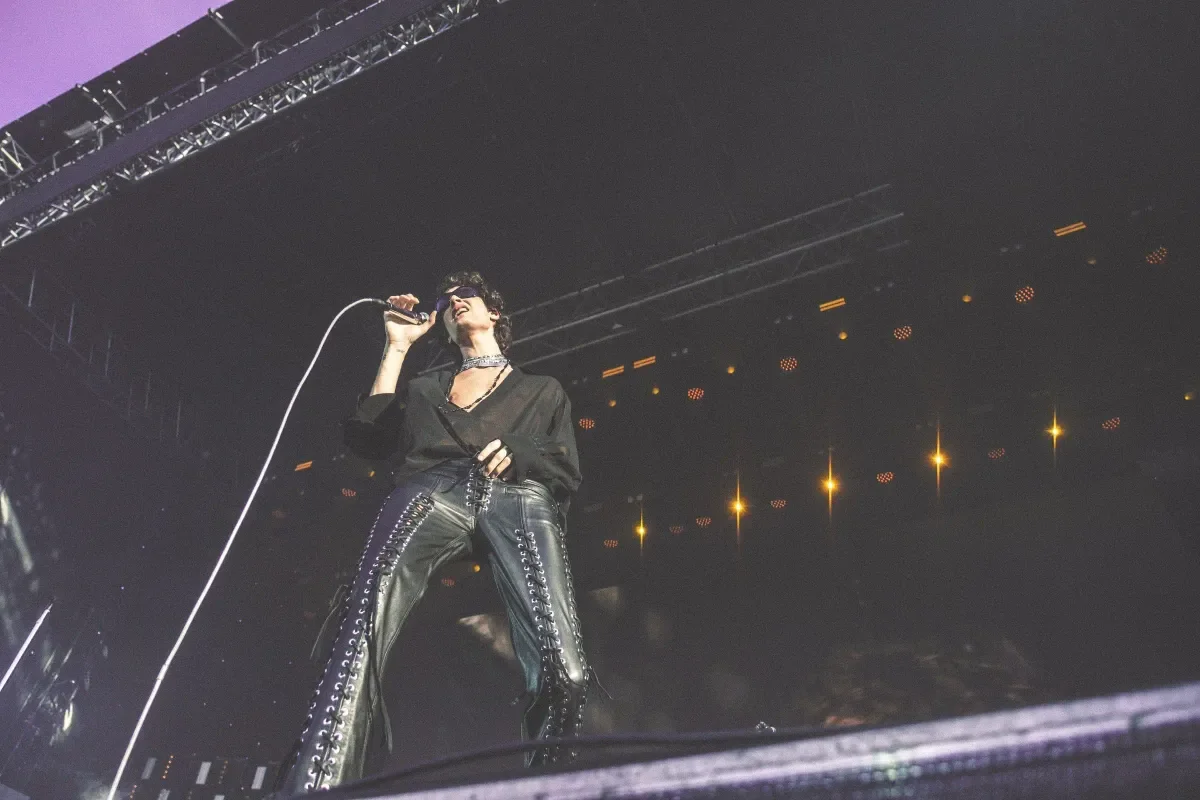
John Martin later did something rather interesting. He almost turned Swedish House Mafia inside out, so they felt like a feature on his own performance. That’s an impressive position to take when your voice is tied so closely to some of the biggest EDM moments from the era when everyone thought life could be solved with a drop and a white V-neck. He had a hit range that reminded you how many of those songs are still buried in the body. Not in the head. In the body. That’s where they survived.

But then there was Bodega Royal.
This is where Festegnen starts doubting itself. Because in the middle of all the big, professional and genuinely well-functioning stuff, a brown bodega suddenly appears dressed up as a festival concept. I get the idea. Local charm. Singalongs. Leif music. Maybe a man in a waistcoat shouting something about another round. But at Festegnen it mostly felt like a leftover from a town fair that had wandered too close to the festival budget.
Unfortunately, MC Clemens became the symbol of it all. A legendary Danish rapper, yes. But here he stood in the bodega, playing his EDM hits to a crowd of maybe 50-100 people, while the volume was so high the tent fabric seemed to tremble in self-defence. An empty stage, Clemens alone, a backing track racing ahead of him, and a collective feeling that we all felt a little sorry for him. He fought like hell to keep up, but it didn’t become more town-fair, and it didn’t become less effort. It looked like a booking for an awkward confirmation party in the provinces, where the budget was too big and the idea too small.

Armand Van Helden was the day’s big wildcard. How he got folded into this project I still struggle to understand, but I loved it. In the middle of Vestegnen’s giant nostalgia machine, he delivered one of the day’s most explosive and festive sets. Hits, pressure, confidence and “Barbra Streisand” as collective release. Big energy. And, mercifully, without that DJ-alligator feeling, where you can hear a man panicking behind the decks and throwing effects at anything that moves.
And then Scooter arrived. Not as an ironic footnote, not as a “oh right, the fish guys,” but as a full-on bodily event. Seeing H.P. Baxxter live felt like one of the biggest out-of-body experiences I’ve had while wearing trousers. Fire. Fireworks. Hardstyle bangers. Love. A German rave preacher with platinum-blond hair standing up there and making all of Festegnen feel like a stadium, a bunker and a very expensive confirmation party at the same time.
Scooter wasn’t just nostalgia. It was pure physical surrender. Everything you should be too old, too smart and too tired for suddenly worked again. “God Save the Rave!” didn’t sound like a joke, but like a creed. And in the Festegnen context, it made complete sense. It was stupid, huge, euphoric, shameless and strangely beautiful. Exactly the kind of thing you can spend the rest of your life trying to explain, but that only makes sense when you’re standing in it with bass in your chest and fire in your field of vision.

Faustix closed the party at 150+ bpm. Fire. Microphone. Bare stomach. Baby oil. It was guilty-pleasure cringe in that way where you know it isn’t good, but your body has already bought shares in it. Like deep-frying a Mars bar. It sounded, above all, like Faustix had bought a “HARD TECHNO MEGA PACK” on Bandcamp and found a new identity as a techno DJ. It was greasy, explosive, extremely loud and objectively not very good. But sometimes you feel like eating at Flammen. And after Scooter, the place was so packed and so fired up that he could almost have banged a drum and sung Volbeat, and people would have received it as a revelation.
That is Festegnen’s Achilles’ heel. The festival wants to be both a proper festival and a local town fair with brown roots. The first succeeds astonishingly well. The second drags it down. Because when you go from big productions, strong sound and international names to something that feels like a trailer with cheap beer and bad judgment, the illusion breaks.
The local part is not the problem. In fact, it’s the strength. There’s something genuinely lovely about Vestegnen getting its own festival brand. Not as a joke, not as a cheap copy, but as something people can actually gather around. Festegnen has room for everyone: the young, the old, the glitter people, the tribal-tattoo people, the ones who call it “our music,” and the ones who only came to shout along to a chorus they haven’t thought about since 2004.

But the festival has to dare to believe in itself. It shouldn’t apologise for its ambition with a bodega in its back pocket. It shouldn’t prove it’s still for the people by lowering the quality. It already is for the people. That’s its whole DNA. It’s the proletariat with a laser show. And I actually mean that as a compliment.
Reflection
Festegnen is at its best when it stops being shy. When it dares to be big, stupid, loud and professional all at once. There are still too many town-fair ghosts in the corners, but the foundation is strong, fun and strangely moving. Vestegnen has gotten its own festival. Now it just needs to stop putting it in a bodega.
En stjerne
To stjerner
Tre stjerner
Fire stjerner
Fem stjerner
Seks stjerner