If you’ve ever wondered, “What is Danish live music actually missing?” the answer is apparently giant moustaches, Irina Olsen under an alien head, and Carl Knast. He delivered that, plus pan flute, plus a filthy wifebeater, plus a level of chaos that should probably be illegal and yet felt exactly right.
One star
Two stars
Three stars
Four stars
Five stars
Disclaimer: Apropos Magazine received access or a review copy. As always, we share our own impressions — unfiltered.
Six stars
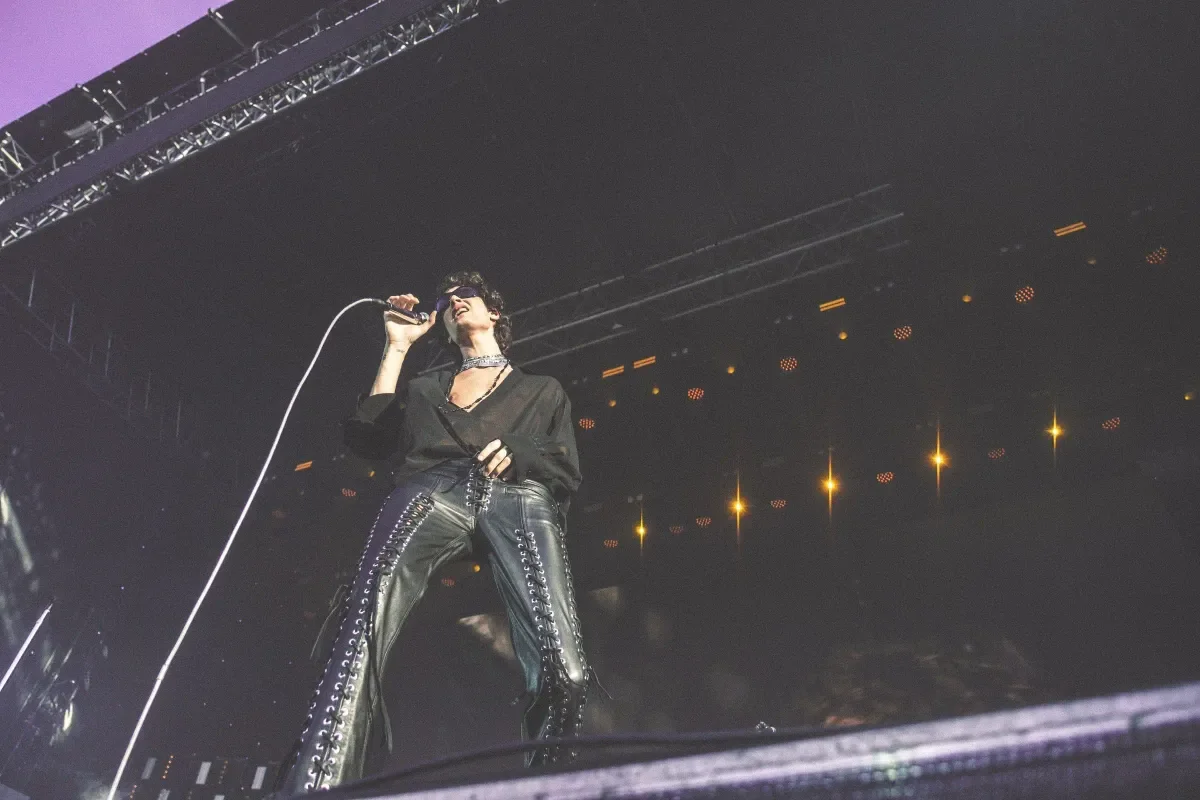
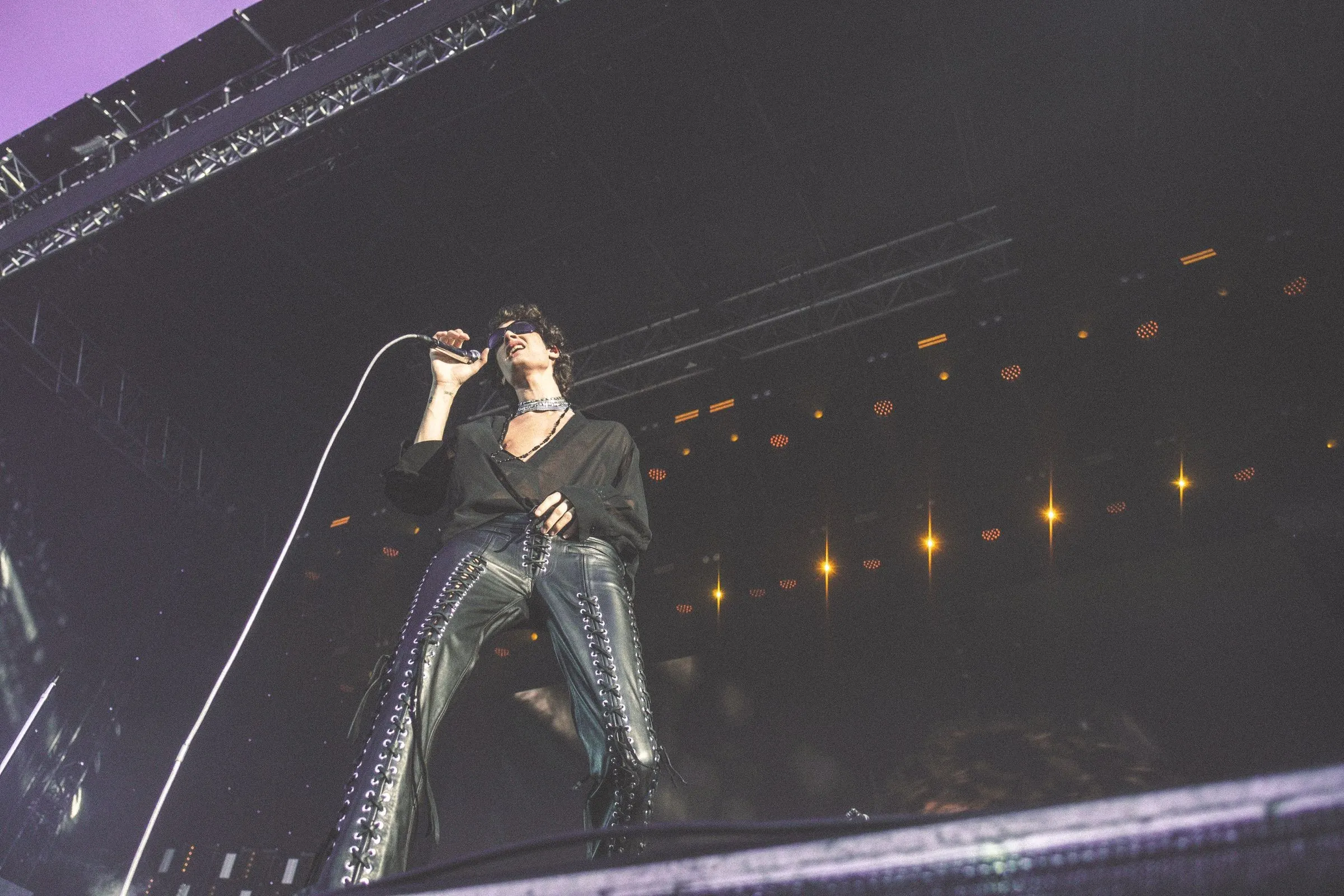
Carl Knast attacks the stage as if it owes him money. Full speed. Full flow. No warm-up caution. No “let’s feel out the room” hesitation. He just goes straight for the throat from the first second and delivers such a steady performance that you almost forget how much utterly insane stuff is happening around him. And that’s saying something. Because this wasn’t just a concert. It was a Carl Knast circus-theatre, carried out with an energy that made it impossible not to get swept along.
Whether this is rap, hip-hop or something else entirely, I honestly don’t know anymore. There was obscenely much audience contact, obscenely much chaos and obscenely much life — and hey, Per Vers was there too. And maybe that’s actually the best way to understand Carl Knast. Not as a genre, but as a state of being. As a man who has decided that if he’s going to fill Den Grå Hal, it should feel as if someone poured lighter fluid over Distortion 2011 and struck a match.
It also helped that Den Grå Hal’s muddy sound system, which in other contexts might have been called a minor disaster, worked in his favour here. It didn’t sound pretty. Thank God. It sounded like a smashed-up street party. As if the whole setup was about to collapse, but never quite did. That kind of sound, where everything becomes a little dirtier, a little more physical, a little more believable. I’d normally have complained. Here, it was almost perfect.

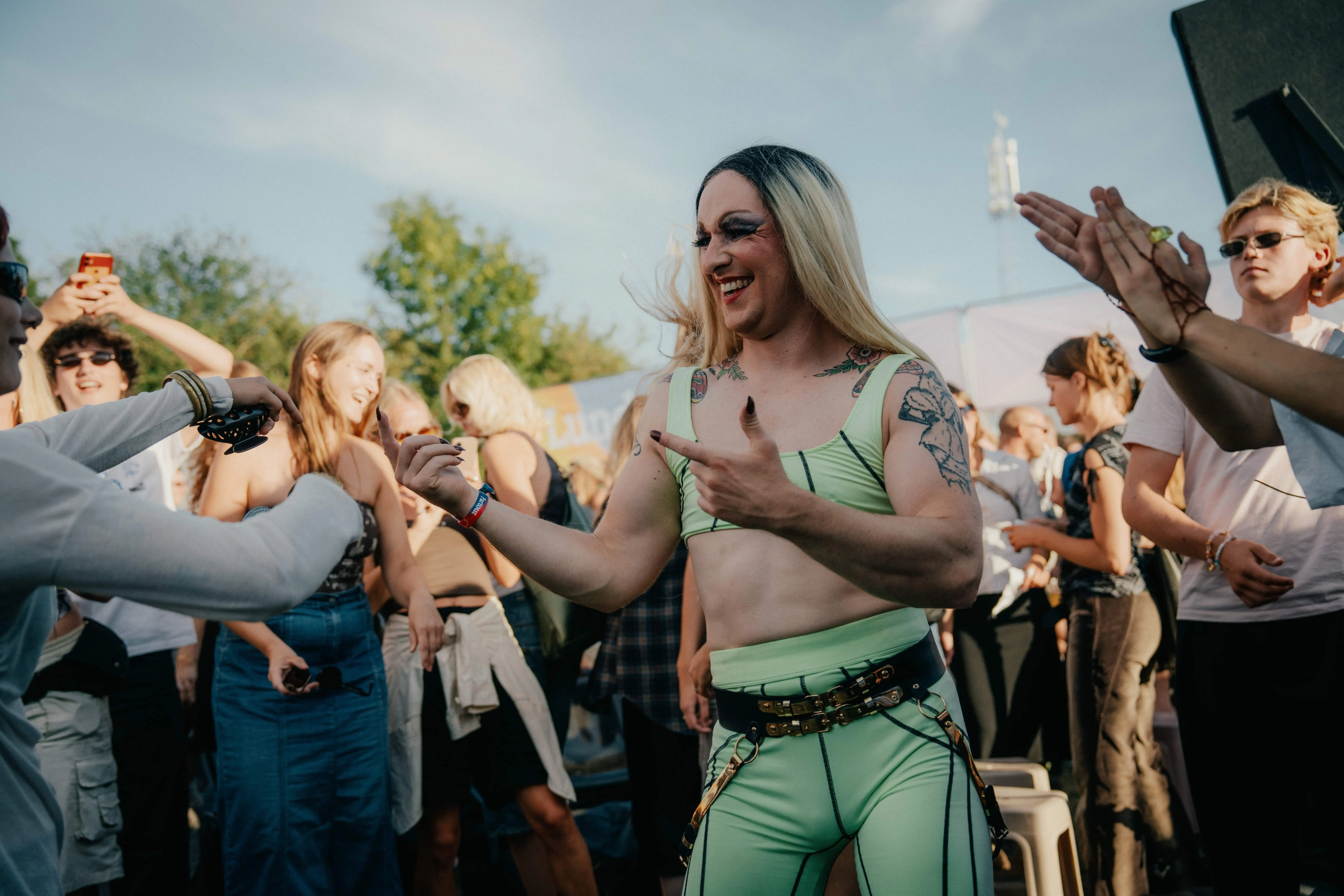
And then there was, of course, all the other stuff. Irina The Diva, in a racing tracksuit, long flowing black Kardashian hair and a pair of high-waisted trousers with Uruk-hai paint running down the legs, showed up and pulled off the evening’s most random act (and that’s saying a lot), which somehow made both the audience and me shout “Yessss!” in the middle of Christiania. What kind of sick parallel universe has Carl transported us to? Why does this work? It makes no sense. But it had that liberating feeling that someone still dares to be deliberately stupid on a stage. Later she came back again. Fresh is probably the word you have to use when you can’t quite be bothered to explain further.
There was also a moment when I wasn’t sure whether I had started hallucinating myself, or whether it was just my neighbour’s relentless hash trumpet that had created a new atmospheric discipline in the room, when Rosa Lund (member of parliament for the Red-Green Alliance) suddenly came crashing in wearing a leopard outfit together with another pregnant woman and started spraying champagne over people to “MILF” with Irina Diva and Carl Knast. Say what you want. Call it art, entertainment, chaos or a municipal nightmare vision. I call it a moment when the world tilts just a little. And I call it live music at its best: a bit too much, a bit too stupid and completely impossible to ignore.
There’s something rather wonderful about how little Carl Knast seems interested in tightening anything up to look “bigger”. Quite the opposite. He runs around in a filthy wifebeater, greasy hair and a kind of victory high that makes him look like a man who has just won the Champions League final on penalties. It’s actually a little too early to celebrate yourself that hard. But that’s also why it works. He celebrates the night as if this is the summit. And for a second you may think: Carl, you’ve only just started. But maybe that’s exactly part of the charm — that he doesn’t play cool. That he takes his own night deadly seriously in the most unpolished way imaginable.
Was this his Mount Everest? His Holy Grail? I don’t know. But it clearly felt important to him. And it did to the room too.
The catalogue carried him beautifully. “Velkommen” with Artigeardit, Benjamin Hav and Klamfyr sent the audience straight into collective collapse. “Umti Umti” with Speedy worked insanely well live. “Frem og tilbage” with Peter Sommer, Speedy and Lay had that strange Carl Knast quality, where something that on paper could sound like a crooked idea suddenly stands razor-sharp in the room. And then there was, of course, “STANK”. Hands up. No talking. Just go.
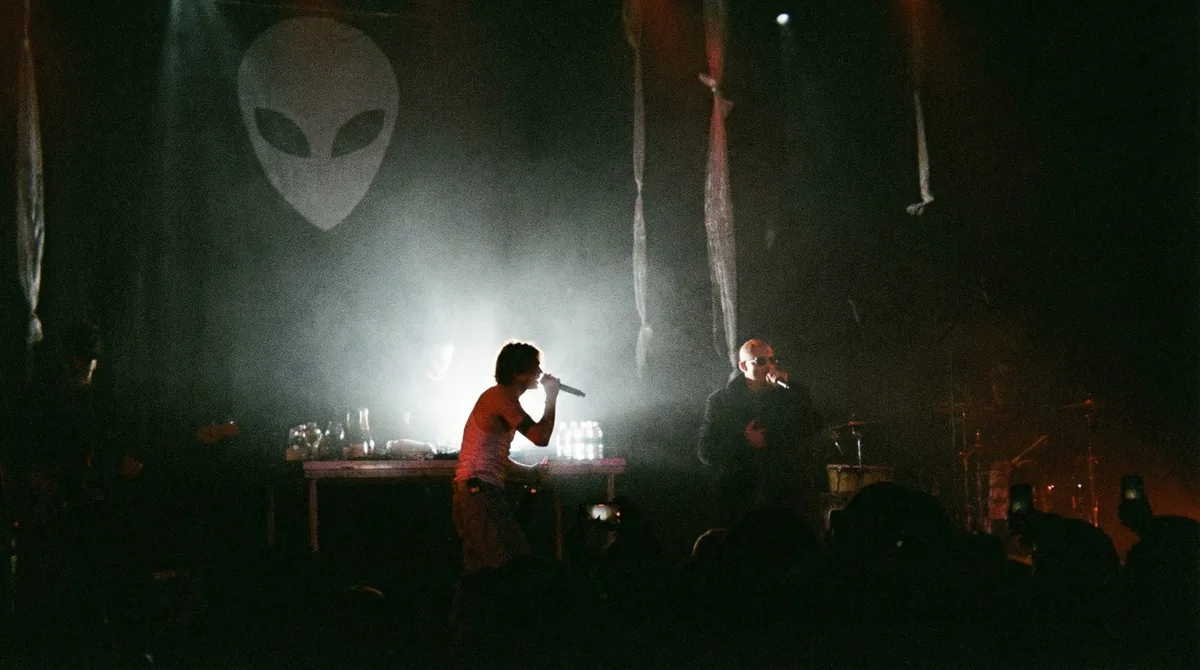
DJ Ary (Aryan Sanjarizadeh) behind the decks, as always, delivered one of Denmark’s tightest sets. He’s become the kind of figure who makes Danish live rap concerts hold together without demanding gratitude for it. Blæs Bukki came on and laid his verse on “MILF”. Emil from Suspekt showed up and backed things up. Tarrak was there too. Somehow, you can almost not put on an ambitious Danish rap concert without some grand old man from the scene eventually appearing in the wings and nodding approvingly. The Suspekt people have become a kind of cultural godparents for Danish rap, and it works. When they step on stage, people still lose their minds. Not because it’s new, but because it still works.
In the middle of all this, a drummer and a guitarist added an extra layer of body and weight to the concert. It suited him. Because even though Carl Knast can clearly carry a stage on personality and presence alone, the live musicians gave the night a little more muscle. A little more roughness. A little more of the feeling that this whole thing could fall apart if someone blinked at the wrong moment.
And then came the evening’s strangest — and maybe best — moment: when Carl Knast called someone from the audience up to play a long intro on pan flute. Pan flute. In Den Grå Hal. Under a giant alien head. In dark green light and heavy skunk fumes. On paper, it sounds like something you should shut down immediately. In practice, it somehow became the concert’s high point. You stood there thinking that either this is deeply ridiculous, or this is exactly the kind of live moment you end up talking about afterwards. It turned out to be both.
And really, that’s the whole point of Carl Knast. He isn’t strongest when he tries to look important. He’s strongest when he dares to be crooked, ugly, overcooked, a little moving and completely unedited. When he lets the concert look like something that could just as easily have been born at three in the morning in a collective with too much smoke, too few adults and a surprisingly good songwriter right in the middle of it all.

Because maybe the only thing you could wish for a little more of next time is depth. Not because there wasn’t entertainment. Quite the opposite. We were insanely well entertained. But I also know that Carl Knast has something else in him than just the party. I know there’s a depth, an exposure, a slightly more vulnerable core in what he does. And if he dares to show just two more minutes of that next time, this won’t just be a damn good concert. It’ll become something even bigger.
But as it stood this evening, it was hard to be dissatisfied. It was deranged. It was ridiculous. It was filthy. It was very, very good. And above all, it was fun.
Let’s put it like this: if you went to Den Grå Hal that night looking for order, elegance and discipline, you were in the wrong place. If, on the other hand, you wanted to be crushed into a perfectly insane night with reality-TV vibes, chaos, pan flute, guests, skunk fumes and a man attacking the stage as if it had said something ugly about his mother, then you got full value for money.
En stjerne
To stjerner
Tre stjerner
Fire stjerner
Fem stjerner
Seks stjerner